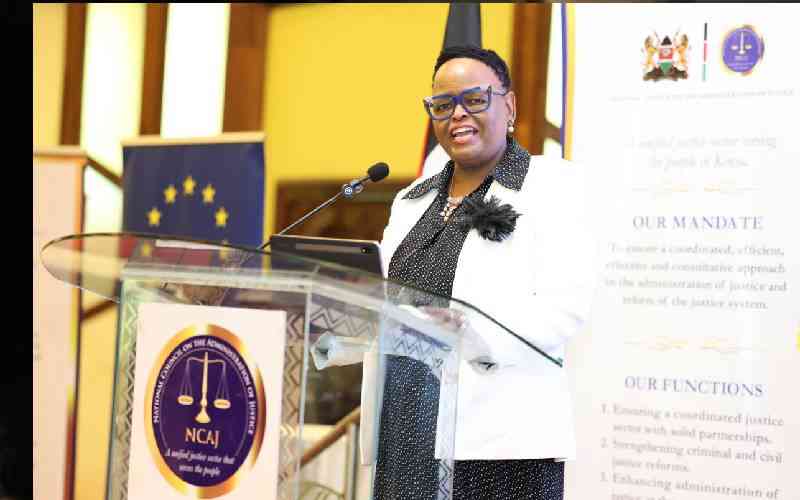
“That is not a lot of money for the Judiciary to ask for. That is not a big investment really for an institution as important as the Judiciary,” said Deputy President Kithure Kindiki on Friday during the launch of the State of the Judiciary and Administration of Justice Annual Report for the 2025/2026 financial year.
The report shows courts resolved 576,702 cases against 561,580 filed, a 103 per cent clearance rate for the second consecutive year, and the pending caseload fell 2.5 per cent to 579,954 by June 30, 2026.
Funding Gap Widens
Despite the improved clearance rate, the Judiciary received Sh27.15 billion against an assessed requirement of Sh40.10 billion, leaving a Sh12.95 billion shortfall that represents 32 per cent of needed resources.
The budget increased by 19 per cent from Sh22.78 billion in 2024/25, but the shortfall constrained personnel costs, contractual obligations, operational expenses, maintenance, court construction, infrastructure expansion, information and communication technology investment, and modernisation of court services. Development budget absorption stood at 47 per cent, down from 78 per cent the previous year, while overall absorption was 96 per cent and recurrent expenditure absorption reached 99 per cent.
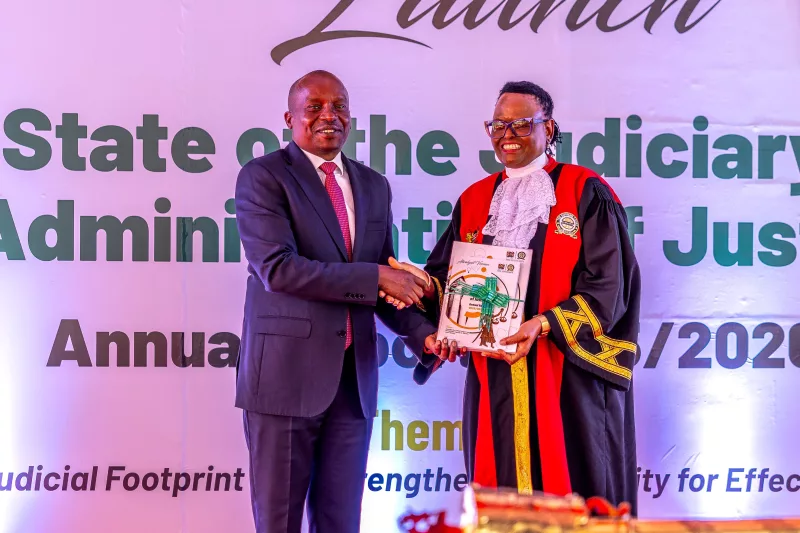
Staffing stood at 8,017 employees against an approved establishment of 12,079 — about 66 per cent of required posts — with 4,062 vacancies as of June 30, 2026. The Judicial Service Commission expanded the approved workforce from 10,870 to 12,079 positions, an increase of 1,209 or 11.1 per cent, intended to meet requirements from new and expanded courts and registries. The Commission appointed 1,280 personnel during the year, including 53 judges and 100 resident magistrates, and introduced a first paid internship programme placing 201 graduate and diploma interns in court stations and administrative units.
Judges stood at 241 against 407 established positions (59 per cent), magistrates at 637 against 1,200 slots (53 per cent), registrars at 11 per cent of approved strength, and legal researchers at 38 per cent. Women accounted for 51 per cent of the workforce and men 49 per cent.
The Judiciary employed 198 persons with disabilities, representing 2.5 per cent of the total workforce, below the five per cent constitutional threshold; approximately 200 additional employees with disabilities would be needed to reach it. The report also records 166 unfilled judicial vacancies and projects 348 retirements over the next five years.
Backlog Concentrated in Magistrates’ Courts
Of the pending cases, 341,412 — roughly 59 per cent — had been unresolved for more than a year, including 37,757 older than five years. The number of cases pending for over one year dropped by 15.8 per cent during the year. Magistrates’ courts carried 80.3 per cent of the backlog, followed by the High Court at 11.9 per cent. Chief Justice Martha Koome said 101 constituencies still lack a magistrates’ court, and 69 per cent of court stations have inadequate courtrooms. Some justice seekers travel more than 100 kilometres to reach a physical court, and 43 constituencies rely exclusively on mobile courts, which the report states reflects an underlying infrastructure deficit rather than merely an operational arrangement. Four constituencies are served only by stand-alone Kadhis’ Courts.
As of June 2026, Kenya had 47 High Court stations across 42 counties supported by seven High Court sub-registries, while 148 Magistrates’ Courts were operational across 142 constituencies and 25 gazetted courts were yet to become operational. The Judiciary established five additional Magistrates’ Courts during the year, bringing the total to 148, and expanded Small Claims Courts to 55 stations with 15 new ones.
Two new Court of Appeal stations were established in Kakamega and Meru, and the Eldoret Court of Appeal station was operationalised. The report warns that at current funding levels, addressing minimum identified infrastructure requirements would take several decades, with some projects incomplete for years due to funding limitations, contractor non-performance and contractual disputes. During the year, 16 ongoing and newly started infrastructure projects progressed and several buildings were completed.
Government Raises Budget, Pushes Legislation
Kindiki said the Judiciary’s budget for 2026/2027 has been raised to Sh30.4 billion and cited the Judges’ Retirement Benefits Act, 2026, signed in March, which provided a more predictable framework for judicial officers’ retirement benefits and strengthened institutional independence.
He added that the Tribunals Bill, Kenya Judiciary Academy Bill, and a review of the Small Claims Court Act are being fast-tracked, and that Phase II of the Judicial Performance Improvement Project — a Sh26 billion World Bank-backed initiative approved by Cabinet in June — aims to modernise the Supreme Court and Court of Appeal, consolidate tribunal infrastructure, and establish a permanent campus for the Kenya Judiciary Academy.
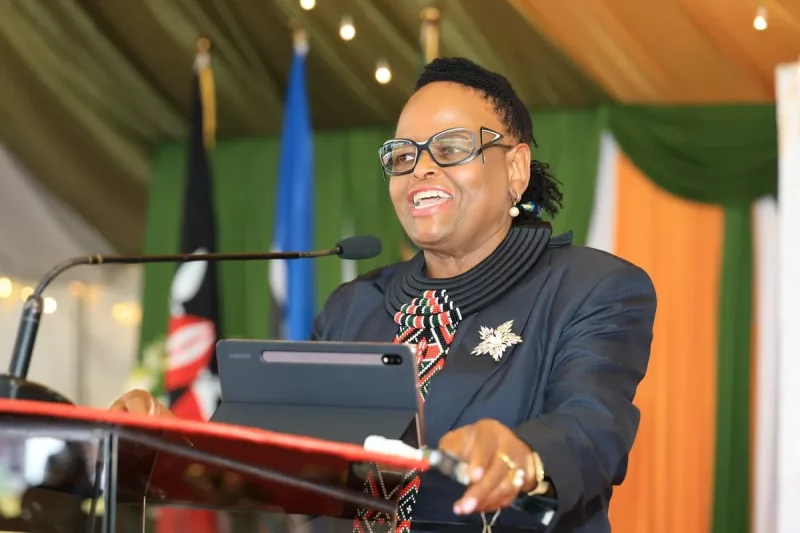
“Please let us not operate outside the law.” “Let Parliament do what they are supposed to do and give us a statute,” Koome said, referring to the tribunals legislation.
Court-Annexed Mediation and Small Claims Courts Resolve Billions in Disputes
Court-annexed mediation reached all 47 counties with 128 registries, supported by 42 additional mediation registries during the year; disputes valued at Sh20.88 billion were referred and settlements worth Sh13.05 billion concluded without trial. Small Claims Courts posted a 120 per cent clearance rate, handling more than 72,000 cases. Koome maintained that corruption, bribery, favouritism and misconduct had no place in the administration of justice.
Deputy President Kithure Kindiki, born in 1972 in Meru District, retaken his secondary exams at Tharaka Boys High School after an initial Grade C at Lenana School. He earned a PhD in International Law from the University of Pretoria in 2002 and taught public law at Moi University before entering politics.
Elected Senator for Tharaka-Nithi in 2013, he became the Senate’s first majority leader and later Deputy Speaker, a post he lost in 2020 over his alliance with William Ruto. He served as Cabinet Secretary for Interior from 2022 to 2024, was dismissed in July 2024 and reappointed days later, then assumed the deputy presidency on 1 November 2024 after Rigathi Gachagua’s impeachment.
The Judiciary is calling for predictable multi-year financing and full operationalisation of the Judiciary Fund so approved appropriations are transferred directly and on time. Kindiki challenged courts to accelerate clearance of the more than 341,000 long-pending cases, warning that delays undermine public confidence and economic activity. The Judiciary has also rolled out a new curriculum for 2027 election disputes.
Keep reading

Oregon’s 2026 Election Results Defied the National Democratic Wave
Oregon's 2026 election results defied the national Democratic wave, leaving Tina Kotek with a vastly expanded margin even...

Rafael Cabral Saves Three Penalties as Real Salt Lake Beats Seattle Sounders in Shootout to Reach Playoffs
Real Salt Lake punched its ticket to the first round of the Audi 2026 MLS Cup Playoffs on...
New Milford Sees State’s Steepest Rise in Household Need, United Way Reports
New Milford was supposed to be the place where working families got by — not the place where...
Johnston Voters Reject Eminent Domain Charter Amendment; Town Vows to Seize Land Anyway
Johnston voters rejected a charter amendment that would have cleared the way for the town to seize 31...