
For any college quarterback, the decision to tuck the ball and run is a calculation made in a fraction of a second.
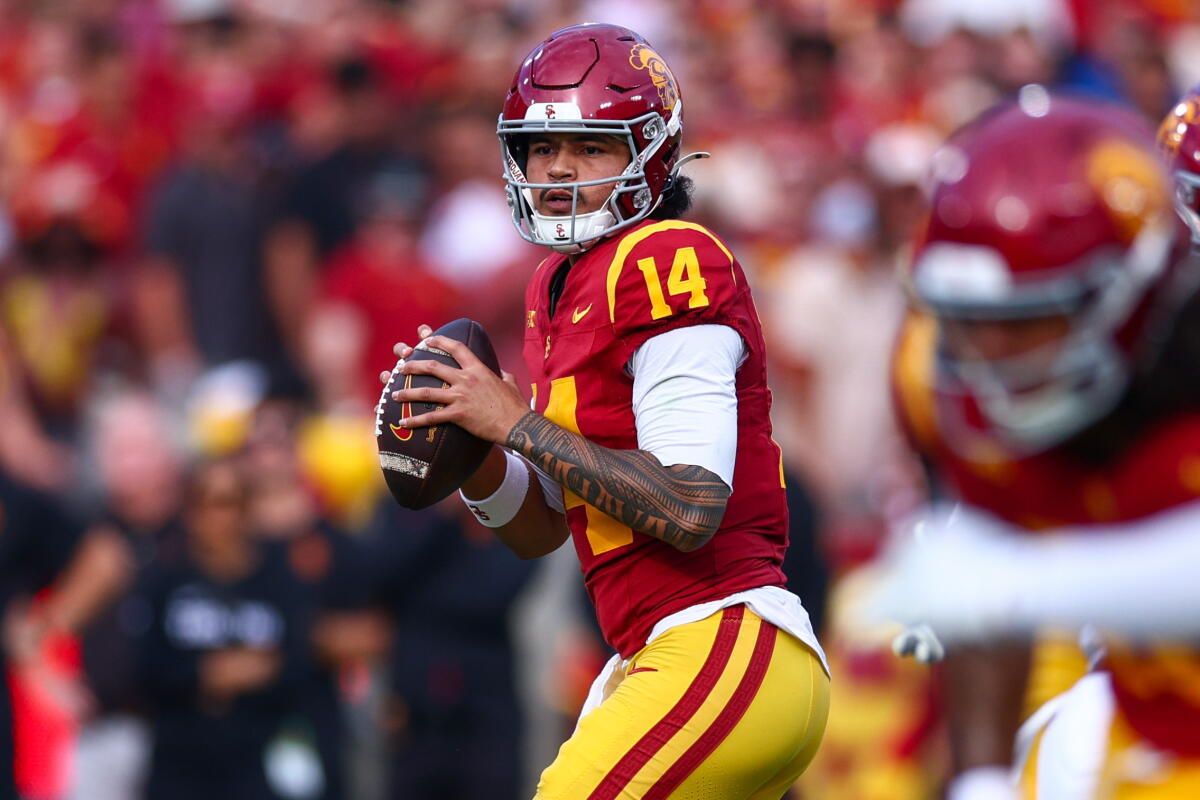
It is a choice between the safety of the pocket and the chaos of the open field. For Jayden Maiava, that choice has become a defining point of contention during a challenging 2026 season. As the Trojans prepare for their upcoming game against Maryland, the conversation around why their senior quarterback has turned so statuesque—and why his head coach is taking the blame—has reached a critical juncture.
Lincoln Riley, who has built a career on molding elite passers, admits the current lack of mobility from his signal-caller is a hurdle the team is still trying to clear. “It’s a split-second decision,” Riley said. “There’s oftentimes opportunities where you could do both.” Yet, the data suggests the dynamic element that defined previous Riley offenses is conspicuously absent this year.
Through 10 games, Maiava has recorded minus-71 rushing yards. He has carried the ball only 13 times, excluding sacks, representing 26 fewer designed runs and scrambles than he managed last season. This shift is stark when measured against the standard Riley set at Oklahoma, where Kyler Murray and Jalen Hurts regularly cleared 1,000 rushing yards in a single campaign. Even Caleb Williams, who preceded Maiava at USC, logged 113 carries in 2022 and 97 in 2023.
The Schematic and Mental Gap
Why has the mobility dried up? Riley pointed to a combination of factors, including the evolution of his own play-calling and the comfort level of his quarterback. During a November 19 Zoom session, the coach admitted he hadn’t put Maiava in as many designed running situations as he had with previous starters, partly due to the development of other offensive weapons.
There is also the matter of familiarity. Riley suggested that because Maiava has spent significant time in the system, he often knows exactly where the ball needs to go, which may paradoxically make him less likely to bail out of the pocket.
However, this comfort hasn’t translated to on-field efficiency. Maiava has struggled against the blitz, completing just 35.6% of his passes under pressure this season, down from 42% a season ago. His production downfield has also waned, with only 43 passes of 20-plus yards compared to 76 the previous season.
| Quarterback | Season | Rushing Attempts |
|---|---|---|
| Jalen Hurts (OU) | 2019 | 233 |
| Kyler Murray (OU) | 2018 | 140 |
| Caleb Williams (USC) | 2022 | 113 |
| Jayden Maiava (USC) | 2026 | 13 |
The Human Stakes of a Final Hurdle
The stakes for USC are high, with the team looking to salvage a season that has drifted away from College Football Playoff hopes. Following a difficult 311-yard performance against Indiana that included three interceptions, Maiava offered a candid assessment of his own play. “I just love to compete,” Maiava said. “It happens, regardless of whether I think about it or not.”
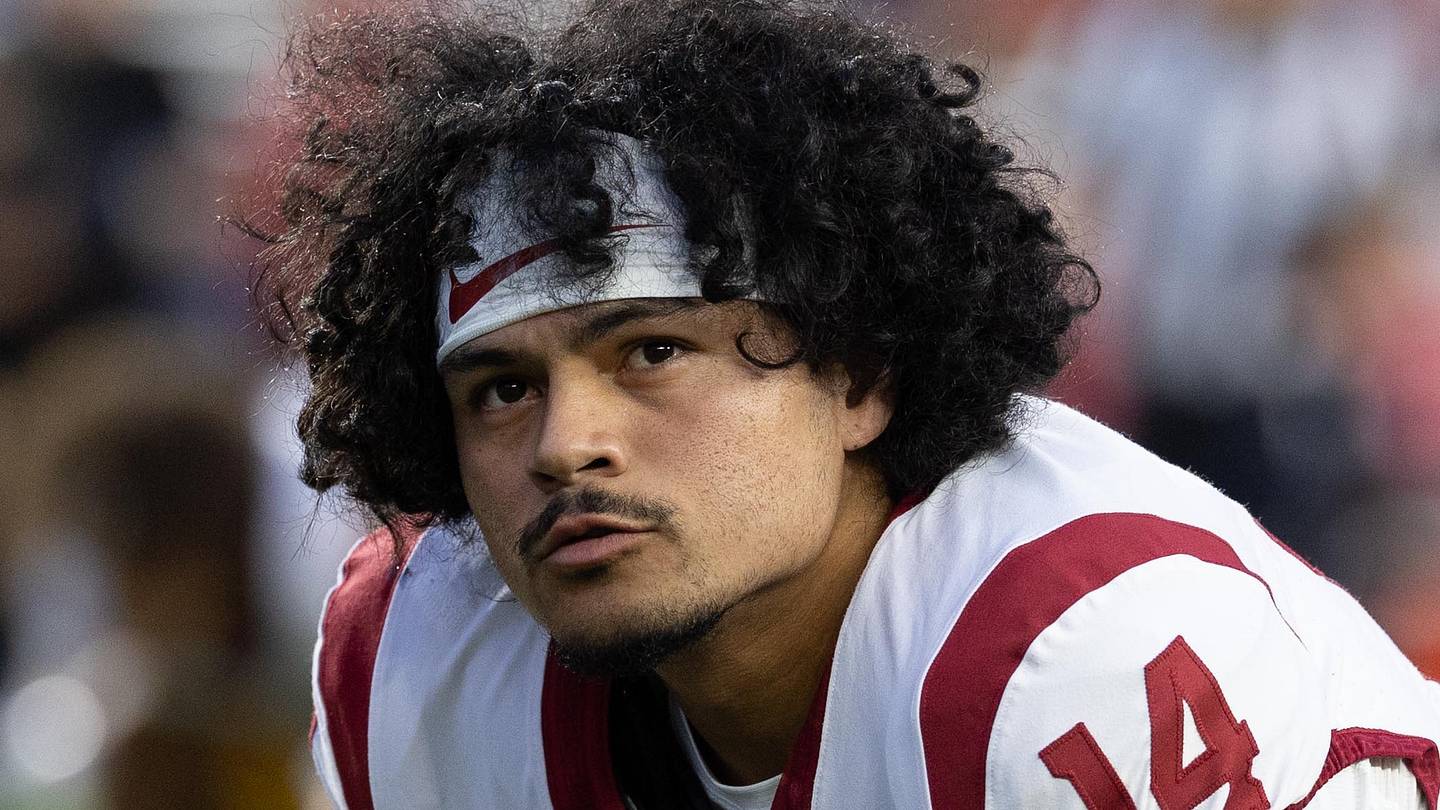
The pressure is compounded by the schedule. After facing a Maryland team that has won two in a row since firing its coach, USC faces a high-stakes crosstown rivalry against No. 4 UCLA at the Rose Bowl. For Maiava, the upcoming game at the Coliseum represents one of his final opportunities to prove he can adapt, not just as a passer, but as the leader Riley expects.
Founded in 1880, USC holds the distinction of being the oldest private research university in California. The institution has long maintained a tradition of athletic excellence, with its Trojan athletes having secured more Olympic medals—including 153 golds—than those of any other American university. Beyond its competitive history, the school also boasts a significant legacy in professional football, having produced the second-highest number of NFL draftees in the country.
“It’s something we’re continuing to push him to be able to do,” Riley said. “Because when defenses have to defend that, it does change the way that the game is played and it can certainly take some stress off of the offense.”
Whether that adjustment arrives in time for the final stretch of his senior year remains the most pressing question for a program fighting to finish on its own terms.
Worth a look

Mark Pope Addresses Need for Consistent Growth After Indiana Loss
Kentucky’s basketball program faces a reality check after falling to 4-2 on the season following a 90-76 defeat...

Atlanta Police Apprehend Male After Armed Kidnapping on Northside Dr SW
Atlanta police officers apprehended a male suspect on Friday afternoon following an armed kidnapping that originated at a...

Boise State Student Films Selected for Sun Valley Film Festival
Two short films produced by students at Boise State’s Film and Television Arts Program have earned a spot...

ECHL Issues Fines and Suspension for Trenton and Maine Players Following Third Period Incidents
Three ECHL players drew discipline from the league office following third-period infractions on November 18. The ECHL Department...