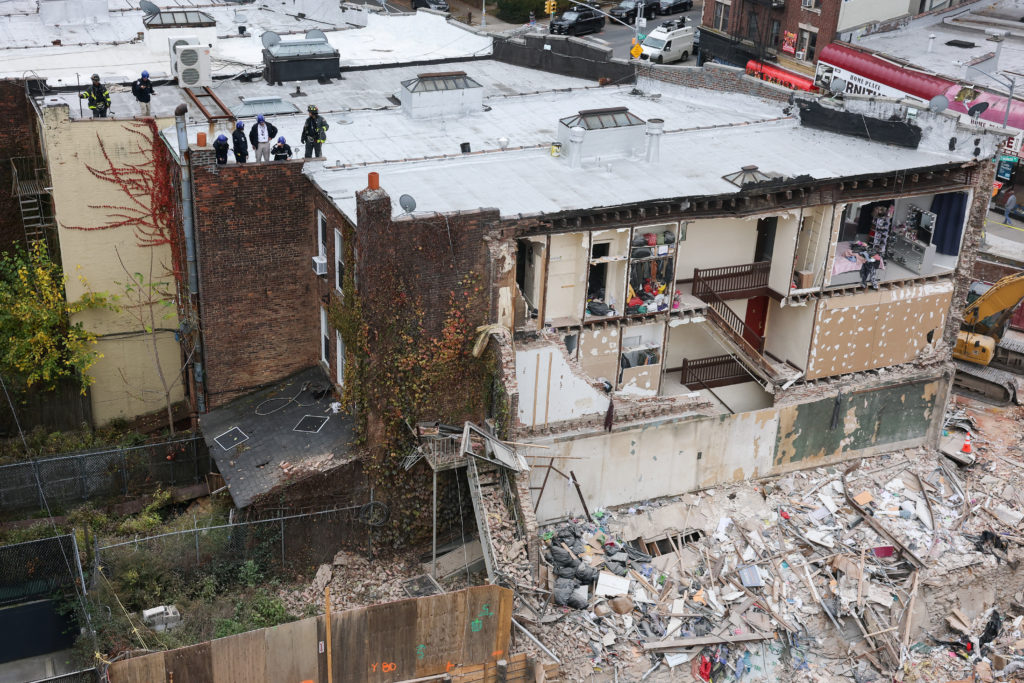
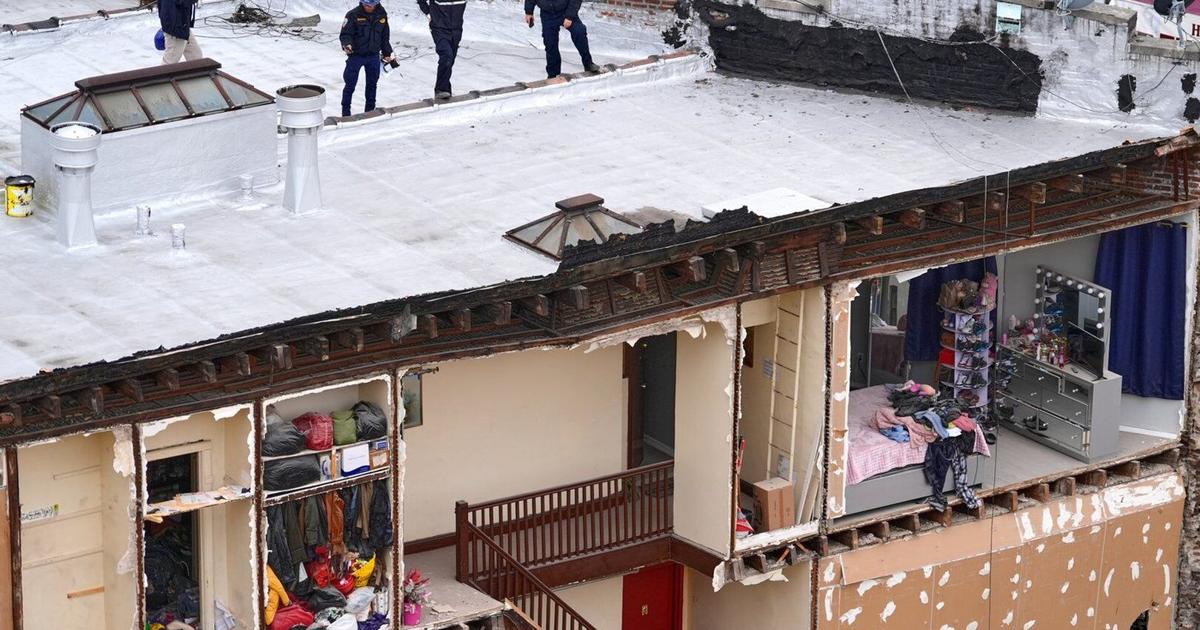
Eight people died on November 11 when a three-story Brooklyn apartment building collapsed into a neighboring construction site, setting off a wave of civil litigation and municipal investigations. Among the dead were two children.
Investigators are examining whether deep excavation work at 2625 Bedford Ave. undermined the foundation of the century-old brick structure at 1321 Flatbush Ave.
Lawsuits filed in the wake of the disaster point to multiple potential failures. Injured construction workers, grieving families, and displaced tenants have named the construction site owner, contractors, the excavation engineering firm, and the owner of the collapsed building in court filings.
Five injured construction workers claim in a lawsuit that the excavation lacked adequate retaining walls, shoring, and underpinning. They allege that work continued even after the building’s facade began to crack.
“The shoring that they were planning to keep the collapsed building up was severely insufficient.”
said Jonathan Damashek, a lawyer representing the injured workers. Damashek accused defendants, including construction manager Townhouse Homes, of failing to prioritize public safety over cutting costs.
Contractor Violations and Liability
The demolition contractor N Tech Design of America was ordered to stop work at the site but continued, according to city records. The company was caught again in April, admitted to both violations, and paid a total of $12,500 in fines.
City officials said that another adjoining building must now be demolished after the collapse peeled away its outer wall. Buildings Commissioner Ahmed Tigani vowed to hold responsible parties accountable, noting that the department is hiring an independent engineering consultant to assist Brooklyn prosecutors.
The New York City Department of Buildings maintained that the initial excavation and support plans complied with municipal requirements. However, the agency requires private inspectors hired by developers to check specific construction stages, and it has not answered whether it responded to a preconstruction survey noting that the adjoining wall was in poor condition with noticeable cracks.
Tenant Dengane Omari Jack stated in a lawsuit that conditions inside the century-old building worsened significantly once construction ramped up next door. Jack reported that when he provided photos of entrance cracks to the landlord, he was told the damage was not the landlord’s fault and could not be fixed.
Olufemi Falade, the owner of the collapsed building, has appeared six times on the public advocate’s “100 worst landlords” roster over the past decade. Falade, a licensed professional engineer, served 12 days in jail in 2006 for failing to fix violations across a dozen buildings.
Then-Housing Commissioner Shaun Donovan once called him “one of the most egregious examples we’ve seen citywide of flouting the law and forcing his residents to live in horrible conditions.” After his release, Falade told the Village Voice that tenants were not paying rent.
While investigations continue, the city is inspecting more than 160 construction sites tied to companies involved in the project at 2625 Bedford Ave. Townhouse Homes, which also operates as Promont, has faced previous lawsuits in 2016 alleging structural damage during a Manhattan renovation project, which it denied.
LMW has faced lawsuits regarding work on excavation sites in Manhattan and Queens. Those past filings alleged property damage, sloping floors, and skipped monitoring testing, with the firm denying liability in the 2015 and 2016 cases while resolving others out of court.
Brooklyn, which is coextensive with Kings County, was originally founded by the Dutch in the 17th century as the town of Breuckelen. Once an independent city, it functioned as a busy port on New York Harbor before being consolidated into the current five-borough structure of New York City on January 1, 1898.
Today, the borough is the most populous in New York City, with a 2020 census population of 2,736,074. Its name, derived from the Dutch town of Breukelen, reflects a history spanning more than 350 years of European settlement on the western end of Long Island.
On Wednesday, housing activists and faith leaders gathered near the site for a vigil. “New housing cannot come at the expense of tenants’ lives,” said Judith Douglas, a tenant advocate in Flatbush.

Mark Pope Addresses Need for Consistent Growth After Indiana Loss
Kentucky’s basketball program faces a reality check after falling to 4-2 on the season following a 90-76 defeat...

Atlanta Police Apprehend Male After Armed Kidnapping on Northside Dr SW
Atlanta police officers apprehended a male suspect on Friday afternoon following an armed kidnapping that originated at a...

Boise State Student Films Selected for Sun Valley Film Festival
Two short films produced by students at Boise State’s Film and Television Arts Program have earned a spot...

ECHL Issues Fines and Suspension for Trenton and Maine Players Following Third Period Incidents
Three ECHL players drew discipline from the league office following third-period infractions on November 18. The ECHL Department...