
In a column for The Washington Post, writer and registered nurse Linda Page reflects on the year her family spent as live-in caretakers of the Ball-Sellers House in Arlington, Virginia, arguing that the reality of 18th-century living was far harsher than modern nostalgia suggests.
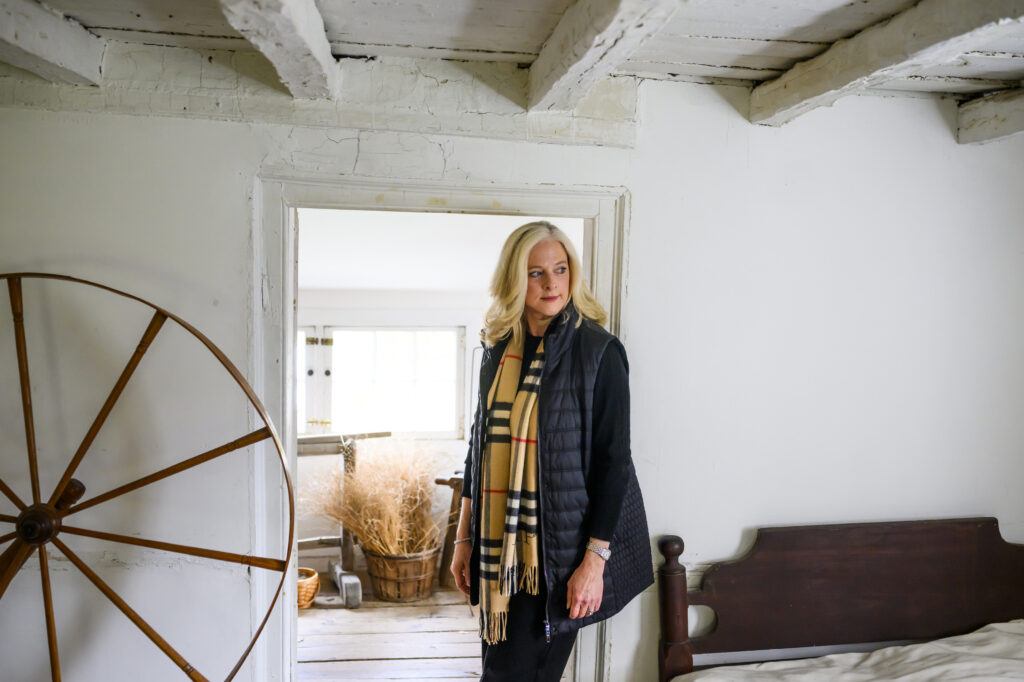
Page writes that in 1975, her parents traded a new suburban home for the mid-1700s log cabin — likely the oldest house in Arlington County — after the Arlington Historical Society struggled to find caretakers willing to endure the property’s condition during restoration. The family lived rent-free in exchange for restoration labor, a deal driven by economics but framed to the children as a pioneer adventure, The Washington Post reported. The house had no insulation, unheated upstairs bedrooms and a single bathroom. Pipes froze regularly. Plaster crumbled in “gravelly chunks” between the original logs, and horsehair was visible in the oyster-shell mixture. Termites, mice and insects were constant companions. Page writes that her allergies triggered a relentless cycle of ear infections and bronchitis; her younger brother developed croup. She recalls waking to “strange, crusted trails on my pillow, the aftermath of a burst eardrum” and her mother boiling pots of water under an umbrella to steam her brother’s airway.
“Pots and pans put away clean usually had an occupied spiderweb in them by morning,” Page’s mother, also named Linda Page, wrote in a 1976 Washington Post article titled “A New Slant on Life in the Rough.” The elder Page described being reduced to tears by termite swarms, a damp root cellar that left dew on floors, and a closet ceiling that collapsed onto her head. The family left after one winter, on a pediatrician’s advice that the children’s health would not improve otherwise.
Page, now a nurse of 35 years who writes on children’s health, returned to the restored museum last week with her husband, stepson, daughter-in-law and three grandchildren — Riley, 11, Camden, 10, and Cooper, 7. The children asked what meat settlers ate most often (rabbit), whether children attended school (most learned at home), and where everyone slept (shared beds, for warmth and economy).
Cooper asked if Elf on the Shelf visited them. “That one, admittedly, stumped me,” Page writes. “You really can’t understand what a historic ‘simpler’ life entails without a time machine,” she writes. “Nostalgia is most useful when it tells the truth.”
Background on the property
Occupancy code standards didn’t apply due to grandfather clauses. Fuses blew so frequently that it wasn’t uncommon for the parents to tell the children they would have to use the nearby library if they needed drinking water, light for homework or a lavatory, which only worked during business hours.
Childhood perspective
“If you look closely at the walls, you can see horsehair mixed in to strengthen the homemade oyster shell plaster,” she would announce in her best docent voice when tour groups or curious neighbors visited. And then: “The antique glass windowpanes are wavy because they were handblown by craftsmen” and “John Ball and his wife raised five daughters.”
Childhood Books and TV Framed Move as Adventure
At the outset, Page’s love of Laura Ingalls Wilder books and the popularity of the “Little House on the Prairie” television series made it easier to accept the family’s framing of the move as a pioneer adventure, The Washington Post reported. She dressed in a colonial costume with a sun bonnet and acted as a willing docent for visitors.
Page wrote that she missed her former home just one block away in the Glencarlyn neighborhood, with its wood-paneled walls, gold shag carpeting, central air and heat, and her floral bedroom with a canopy bed where another girl now slept.
Page Reconnects with House Museum, Visits with Family
After finding and joining the Ball-Sellers House Facebook page, Page connected with its current director, Annette Benbow, The Washington Post reported. She returned to the restored museum last week with her husband, stepson, daughter-in-law and three grandchildren, who asked about settlers’ diets, schooling, sleeping arrangements and whether Elf on the Shelf visited.
Keep reading

Connecticut Health Exchange Shifts Focus to Patient Outcomes
In a column for CT Mirror, Michelle Puhlick argues that Connecticut has built the infrastructure for statewide health...

Zentek Engages Micon International to Lead Albany Graphite Pre-Feasibility Study
Zentek Ltd. said Thursday its subsidiary Albany Graphite Corp. has hired Micon International Ltd. to lead a pre-feasibility...

Albuquerque Man Arrested on Attempted Murder, Kidnapping, Robbery Charges After Hiker Stabbing
A 33-year-old Albuquerque man was arrested this month on charges including attempted first-degree murder and kidnapping after police...

Utah Team Documents Chinese Immigrant Graves at Salt Lake City Cemetery
Plat 1919 was designated for Chinese immigrants, but early tradition of exhuming remains for return to China means...