A massive, months-long fuel leak at the H-Power waste-to-energy facility in Kapolei has ignited a sharp debate over the safety of Oʻahu’s coastline.
While corporate leadership maintains that the contamination is effectively contained, local hydrologists and community members are raising alarms that the island’s complex subterranean geology could act as a fast-track for pollutants to reach the ocean.
The leak, which involved an estimated 400,000 gallons of incinerator fuel, occurred between January and May of this year. According to reporting from Honolulu Civil Beat, the situation has already impacted a sanctuary for endangered native plants, known as the Kīpuka o Kāhinahina, located adjacent to the city-owned incinerator plant.
Reworld, the company contracted by the city to operate the facility, has downplayed the risk of further migration. During a press conference held Thursday in the office of Honolulu Mayor Rick Blangiardi, Reworld Vice President Michael Van Brunt compared the underground spill to water sitting on a flat table.
He argued that the groundwater table on the ʻEwa plain is relatively flat, which he claims keeps the fuel localized near the incinerator site. To support this, the company pointed to a map of 22 monitoring wells installed since May, noting that several wells to the west of the plant have not yet detected the fuel.

“There’s a high potential for any fluid — water or petroleum — to move through that kind of an aquifer quickly.”
said University of Hawaiʻi Mānoa hydrologist Chris Shuler. Shuler challenged the company’s flat-table analogy, pointing out that the ʻEwa plain is defined by a subterranean landscape of limestone, which is riddled with caves, cracks, and fissures. These formations could allow contaminated water to bypass standard monitoring and travel toward the shoreline in ways that are difficult to predict without a full understanding of these underground pathways.
The discrepancy between the company’s assessment and independent scientific concern has caught the attention of federal regulators. The Environmental Protection Agency confirmed on Friday that it has opened an investigation into the spill, citing its proximity to the shoreline. Agency officials have been assisting the state Health Department since August 21, when state authorities first requested federal support, as reported by The Nexus.
For those living near the industrial site, the stakes extend far beyond regulatory compliance. The Kīpuka o Kāhinahina sanctuary, which sits between the H-Power facility and an industrial yard, is one of the last remaining habitats for the endangered ʻEwa hinahina plant.
Ulukoa Duhaylonsod, cultural director and founder of the nonprofit Kauiki o Kapo, explained that these plants rely on the brackish groundwater that is now at the center of the contamination concerns. Industrialization has already depleted the area’s original freshwater layer, and community advocates are now organizing independent groundwater testing to better understand the threat to their home.
The debate shows a gap in transparency. Shuler said that while Reworld has shared some data, the company has not released critical details, such as the specific depths at which their wells are monitoring for contaminants. He cautioned that a two-dimensional map is insufficient when the fuel may be moving at depths that remain unmonitored.
As Ernie Lau, manager and chief engineer for the Board of Water Supply, observed, the area’s 400-foot-thick caprock layer—composed of limestone and muddy clay—will likely force the fuel to flow horizontally toward the coast rather than vertically into the island’s primary drinking water supply. While this may spare the drinking water, it confirms that the shoreline remains the primary point of vulnerability.
The island of Oʻahu, nicknamed “The Gathering Place,” is the third-largest and most populated of the Hawaiian Islands. Spanning 596.7 square miles, it serves as the home to Honolulu, the state capital, and contains about 70% of the total population of the Hawaiian Islands.
The island has long been a focal point of Pacific history, serving as the site of the 1893 coup d’état that ended the Hawaiian monarchy and the 1941 attack on Pearl Harbor that drew the United States into World War II.
As the investigation continues, the community remains focused on the protection of the coastal ecosystem. For residents and volunteers, the issue is personal. As Duhaylonsod told Honolulu Civil Beat, “This is more than just an environmental thing. This is our home. This is the place that we grew up, that we all love. So we malama because we care, because we love this place.”
Worth a look

Santa Fe Distillery Expands Elvira Spirits Line With Vodka and Bourbon, Says Shoemaker
“When the gin was released with Elvira and super successful, we started getting messages from her fans about...

Emily Bickford Asked U.S. Supreme Court to Hear Maine Custody Case
Emily Bickford, a Maine mother blocked from taking her 13-year-old daughter to church without the father's permission, has...

2023 Chevrolet Colorado LT 2LT EPA Fuel Economy 18-20 City/23-25 Highway
The 2023 Chevrolet Colorado LT 2LT arrives with an EPA fuel economy estimate of 18 to 20 miles...
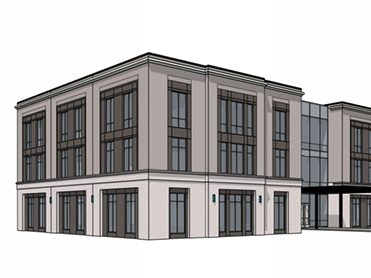
Autumn Hall Three-Story Office Building Plan Under Review in Wilmington
Preparations are advancing for the upcoming building in Autumn Hall, a mixed-use, master-planned community situated near Eastwood Road...