
In a column for Homer News published on Friday Frank Murkowski argues that state leaders must protect existing Cook Inlet natural gas resources before committing to the massive Alaska LNG project.
Murkowski spent much of his public career working to bring North Slope oil and gas to market. He still believes a well-structured Alaska LNG project could add real value to the state economy. But decades of gas line proposals have taught him that how a project is built matters as much as whether it is built.
Before Alaska commits to the pipeline, officials should be clear about what it must do for residents and what it must not do to them. Southcentral Alaskans currently rely on Cook Inlet as their sole natural gas supplier, making its essential infrastructure a direct foundation for affordable energy.
Continued Cook Inlet exploration and investment protects approximately 2,000 jobs and provides energy security. Those jobs represent paychecks for Alaska families, work for local contractors, and the specialized rigs, crews, and operational know-how that would be prohibitively costly to rebuild once lost.
Cook Inlet also provides essential operational redundancy. A single 740-mile pipeline as currently considered should never serve as Southcentral’s only lifeline. Local gas acts as vital insurance against mechanical delays, unexpected outages, and cold-weather demand peaks.
The local supply actively keeps home heating bills manageable. According to data from the U.S. Energy Information Administration, Alaskans’ gas at the home meter ranked as the 12th-cheapest among 47 reporting states, sitting at $13.95 per Mcf in May 2026.
During the winter stretch spanning December 2025 through February 2026—when local demand reaches its annual peak—home meters registered about 10% below the national average. Continued support for Cook Inlet exploration maximizes market competition for the lowest-cost gas delivered directly to residences.
That economic reality is why the Alaska LNG initiative must complement Cook Inlet production rather than compete with it. Executed properly, the new system could serve lucrative export channels, foster economic activity along the transit path, transport gas northward to Fairbanks, and backstop Cook Inlet output if the situation demands it.
The megaproject should add jobs rather than eliminate existing ones, and it must win new markets instead of taking the ones Cook Inlet already serves. If the new pipeline simply displaces Cook Inlet gas, residents gain nothing beyond a longer, costlier supply line and fewer local jobs.
Many residents may not realize that the Alaska LNG project holds federal authorization as an export project under Section 3 of the Natural Gas Act to send liquefied natural gas overseas. Glenfarne intends to construct the pipeline prior to building the export facility, leaving no assurance that the subsequent phase or its financial returns will ever materialize.
In-state gas has remained central to the public pitch. If that is the core promise, it belongs enshrined in the actual permits and contracts. The financial burden and risk of construction must fall on the developer and accredited investors who stand to profit, rather than on state residents.
Alaskans should benefit from the infrastructure rather than bear the exposure so others can profit. Past megaprojects running over budget and behind schedule demonstrate where real financial vulnerability lands. That exposure should not shift to the Permanent Fund, the state treasury, or local families, nor should the state consider waiving traditional corporate taxes.
Glenfarne has taken on the role of developer for Alaska LNG, and developers inherently shoulder developer risk. That responsibility means investing private dollars and underwriting construction. If the firm remains unwilling to do that, Alaskans should recognize its operational role for what it actually is: a marketer rather than a builder.
If that definition holds, the state should limit its economic return accordingly, reflecting a marketer’s limited risk profile. None of this assessment constitutes an argument against Alaska LNG itself. It stands as an argument for executing the undertaking properly.
Large infrastructure projects face frequent delays, and until new systems are fully built and operational, Cook Inlet keeps the lights on. During construction phases, continued local investment will sustain supply and protect those 2,000 jobs. After first gas, local production can blend with pipeline supplies, cover winter demand peaks, and provide necessary backup.
That reliance is felt directly in communities such as Homer, located 218 mi southwest of Anchorage on the shore of Kachemak Bay.
Long known as the Halibut Fishing Capital of the World and nicknamed “the end of the road”, the city is defined by the Homer Spit, a narrow 4.5 mi long gravel bar extending into the water that saw much of its coastline sink dramatically during the Good Friday earthquake in March 1964.
Alaskans cannot afford for Cook Inlet producers to halt drilling operations. Alaska has one clear chance to execute this strategy correctly. The state must keep Cook Inlet strong, hold any developer strictly to its operational responsibilities, and put local residents first.

Santa Fe Distillery Expands Elvira Spirits Line With Vodka and Bourbon, Says Shoemaker
“When the gin was released with Elvira and super successful, we started getting messages from her fans about...

Emily Bickford Asked U.S. Supreme Court to Hear Maine Custody Case
Emily Bickford, a Maine mother blocked from taking her 13-year-old daughter to church without the father's permission, has...

2023 Chevrolet Colorado LT 2LT EPA Fuel Economy 18-20 City/23-25 Highway
The 2023 Chevrolet Colorado LT 2LT arrives with an EPA fuel economy estimate of 18 to 20 miles...
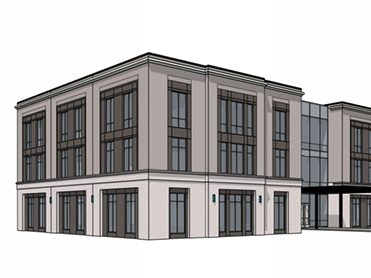
Autumn Hall Three-Story Office Building Plan Under Review in Wilmington
Preparations are advancing for the upcoming building in Autumn Hall, a mixed-use, master-planned community situated near Eastwood Road...