
LSU Coach Will Wade Refuses to Address RJ Luis Jr.’s Eligibility Despite Court Ruling
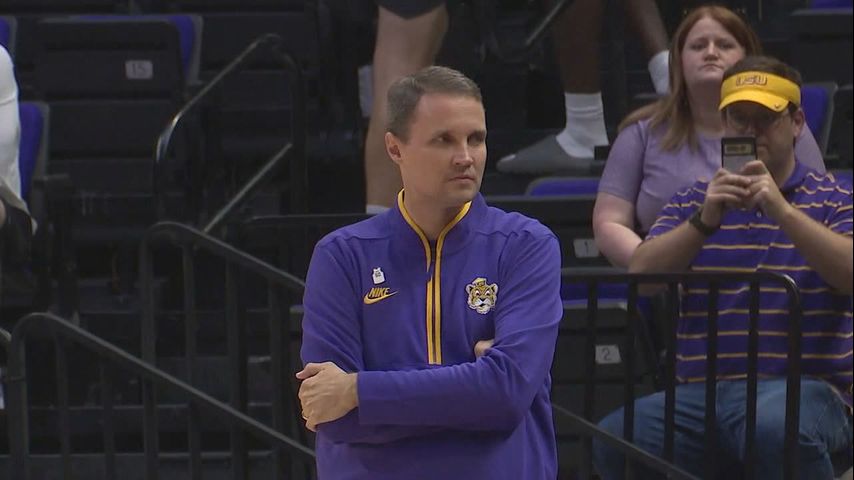
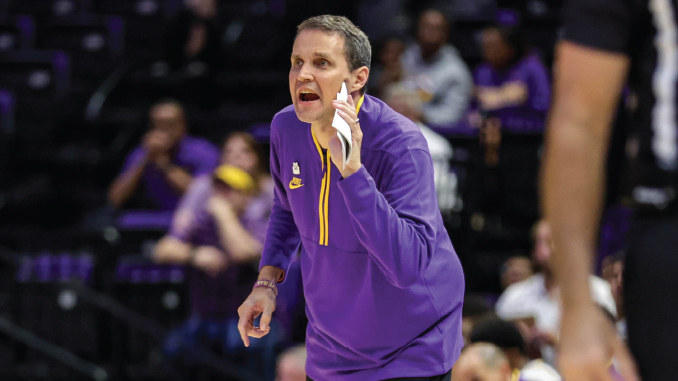
LSU men’s basketball coach Will Wade refused to discuss the eligibility status of guard RJ Luis Jr. during a Thursday press conference, even as a Louisiana judge’s ruling temporarily cleared the player to join the Tigers’ roster. The decision places Wade in a legal and administrative crossfire between the NCAA, the Southeastern Conference (SEC), and a state court that has barred the league from penalizing LSU for playing Luis.
The conflict centers on Luis, a 2025 Big East Player of the Year who left St. John’s to enter the NBA Draft. Despite not being selected, Luis signed with the Utah Jazz and Boston Celtics during the 2025 offseason, a move the NCAA and SEC argue violates their rules against players with professional experience. A state judge issued an injunction that made Luis eligible to play college basketball, and an expansion of that ruling now blocks the SEC from sanctioning LSU if it adds him to the roster.
The Legal Tightrope: Courts vs. Conference Rules
Wade’s refusal to comment shows the precarious position he faces. The SEC has long maintained that players who sign with professional teams—regardless of whether they play in a game—are ineligible for college competition. In September, the conference updated its enforcement policies, granting its commissioner authority to fine schools, suspend coaches, or strip voting rights from members who defy the rules. LSU’s recent decision not to roster players illustrates the stakes: the school avoided potential penalties by complying with the SEC’s stance.
“I’ve made my stance very clear on things, and my stance has not changed,” Wade said, according to Newsday. His silence signals a deliberate choice to prioritize conference protocols over the court’s order. Luis’ attorneys, Elliot Abrams and Tony Clayton, have asserted that failing to roster him could trigger further legal action, but Wade’s stance indicates he is following SEC protocols.
The Human and Institutional Stakes
The case has profound implications for college athletics. For Luis, the fight is about reclaiming his college career after a year of limbo. For the SEC, it’s a battle to preserve its authority over eligibility rules in the face of judicial interference. And for LSU, it’s a test of loyalty to a conference that has historically dictated the terms of its athletic identity.
If courts can override conference rules, it sets a dangerous precedent for the entire system.”
The NCAA’s argument hinges on Luis’ brief professional affiliations.
Dale Brown Celebration of Life ceremonies will be at the site he made the place to be back in the day – the Pete Maravich Assembly Center – on Nov. 11:https://t.co/tKZpLl42yk
What’s Next for LSU and the SEC?
The immediate next step is a Nov. 13 hearing in the case, where the court will determine whether Luis’ eligibility remains in effect. Until then, LSU must deal with a minefield of conflicting mandates. The Tigers’ season opener against LSU-New Orleans will be a critical moment: if Luis is on the roster, it could spark a legal showdown with the SEC. If he’s not, his lawyers may escalate their campaign to force the school’s hand.
Meanwhile, LSU’s roster is already in flux.
If courts can override conference rules, it sets a dangerous precedent for the entire system.”
The Broader Implications for College Sports
The Luis case is part of a larger trend of judicial intervention in collegiate athletics. Over the past decade, courts have increasingly challenged NCAA rules on everything from name, image, and likeness (NIL) policies to eligibility standards.
From the SEC’s perspective, the Luis ruling undermines its authority to enforce its own rules. In a federal lawsuit filed earlier this year, the conference argued that LSU’s attempt to circumvent its protocols violated the First Amendment by infringing on the league’s “expressive association.” The legal battle reflects a deeper tension between institutional control and judicial oversight—a tension that could reshape the future of college sports.
For fans and players, the stakes are clear. If the court’s decision stands, it could open the door for more athletes to challenge eligibility rules, potentially altering the competitive environment of college basketball. But if the SEC prevails, it may reinforce the conference’s dominance over its members, even in the face of judicial pressure.
Redefining College Athletics Boundaries
At its core, the Luis case is a clash between legal precedent and institutional tradition. While the court’s ruling offers a glimmer of hope for athletes seeking second chances, the SEC’s resistance highlights the power dynamics at play in college athletics. For LSU, the decision to side with the conference over the court may signal a broader strategy to uphold its regional authority in an era of increasing judicial scrutiny.
As the Nov. 13 hearing approaches, all eyes will be on Wade, Luis, and the forces pulling them in opposite directions. The outcome could redefine the boundaries of college sports eligibility—and set a precedent that echoes far beyond Baton Rouge.
Worth a look

Understanding microclimates in South-Central Kentucky – WBKO
South-Central Kentucky Experiences a 20-Degree Temperature Split Due to Local Microclimates Foggy and cold weather in one pocket...

Billings eyes more parking at Amend Recreation Campus after busy weekend – KTVQ
“We knew that there was going to be crazy busy,” said Chris Martin, facility supervisor at the Amend...

New Mexico US Rep. Leger Fernández’s bill would require mining companies to pay royalties
New Mexico Rep. Leger Fernández Unveils Landmark Bill to Charge Mining Firms Royalties, Block Foreign Extraction U.S. Rep....

Cole County plans $1.3 million facility renovation – ABC17NEWS
Cole County is planning an approximate $1.3 million renovation of its emergency services building as officials continue exploring...