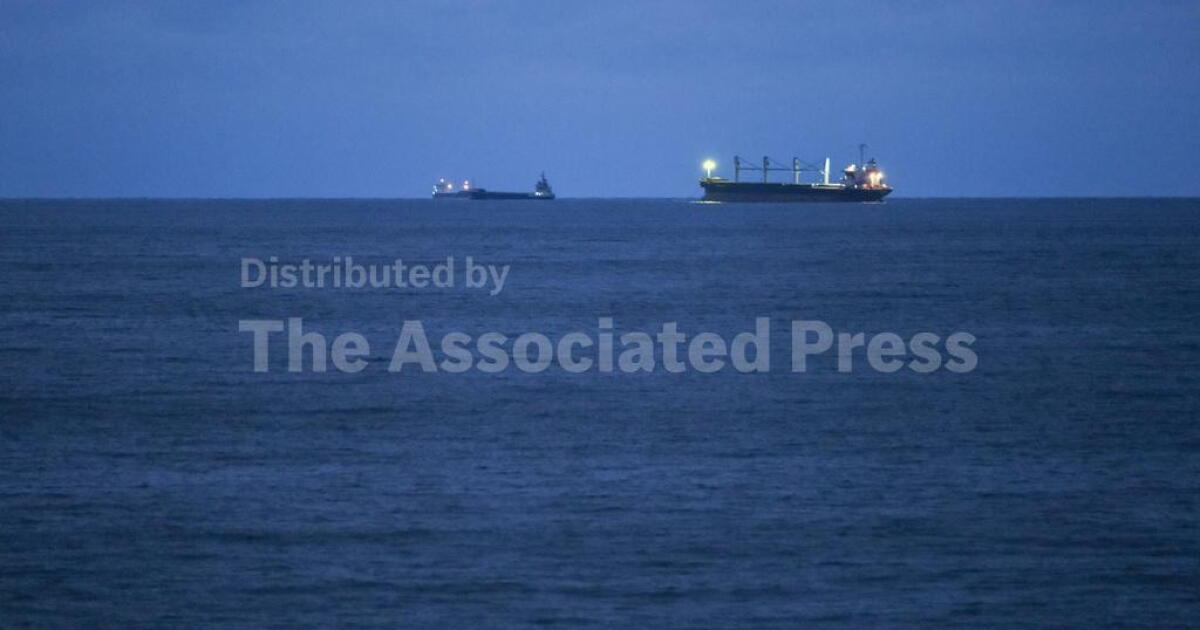
Three maritime drones struck the Liberian-flagged container ship Contship Jet in the Black Sea off the coast of Bulgaria on Wednesday. The attack occurred just before 1 p.m. local time, approximately 21 nautical miles southeast of Shabla, near Cape Kaliakra. All 18 crew members—14 Filipinos and four Ukrainians—were evacuated and rescued by the Bulgarian Navy and border police, then transported to Varna for medical evaluations.
This strike is the latest in a string of attacks targeting commercial shipping on NATO’s eastern flank. The Contship Jet was traveling from Haifa, Israel, to Constanța, Romania, carrying 421 containers of unspecified cargo. The incident happened while defense ministers from Bulgaria, Romania, and Turkey were meeting in Sofia to discuss security in the Black Sea region.
A Pattern of Escalation in NATO Waters
The attack on the Contship Jet isn’t an isolated event; it’s part of a trend that has turned the Black Sea into a high-risk zone for global trade. In October alone, multiple commercial vessels have been targeted within the exclusive economic zones of NATO members. The human cost is already mounting, with two people dead and at least 25 sailors still missing from previous incidents.
The timeline of this month’s instability shows a rapid acceleration of strikes:
- Early October: Two commercial ships attacked in Bulgaria’s exclusive economic zone.
- A week later: The Guinea-Bissau-flagged HS Dignity sank after a strike 17 nautical miles east of Shabla; the Malta-flagged Chelsea 3 was damaged in a separate attack about 17 nautical miles east of Byala.
- October 23: A foreign-flagged cargo ship capsized and sank roughly 13 nautical miles off the Romanian port of Constanta following a suspected drone strike.
The implication is that if the Black Sea becomes a no-go zone for commercial traffic, the cost of goods moving through the region could climb, affecting businesses and consumers.
The Geopolitical Chessboard
While Russia has not claimed responsibility for these attacks, suspicion has fallen on Moscow. The timing and geography suggest a strategic attempt to pressure NATO members and test their resolve regarding Ukraine. By targeting ships in the exclusive economic zones of Bulgaria and Romania, the attacker may be testing the support of NATO members and the alliance’s counter-drone capabilities.
“The logic points in that direction … The problem is that we cannot prove it.” Prime Minister Rumen Radev
Rumen Radev shared this assessment with his country’s Parliament earlier this month, highlighting the frustrating gap between intelligence-based suspicion and forensic proof.
From a strategic standpoint, this aligns with Russia’s repeated efforts to disrupt Ukraine’s maritime economy. Throughout the invasion, Moscow has repeatedly bombarded Ukrainian ports along the Black Sea and the Danube River. This has forced Kyiv to rely on alternative, often more expensive, routes to export grain to Africa and the Middle East. By extending the violence to ships flagged to other nations and sailing in NATO exclusive economic zones, the conflict is extending beyond the Ukrainian coastline.
Bulgaria, Romania and Turkey Demand End to Ship Attacks
The trilateral meeting in Sofia resulted in a joint condemnation from Bulgaria, Romania, and Turkey, who demanded an immediate end to attacks on commercial ships and maritime infrastructure. The three nations agreed to ramp up intelligence sharing and early warning systems to prevent further losses.
NATO Secretary-General Mark Rutte acknowledged the shift in threats on October 15, stating on X that the alliance has strengthened its posture along the eastern flank, specifically by increasing counter-drone capabilities.
As the Contship Jet’s crew recovers in Varna and investigators sift through the wreckage of the last several weeks, the Black Sea remains a volatile corridor.

Cincinnati Volleyball Previews Matches Against Colorado and West Virginia
The Cincinnati volleyball team is traveling to Boulder, Colorado, to play Colorado on Thursday at 9 p.m. ET...

Washington State Suspends Pre-Election Campaign Contribution Limits
Washington state's campaign finance regulators are effectively pausing the rules on how much money can flow into political...

Richmond Kickers Name Brian Ownby as Head Coach
The Richmond Kickers have officially named Brian Ownby as the ninth head coach in the club's history, moving...

Will Hoser runs for Vermont Legislature on platform of fairness
A physician assistant with over 30 years of medical experience in Chester and the surrounding communities is running...