
Maryland and Virginia formally entered the race Monday to host the nation’s first Space Academy, submitting proposals to NASA that lean heavily on existing federal labs and university systems to meet a White House deadline that calls for cadets on campus by 2028.
The applications, due Nov. 16, answer an executive order President Donald Trump signed in August directing NASA to establish a service academy distinct from the others: one that will train scientists and astronauts alongside Space Force officers.
About a dozen states have now bid, including Pennsylvania, West Virginia, Florida, Texas, Alabama, Louisiana, Nevada, Ohio, Arizona, Colorado and Tennessee, according to Maryland Matters, WTOP News, Axios and Virginia Scope. NASA put out a call for applications in September, asking states to share details about site readiness and regulatory considerations.
“The U.S. Space Academy belongs in Maryland. Period,”
Maryland is offering the University of Maryland, College Park as an interim home while it searches for a permanent campus near the NASA Goddard Space Flight Center in Greenbelt. The plan also folds in the University of Maryland Eastern Shore and the Wallops Flight Facility on the Eastern Shore. Moore’s office cited a cluster of assets that reads like a federal org chart: NASA headquarters, the Johns Hopkins Applied Physics Laboratory, NOAA’s Satellite Operations Control Center, the National Security Agency and a dense defense-contractor base.
“We have the talent, the resources, and the assets, as well as a prime location in the heart of the space enterprise,” Moore said in a prepared statement. “Maryland has the best assets in the country to welcome the Space Academy, and we’ll continue to make critical investments to lead the nation in advanced aerospace technology.”
Virginia took a different tack, proposing a permanent 600-acre campus split between NASA’s Langley Research Center and Fort Monroe in Hampton, with a satellite campus at the Mid-Atlantic Regional Spaceport on Wallops Island.
Gov. Abigail Spanberger’s office named a statewide university consortium — Virginia Tech, the University of Virginia, George Mason University, Old Dominion University, Christopher Newport University, Virginia Commonwealth University and Hampton University — to build a unified curriculum covering aerospace engineering, data science, cybersecurity, power systems and aviation. Virginia Tech would lead the consortium to support NASA’s goal of welcoming approximately 300 cadets in 2028.
“With our unparalleled defense footprint and world-class research assets — including NASA’s Langley Research Center — I am confident Virginia can meet the federal government’s ambitious goal and begin training the first class of cadets by 2028,”
“I look forward to working with our entire congressional delegation and federal partners to bring this world-class institution to the heart of Hampton Roads.”
Rep. Bobby Scott, D-3rd District, who represents Hampton, framed the bid as historical continuity: “NASA Langley provided the critical calculations for the Apollo missions and has since become our nation’s leading center for aeronautics research.”
The Pennsylvania wildcard
Pennsylvania’s bid, announced by Gov. Josh Shapiro, puts 300 acres of state-owned land near Pittsburgh International Airport on the table alongside a concrete financial package: $85 million in state funds and a pledge to raise a $200 million private endowment, totaling $285 million. No other state has yet publicized a matching dollar figure.
Shapiro called it a chance to “strengthen and diversify America’s space industry” and noted a bipartisan team of state leaders backed the proposal. “My Administration is all in and we’ve assembled a bipartisan team of Pennsylvania leaders who are committed to this effort,” Shapiro said in a statement.

A timeline that leaves little margin
NASA’s solicitation asks for site readiness and regulatory details. The agency wants to break ground in 2027, enroll the first class of roughly 300 cadets in 2028, and have a permanent campus operating by 2031. Axios reported the Trump administration could announce a winner as early as late December, a pace that would require the selected state to move from paper to dirt in months.
The competition effectively pits the mid-Atlantic’s federal density against the Gulf Coast’s launch infrastructure and the West’s private-sector momentum. Maryland and Virginia argue their proximity to the Pentagon, the intelligence community and NASA’s own headquarters creates a gravitational pull the others cannot replicate. Pennsylvania is betting that land and cash can close the gap.
Virginia’s congressional delegation — both senators and all 11 representatives — signed onto the commonwealth’s proposal, Virginia Scope reported. Maryland’s delegation has not yet issued a joint endorsement.
NASA has not disclosed evaluation criteria beyond the broad readiness factors in its September call for applications.
Keep reading

Sound Ventures’ AI Holdings Approach $9B in Paper Value, LPs to Claim Most Gains
Sound Ventures' two core AI holdings approach $9 billion in paper value, though outside investors will claim most...
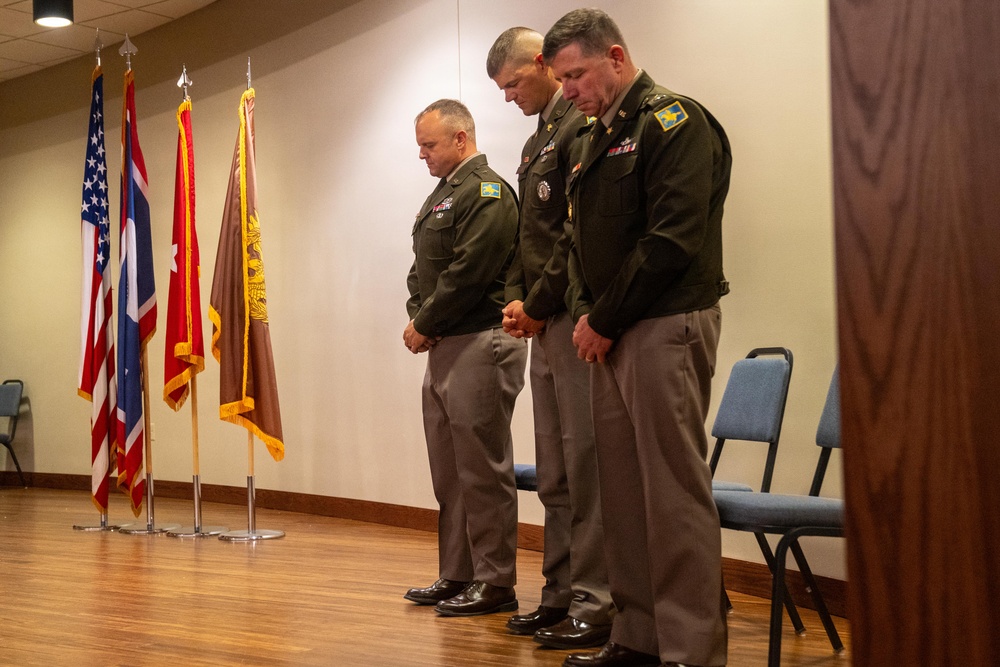
Wyoming Army National Guard Welcomes CW4 Jared Sallee as New Command Chief Warrant Officer
Chief Warrant Officer 4 Jared Sallee took the warrant officer flag at the Joint Force Readiness Center on...

WCIV: Charleston County Confirms Data Removed in Cyber Incident; SLED Investigating
Charleston County IT staff detected unusual network activity Monday evening and confirmed that data was removed from county...

Wisconsin School Districts Achieve 95% Pass Rate on 2025-26 Accountability Report Cards
Wisconsin’s public school districts hit a 95% pass rate on the latest state report cards, with 358 of...