
“Anybody who tells you they’ve figured out AI is not telling the truth,” said Fouad Abd-El-Khalick, provost at the University of Massachusetts Amherst.
A record-low 31 percent of Americans now consider a college education “very important,” a Gallup poll found, down four points from the previous low in 2023. The share calling it “not too important” reached 29 percent, up from 6 percent in 2013.
Colleges in Massachusetts are confronting that skepticism alongside demographic decline, a drop in international enrollment, and federal research cuts. Foreign enrollment fell 2.7 percent to 1.1 million students nationally for the 2025-2026 academic year, the Institute of International Education reported last week. Massachusetts led the nation in lost funding for math and science, the bulk of it for university-affiliated research, a Globe analysis found last May.
“I don’t think we’ve ever had a federal government less supportive of higher education,” said Brandeis University President Arthur Levine.
The Supreme Court last week rejected an administration request to restore tens of millions of dollars in cuts to University of California research grants tied to diversity initiatives, a ruling that could aid universities fighting similar cuts nationwide. UMass Amherst has already lost two top researchers to institutions outside the United States, Abd-El-Khalick said.
At a Charles River Regional Chamber breakfast this month, leaders from four Massachusetts institutions described divergent responses. MassBay Community College, with campuses in Wellesley, Framingham, and Ashland, saw enrollment rise after the state launched free community college tuition in 2023, funded partly by the “millionaire’s tax.”
The college expanded training in nursing, computer science, cybersecurity, and automotive technology.
“We can fulfill our mission better by serving more students,” said David Podell, president of MassBay Community College. “Some of these are first-generation students.”
Lasell University in Newton partnered with hospitals to train surgical, respiratory, and radiology technicians. It also operates a preschool, an online high school, and an on-campus senior residence where residents must take courses.
“We’re teaching from six months old to over 100 years old,” said Eric Turner, president of Lasell University.
Liberal arts colleges are seeking closer ties to employers. Levine described the goal as planting “one foot in the library… and one foot in the street.”
On AI, Abd-El-Khalick said employers recognize its importance but remain uncertain how to deploy it. “An analysis of the job descriptions out there shows that everybody’s asking for AI use in the workplace,” he said. “But when you dig deeper, they don’t know what they want” to use it for.
“At UMass Amherst, we’re trying to challenge our faculty to fill that void.”
Asked whether universities were “indoctrinating” students, Levine replied, “Yes.” After a pause, he added, “We’re indoctrinating them into the American dream … We’re showing students that education is a pathway to a better career. It’s also the pathway to a stronger nation.”
Keep reading
Kansas City Earns Perfect FIFA Hotel Score, Ties for Top Fan Festival Rating in 2031 Women’s World Cup Bid
Kansas City scored perfect marks for hotels and tied for the best fan festival rating in FIFA’s evaluation...
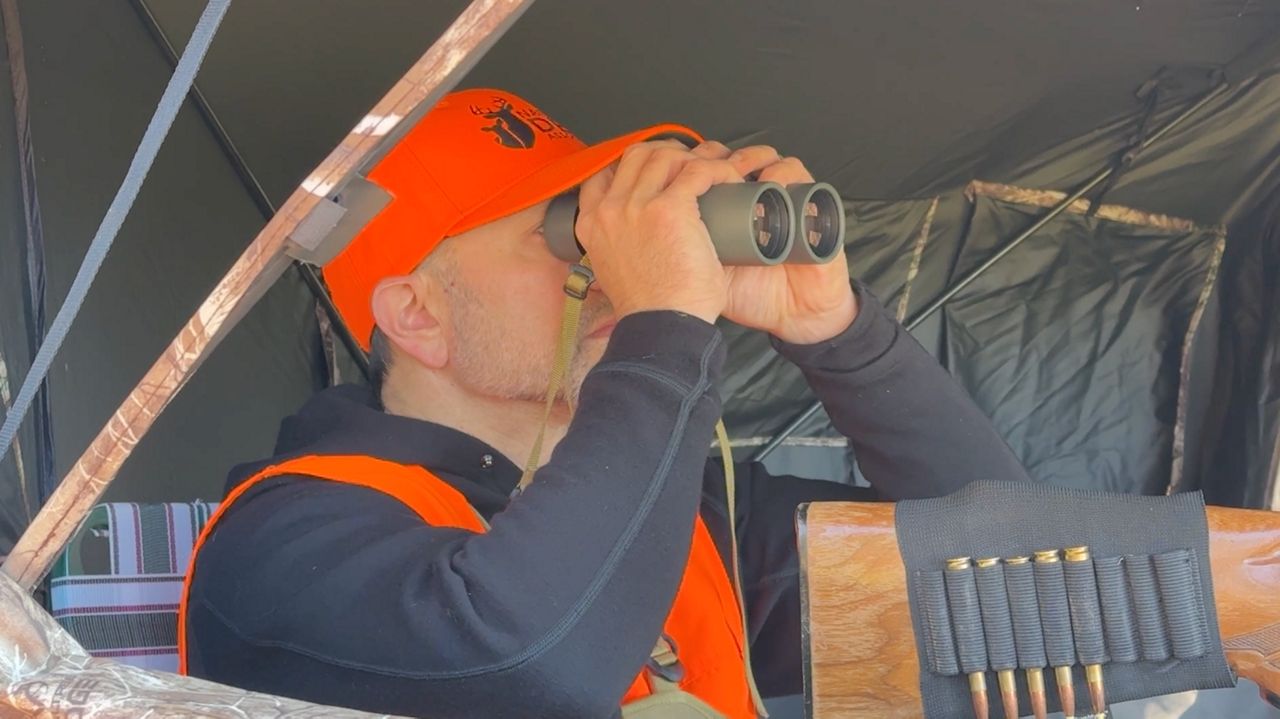
Two Hunters Dead, One Injured in Wisconsin Deer Season Opener, DNR Urges Tree Stand Safety
Three hunters died during the opening weekend of Wisconsin's nine-day gun deer season, prompting the Department of Natural...

West Virginia AG Withdraws Subpoenas After Judge Rules They Violate First Amendment
West Virginia Attorney General JB McCuskey withdrew all investigative subpoenas targeting at least six environmental groups on Monday,...

Seattle U’s Jones Earns WCC Player of Week With Triple-Double; Portland’s Mangan Takes Freshman Honor
Seattle U forward Cristina Jones and Portland guard Sara Mangan earned West Coast Conference weekly awards announced Monday,...