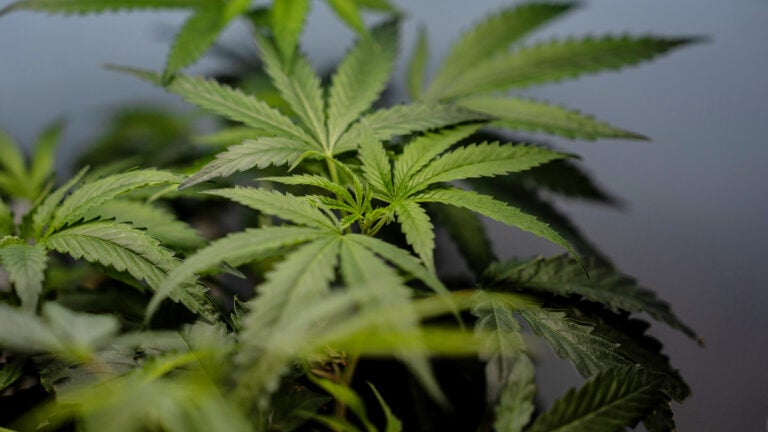
Nearly 76 percent of Massachusetts voters said no to Question 8, with the Associated Press calling the race around midnight Wednesday after roughly 48 percent of ballots were counted—a three-to-one margin that delivered what boston.com reported as a major victory for the state’s cannabis industry in Tuesday’s 2026 midterm election.
The question would have banned recreational marijuana sales outright, repealed laws letting residents grow cannabis at home, and rewritten possession penalties based on age and amount. With its defeat, dispensaries keep operating under the recreational framework legalized about a decade ago, and the industry keeps the momentum of a market that has already crossed $10 billion in all-time gross sales.
Three-to-One Against the Ban
The numbers tell the story plainly: about 24 percent of voters backed Question 8, while nearly 76 percent opposed it. That gap wasn’t close, and it arrived early—with less than half the votes in, the outcome was already clear enough for the AP to project.
The industry supports more than 18,000 jobs, according to Jordan MacKenzie Whittaker, director of marketing and communications at New Dia Fenway, a large multi-level dispensary that actively campaigned against the measure.
“The votes are speaking for themselves,” MacKenzie Whittaker told boston.com Tuesday night, “that the cannabis industry is welcomed here [and] is protected.”
What Question 8 Would Have Changed
Beyond banning retail sales, the measure would have stripped away home-growing rights and altered how possession is penalized depending on who has it and how much. A yes vote would have forced recreational shops like New Dia Fenway to pivot to medical-only licensing—a shift MacKenzie Whittaker said would significantly affect the business, which sees about 250,000 new customers annually.
Kristin Rogers, co-founder and CEO of LEVIA, a cannabis-infused beverage brand in Georgetown, put the stakes in personal terms for her 20 employees. The loss of recreational retail sales, she said, would have been “devastating” and forced the company to consider cuts.
“We’ve got so much more opportunity to do stuff with this plant,” Rogers told boston.com. “And to cut us off right now, I mean, seriously, backwards … It just feels like such a giant step back.”
A $10 Billion Market Holds Its Ground
Adult-use establishments grossed more than $1.65 billion in sales in 2025 alone, according to the state’s Cannabis Control Commission, and the industry recently passed $10 billion in all-time gross sales. newsbreak.com reported the same figures, underscoring how entrenched the market has become since legalization roughly a decade ago.
That scale is why opponents framed the repeal effort as a threat not just to big retailers but to hundreds of small businesses woven into the state’s economy.
The Concerns That Didn’t Prevail
Question 8 didn’t appear out of nowhere. Supporters raised public health alarms about cannabis products designed to look like familiar cookies and candies, and the risk of children accidentally ingesting them. Those concerns gave the repeal campaign its moral footing, even as it collided with the reality of a multibillion-dollar industry and the jobs it supports.
The framework governing that legality remains the state’s recreational marijuana law on mass.gov, unchanged by Tuesday’s result—and with 76 percent of the vote, the industry’s place in Massachusetts looks secure for now.

New Orleans Saints and Pelicans Announce New Partnerships Leadership Team
In a LinkedIn post signaling a major push to grow corporate revenue, Erica Bernadas announced that the partnerships...

Kansas Weather Forecast Predicts Rain and Weekend Warm-Up
Wake-up temperatures across Kansas dipped into the 30s and lower 40s this morning, and when the breeze is...

Democrats flip four Des Moines metro House seats in Iowa on Nov. 3, 2026
Republicans entered Tuesday's midterm elections with a 66-seat majority in the 100-member Iowa House and a winning streak...

Utilization Review Manager – Medical & Behavioral Healthcare Jobs
NeuroPsychiatric Hospitals reported that its two Indianapolis facilities — Medical Behavioral Hospital of Indianapolis and NeuroPsychiatric Hospitals of...