Massachusetts Voters Uphold Major Gun Safety Law, Rejecting Repeal Effort
“This victory belongs to the people of Massachusetts, who through their votes said a resounding yes to protecting this legislation and keeping our communities safe from gun violence,” said Ruth Zakarin, Chair of Yes on 9 for a Safe Massachusetts.
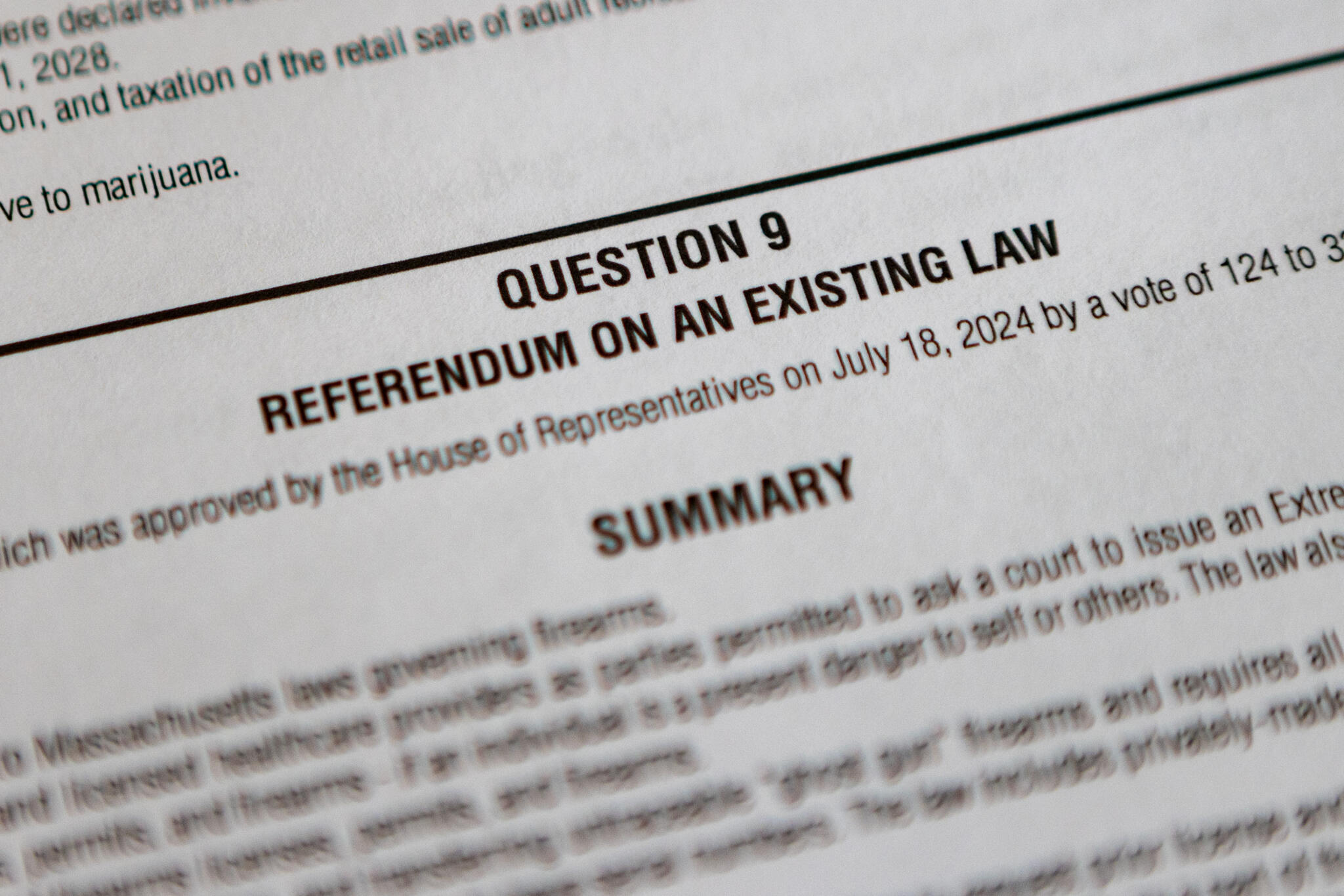
Massachusetts voters have decided to keep a sweeping 2024 gun safety law on the books, rejecting a ballot initiative that sought to repeal it, WBUR News reported. The Associated Press called Question 9 Tuesday night, affirming the regulations that have been phasing in across the Bay State over the past two years and cementing the state’s position as a national leader in firearm restrictions.
The law, which Governor Maura Healey signed in 2024 and called the state’s “most significant gun safety legislation in a decade,” adds a comprehensive suite of new requirements for firearm licensing, training, and data collection. A critical deadline passed just last week requiring all Massachusetts gun owners to register their firearms with the state, marking one of the final major provisions to take effect under the measure.
This vote represents a major test of public support for gun control measures in a state where firearm regulations have historically enjoyed broad backing. The result suggests that even as national debates over gun rights intensify, Massachusetts voters remain committed to maintaining strict oversight of firearms within state borders.
The regulations have been rolling out gradually since Healey signed the bill, with various provisions taking effect at different intervals over the past two years. State officials say the staggered implementation was designed to give gun owners, retailers, and law enforcement clear timelines for compliance. The registration requirement that took effect last week represents the most sweeping change for individual owners, creating a state registry that did not previously exist for all firearms.
New Rules for Owners, Sellers, and Schools
The legislation touches nearly every corner of gun ownership in Massachusetts. It banned firearms from polling places and made it a crime to carry weapons inside government buildings, closing what supporters called dangerous loopholes in public safety. The ban on firearms at polling places addresses concerns about voter intimidation, while the prohibition in government buildings extends protection to DMV offices, courthouses, and other public facilities where tensions can run high.
The law also expanded the state’s “red flag” provisions, adding healthcare workers and school administrators to the list of people who can petition courts to have firearms temporarily confiscated from individuals considered a threat to themselves or others. The expansion of red flag laws to include these professionals reflects a growing emphasis on early intervention. These workers often see warning signs before a crisis occurs, and the law gives them a direct legal pathway to ask courts to temporarily remove firearms from people who pose risks.
For the first time, Massachusetts cracked down on so-called “ghost guns”—untraceable, homemade firearms built from 3D printouts or kits. Those weapons now require a serial number, giving law enforcement a way to trace them when they appear at crime scenes. Ghost guns have become a particular focus for police because they lack serial numbers, making them impossible to track through traditional channels. By requiring serial numbers on homemade firearms, Massachusetts aims to close a loophole that has allowed untraceable weapons to flow into communities.
The law also broadened the definition of “assault-style firearm” and added regulations on products that can make semi-automatic weapons function like automatic ones. The broadened definition targets specific cosmetic and functional features that lawmakers say increase the lethality of certain semi-automatic rifles, while the restrictions on conversion devices address aftermarket products that can modify standard weapons to fire at rates comparable to fully automatic firearms.
Anyone applying for a gun permit must now complete expanded safety courses that include live-fire training, instruction on safe storage practices, and suicide prevention education. Supporters point to data from the Centers for Disease Control and Prevention showing that in 2024, more than half of all deaths attributed to firearms were from suicide, arguing that the training requirements address a critical public health crisis. The new training requirements go beyond basic safety to address the reality that most gun deaths in the state involve suicide rather than homicide.
Massachusetts has long maintained one of the lowest rates of gun deaths in the country, a statistic backers say reflects the state’s tight regulatory environment and now serves as vindication for the new restrictions.
Campaign Alignments and Opposition Arguments
The “yes” campaign drew support from Governor Healey, state and federal lawmakers, and a coalition of labor unions. They framed the law as essential protection for communities, emphasizing that the measures keep residents safe from both interpersonal violence and self-harm.
Gun rights advocates mounted a signature-gathering campaign to place the repeal measure on the ballot, arguing that the law is confusing to comply with, damages longstanding hunting traditions, and places an undue enforcement burden on local police departments already stretched thin. The “no” campaign was backed by gun rights organizations, a number of firearms stores, firing ranges, and local gun clubs.
Opponents argued that the registration requirement creates a database that could be misused, while the assault weapon ban and restrictions on conversion devices infringe on rights protected by the Second Amendment. Local police chiefs in some communities also raised concerns about the administrative burden of enforcing the new regulations alongside existing duties.
Courts Could Still Intervene
Despite the electoral victory for supporters, the legal battle over the law is far from over. Gun rights advocates have also challenged the legislation in court, arguing that it violates Second Amendment rights to bear arms. Those lawsuits remain ongoing, meaning the courts could return a different decision than the voters and potentially strike down portions of the law in the months ahead.
For now, every provision of the 2024 law remains fully in effect across the Commonwealth.
Keep reading

Maranatha Village Offers Comprehensive Senior Living in Springfield
For families weighing senior living options in southwest Missouri, the decision often comes down to a single question:...

How to Watch Indiana Fever basketball on Prime Video
To find Indiana Fever basketball on Prime Video, go to the Sports section, which appears in the top...

Georgia Living Center: Assisted Living in Tallapoosa from $2,030/mo
Georgia Living Center Lists $2,030 for Assisted Living, $1,629 for Independent Living in Tallapoosa CareScout reported that Georgia...

2026 Capitol Christmas Tree Travels 3,000 Miles with Boise Cascade
Boise Cascade Will Haul the 2026 U.S. Capitol Christmas Tree Nearly 3,000 Miles from Idaho to Washington, D.C....