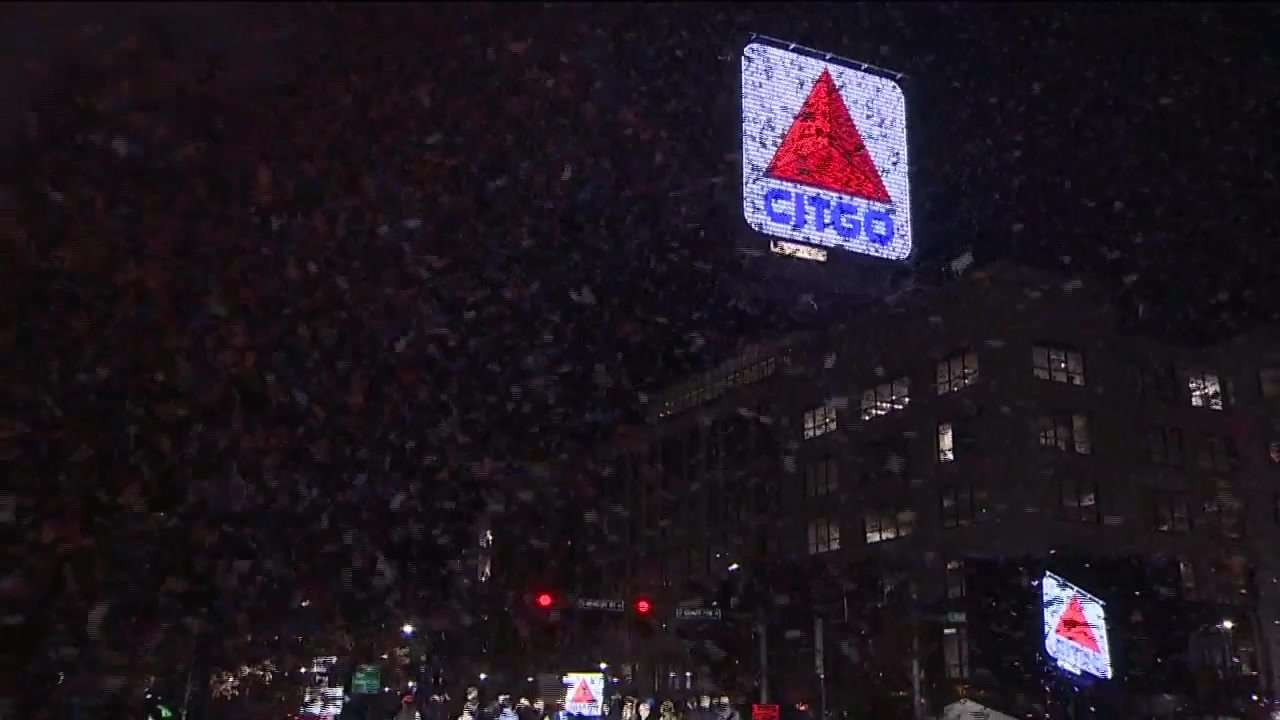
Hundreds of people packed Kenmore Square Thursday night as Mayor Michelle Wu flipped an oversized switch, sending the rebuilt CITGO sign blazing back to life after six months of darkness.
The relighting ceremony capped an $8 million, federally approved project that dismantled the deteriorating 1965 landmark in May 2026 and reconstructed it 30 feet higher and 120 feet east of its original perch atop 660 Beacon Street, Boston University reported. The double-sided LED structure now sits on a different section of the same rooftop, positioned to remain visible as surrounding development continues to rise.
“It reminds us of…the home that Boston represents,” Wu told the crowd. “As the city changes, as highways have gone underground, as our communities have grown, as everything continues to evolve, some things don’t change.” She added that the sign serves as a beacon to newcomers: “We will always have a home for every person here. We will always leave a sign on for you.”

“CITGO means belonging. It means identity. It means resilience and … for many, it means hope.”
Edgar Rincon, CITGO Executive Vice President and Chief Operating Officer
The festivities, which ran from 6 p.m. to 8 p.m., carried a New Year’s Eve energy. A giant screen counted down from ten before the switch was thrown. Confetti rained down as the Boston University Pep Band and Berklee College of Music students launched into “Sweet Caroline,” the unofficial anthem of the Red Sox.
Earlier, the BU Pep Band marched up Commonwealth Avenue playing “Shipping Up to Boston,” while Berklee’s House Band covered Earth, Wind & Fire and Whitney Houston hits, the Boston Globe reported.
Arthur King, the Massachusetts native and Pittsfield resident who designed the original sign and coined the name “CITGO” more than 60 years ago, sat onstage with his wife and received a standing ovation when acknowledged. “Generations of Bostonians are reminded that when we see this light, we know we’re home,” Wu said later, according to WHDH.
A landmark for runners and residents
The sign’s significance extends well beyond corporate branding. For Boston Marathon runners cresting the hills of Brookline, the red triangle signals the final mile before the finish line on Boylston Street. For Red Sox fans, it frames home runs clearing the Green Monster. For Back Bay residents Terri and Bob McShane, ages 64 and 68, it serves as a navigational anchor during evening walks along the Esplanade.
First-year BU students who had never seen the sign lit described the absence as jarring. “Where did it go? I remember there was a big ass sign there,” Mia Pisacane, 19, recalled thinking. Matthew Rivadeneyra, 18, called the relit version “surprisingly bright and vibrant.” Claire Chilbert, 18, said the ceremony felt like an “encapsulation” of her first semester.
Surviving hurricanes, nor’easters, and demolition threats
The current structure dates to 1965, replacing a 1940 predecessor. It has weathered hurricanes, nor’easters, and a serious demolition threat in the 1980s before preservationists and the city rallied to save it. Previous refurbishments occurred in 2004 and 2010, but this latest overhaul was driven by structural deterioration deemed beyond repair.
CITGO funded the entire project, executed by Suffolk Construction. The redevelopment of 660 Beacon Street, which began in April 2025, necessitated the move. The sign’s new coordinates—higher and farther east—were calculated to preserve sightlines from the Charles River, the BU Bridge, and the Mass Pike approach.
“I know that I’ll remember it for the rest of my life. Our whole team will.”
Shaydon Smith, Suffolk Construction Superintendent
Jack Fleming, President and CEO of the Boston Athletic Association, emphasized the sign’s role for athletes: “From a marathoner’s perspective, coming down Beacon Street, right here, when you reach it, it’s welcoming you. It speaks to marathoners. It calls them, it cheers them.”
Pam Beale, co-owner of Cornwall’s—Kenmore Square’s oldest continuously operating restaurant and president of the Kenmore Square Business Association—put the neighborhood’s stake plainly. “The sign means the world to our little corner of the city,” she said.
“My husband, John, and I have been operating a business in this neighborhood for over 60 years. We have seen a lot of change, and all of it great, wonderful progress. New people every year. The students move in—we love it…. [But] one thing has always remained: the sign.”
CITGO traces its roots to 1910, when Henry Latham Doherty founded Cities Service to supply gas and electricity to small public utilities; the company completed the nation’s first long-distance high-pressure natural gas pipeline in 1931.
The CITGO brand was introduced in 1965 for Cities Service’s refining and marketing operations, and the name was coined by sign designer Arthur King. The current corporation was formed in 1983 as a spinoff of Cities Service assets and is majority-owned by PDVSA, the Venezuelan state oil company.
The letter “C” from an earlier version of the sign remains on display inside Cornwall’s, a physical reminder that while the technology has shifted from neon to LED and the structure has migrated across the roof, the symbol endures.
Worth a look
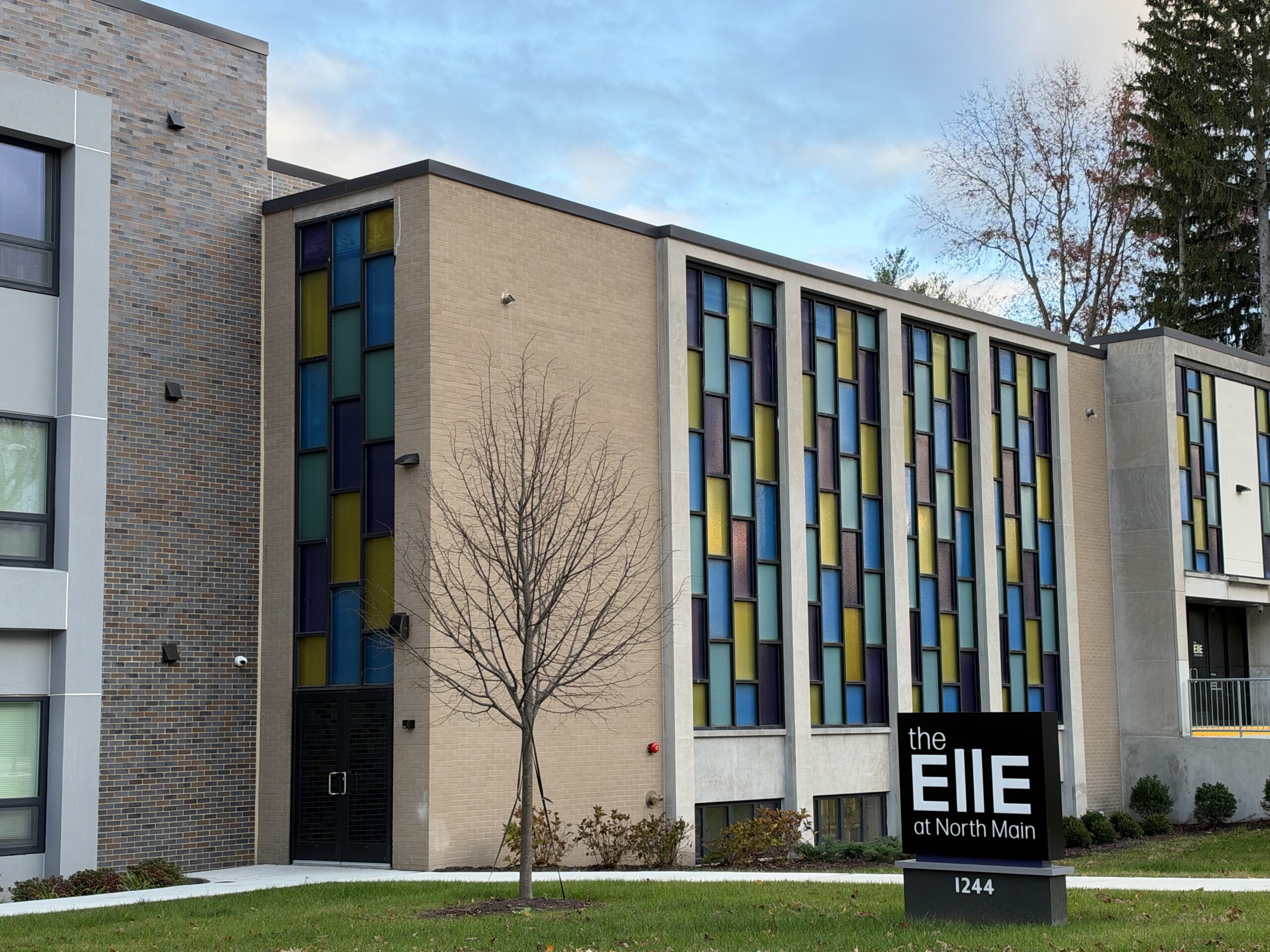
The Elle: Former West Hartford Synagogue Reimagined as 49-Unit Housing Development
"This is our first adaptive re-use," said Jill Corrado, executive director of the West Hartford Housing Authority. "It’s...

From Ruby Bridges to 2026 Vouchers: The Segregation Academy Playbook Never Left
Sixty-six years ago this month, four federal marshals walked a six-year-old girl named Ruby Bridges into William Frantz...

Minnesota 85, Oklahoma State 70: Gophers Pull Away in Second Half to Win Charleston Classic Opener
Minnesota picked up an 85–70 win over Oklahoma State in the Shriners Children's Charleston Classic on Friday, shooting...

Blue Sucker Lives 131 Years, Tripling Previous Estimates, Study Finds
A fish swimming in the Upper Missouri River today hatched before Montana was a state, before the Titanic...