
Mercury reached its greatest western elongation on 20 November, placing the innermost planet far enough from the Sun’s glare to be seen low in the pre-dawn sky for the next several mornings.
The geometry means Mercury now sits about 20° west of the Sun, rising roughly an hour before sunrise and climbing to around 7° above the horizon at magnitude –0.5. For observers at mid-northern latitudes, the best window falls between 06:00 and 06:15 GMT, when the sky is still relatively dark enough to pick out the planet’s modest glow as The Guardian notes.
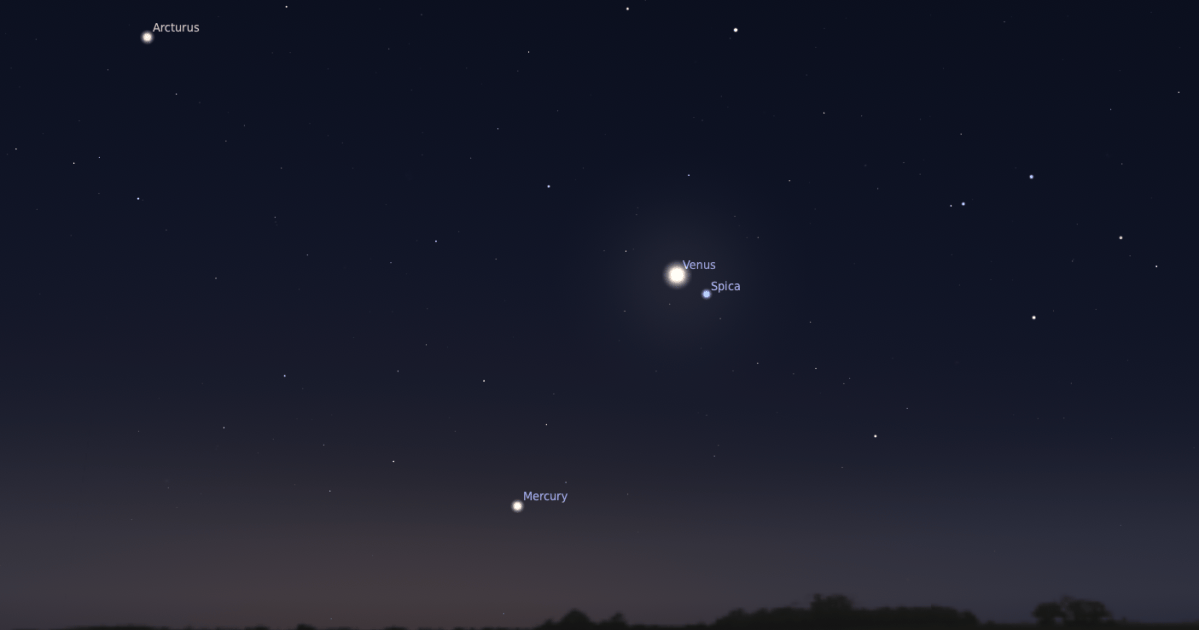
Venus acts as the bright signpost. On the morning of 24 November, Venus shines high in the east-south-east, close to Spica, the brightest star in Virgo.
Mercury appears below and to the left of Venus, a faint, star-like point easily mistaken for a dim star, per the Starwatch chart for London. An unobstructed horizon toward the southeast is essential; trees or buildings will hide the planet entirely.
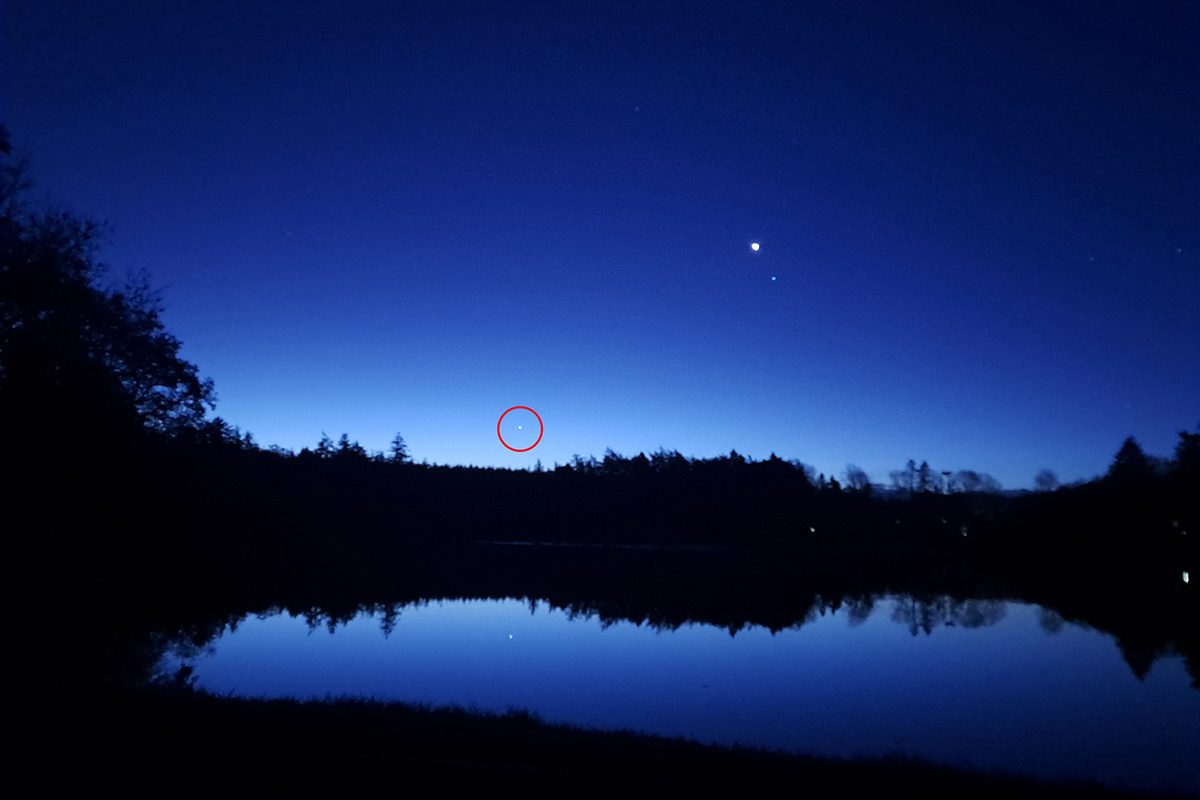
BBC Sky at Night Magazine’s Iain Todd captured both planets on 20 November from a UK park using a Samsung Galaxy A53 smartphone, confirming Mercury was visible to the naked eye once the observer knew where to look in his first-hand account. He noted Mercury remained below the horizon at 06:00 UTC but appeared about 35 minutes later as twilight began to brighten the sky.
If you have a telescope, the two planets offer a striking phase comparison. Venus shows a slender crescent, only 19% illuminated, yet its disk spans 46 arcseconds — currently larger than Jupiter’s apparent size.
Mercury, though much smaller at 7 arcseconds, displays a fatter gibbous phase at 62% illumination, per Astronomy Magazine’s observing notes. That gibbous phase will grow to about 84% lit by month’s end as Mercury swings closer to the Sun from our perspective.
Viewers south of the equator will see Mercury lower above the horizon at the same elongation, making it significantly harder to spot, as the Starwatch column warns.
Binoculars make the initial search easier, especially in light-polluted suburbs. The Guardian’s guide stresses stopping binocular use before sunrise to avoid accidentally sweeping the optics across the dangerously bright Sun.
Naked-eye confirmation is possible once you know the spot; Mercury’s steady, non-twinkling light distinguishes it from nearby stars.
BBC Sky at Night Magazine relates that the late Patrick Moore once observed you wouldn’t notice Mercury unless you were deliberately looking for it. The planet is dim, close to the horizon and only visible for a short while before sunrise, making it easy to mistake for a faint star if you are not actively searching.
About 30 minutes later, as twilight began to brighten the sky, he spotted the planet below and to the left of Venus using a Samsung Galaxy smartphone.
Both planets remain morning objects through December, offering repeated chances for early risers. BBC Sky at Night Magazine encourages readers to share images of the pairing through the holiday season in its call for reader submissions.
Mercury will gradually sink back toward the Sun, so the next week or two represent the most favorable viewing geometry of this apparition.
Related reading

Ottawa Tables Motion to Expand Expropriation Powers for Alto Rail
Ottawa moved Friday to strip away the remaining standard expropriation rules for the Alto high-speed rail project, posting...

New Imaging Framework Links Schizophrenia Cognitive Deficits to Disorganized, Rigid Brain Network Dynamics
Researchers have introduced a new imaging framework that links cognitive deficits in schizophrenia to disorganized and abnormally rigid...
Samsung to Drop 3x Telephoto and Laser Focus on Galaxy S27 Ultra
Samsung's Galaxy S27 Ultra is expected to lose its dedicated 3x telephoto camera and laser autofocus module, dropping...
Beaver Moon Begins Four Supermoons Through February 2027
November's Beaver Moon reaches peak illumination at 9:53 a.m.