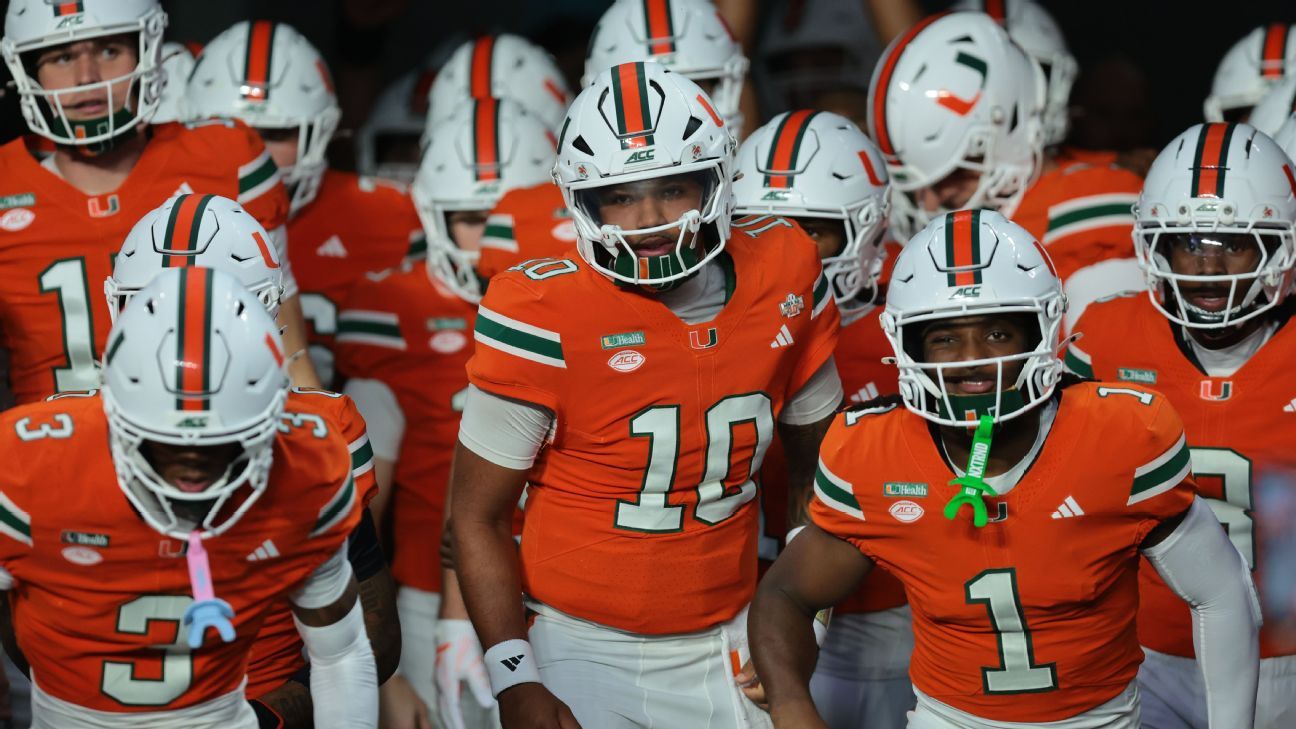
The Miami Hurricanes have claimed the No. 1 spot in the first College Football Playoff rankings of the season, leading a top four that includes Georgia, Utah, and Indiana. According to ESPN, these four teams would currently secure first-round byes in the 12-team bracket if these rankings held through the end of the regular season.
The release of these initial rankings on Tuesday night signals a season defined by extreme parity and unexpected climbs. While Miami wasn’t even in the committee’s top 10 until the final stretch of last season, the unbeaten Hurricanes now sit atop the national hierarchy. Behind them, the Bulldogs, Utes, and Hoosiers round out the elite tier, setting the stage for a postseason landscape that looks vastly different from previous years.
How do the top 12 rankings shape the playoff bracket?
Under the current 12-team format, the selection committee’s decisions carry immediate weight for postseason scheduling. As reported by NCAA.com, the top four teams—Miami, Georgia, Utah, and Indiana—earn automatic first-round byes. This structure provides a massive competitive advantage, allowing these programs to bypass the opening weekend of the playoffs.
THE CFP TOP 25 HAVE BEEN REVEALED 👀 Agree with the list? 🤔 pic.twitter.com/c4D5MF5GCc
The remaining seeds from 5 through 12 are scheduled to face off in first-round matchups, with the higher-seeded teams hosting those games on their own campuses. Based on the current rankings, the opening slate would feature Boise State at Alabama, BYU at UCLA, Notre Dame at Kentucky, and Ole Miss at Texas. Because five conference champions are guaranteed a spot, the current No. 12 seed, Ohio State, could be replaced by No. 25 Boise State if the Broncos secure their conference title.
The current composition of the top 12 reflects a heavy dominance by the SEC, which holds five spots, followed by the Big Ten with three. The Big 12 holds two positions, while the ACC and independent Notre Dame each have one representative in the top 12. The following table breaks down the current top 12 standings:
| Rank | School | Record |
|---|---|---|
| 1 | Miami (FL) | 8-0 |
| 2 | Georgia | 7-1 |
| 3 | Utah | 8-0 |
| 4 | Indiana | 8-1 |
| 5 | Alabama | 6-2 |
| 6 | Kentucky | 7-1 |
| 7 | Texas | 6-2 |
| 8 | UCLA | 8-0 |
| 9 | BYU | 7-1 |
| Ole Miss | 6-2 | |
| 11 | Notre Dame | 7-1 |
| 12 | Ohio State | 6-2 |
Why did Indiana and Alabama earn such high placements?
The inclusion of Indiana in the top four has drawn scrutiny due to their narrow margins of victory and lack of a ranked win. NCAA.com notes that the Hoosiers’ only loss came to Ohio State, and their recent successes have been hard-fought, including overtime wins against Michigan and Minnesota. Despite this, the defending national champion remains positioned for a bye.
Alabama’s No. 5 ranking is equally debated, particularly following consecutive losses to Georgia and Tennessee in October. However, the committee appears to be weighing strength of schedule and specific head-to-head data. ESPN reported that Alabama was placed eight spots ahead of Tennessee, even though the Volunteers defeated the Crimson Tide 26-10 on October 17.

Hunter Yurachek, the CFP committee chair, addressed these discrepancies by pointing to the quality of wins. Regarding Alabama, Yurachek noted that the committee gave the Tide credit for their 56-23 win over an undefeated Mississippi State team on October 3. When comparing Alabama to Kentucky, Yurachek explained that the head-to-head matchup served as the deciding factor for the ranking gap.
“Tennessee doesn’t have the same level of quality wins,” Yurachek said regarding the gap between the Volunteers and the Crimson Tide.
Can Notre Dame and Ohio State recover their standings?
For several blue-blood programs, the current rankings represent a precarious position. Notre Dame currently sits at No. 11, meaning they are on the edge of the playoff field. To guarantee a spot, the Fighting Irish must finish in the top 12. They face a critical test this Saturday against the No. 1 Hurricanes, a game that could serve as a “signature win” that the committee says they currently lack.
Ohio State’s slide to No. 12 follows a 30-18 loss to USC, a game played without their injured star quarterback, Julian Sayin. While freshman Luke Fahey managed 260 passing yards in his first start, the Buckeyes’ defense struggled, allowing more points than in their previous 31 games. Yurachek acknowledged the committee still respects the Buckeyes, specifically citing their road win against Indiana, but noted they did not look like the same team during the USC matchup.
The stakes for these programs extend beyond mere prestige; they involve the economic and competitive stability of their athletic departments. A failure to reach the 12-team bracket can result in significantly diminished revenue from playoff distributions and a loss of momentum in recruiting.
When will the final playoff field be determined?
The committee has cautioned that these rankings are far from final. Hunter Yurachek emphasized that with significant games remaining this weekend, the committee expects a “significant amount of movement” across the entire top 25. The final rankings, which will determine the definitive playoff bracket, are scheduled to be released on December 6.
Once the field is set, the postseason will move quickly through several key stages:
- First Round: December 18 and 19, hosted at the campuses of the higher seeds.
- Quarterfinals: December 30 and January 1, staged at the Vrbo Fiesta Bowl, Goodyear Cotton Bowl Classic, Rose Bowl Game, and Chick-fil-A Peach Bowl.
- Semifinals: January 14 and 15, held at the Capital One Orange Bowl and Allstate Sugar Bowl.
- National Championship: January 25, at Allegiant Stadium in Las Vegas.
Related reading
Tom Brady to Return to Gillette Stadium as Fox Broadcaster for Patriots-Packers Game
Tom Brady returns to Gillette Stadium as Fox broadcaster Tom Brady will return to Foxborough this Sunday to...

Jon Ossoff Wins Georgia Senate Reelection Over Republican Mike Collins
Jon Ossoff secures reelection to Georgia U.S. Senate seat Democratic incumbent Jon Ossoff won reelection to the U.S....

Tanner Hesterberg Wins Election to Kentucky’s 95th House District
Tanner Hesterberg wins Kentucky House District 95 seat Tanner Hesterberg, a former journalist and local attorney, won the...

Democrat Adam Hamilton Upsets Republican Roger Marshall to Flip Kansas Senate Seat
Adam Hamilton breaks 94-year Kansas Senate losing streak Adam Hamilton, a Methodist megachurch pastor, secured a startling upset...