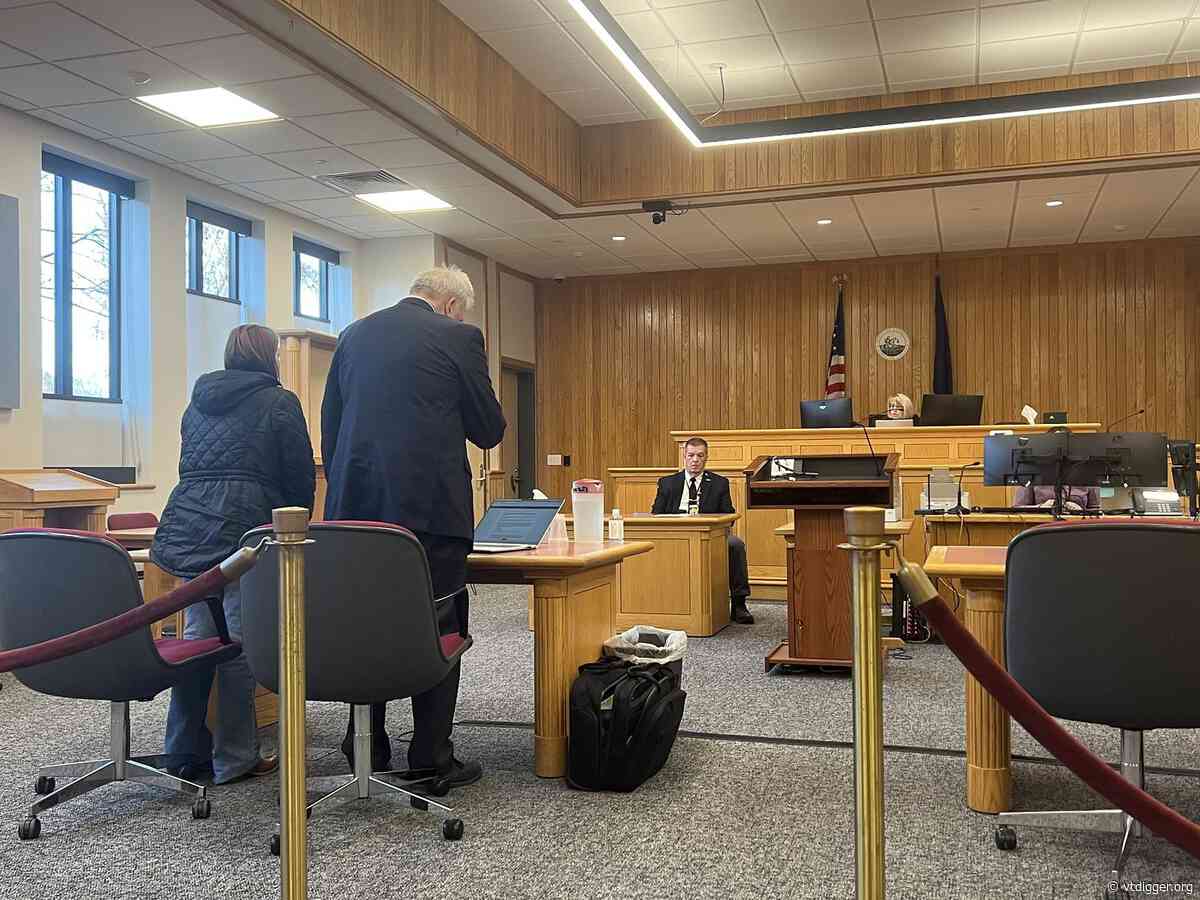
Michelle Mullins turned to Jessica Lemay in a Windsor Superior courtroom on Friday and, through tears, offered an apology Lemay refused to meet.
Mullins, 47, received a six-month prison sentence for her role in the fatal attempted robbery that killed David Labrecque, 65, outside a White River Junction home last August. The sentence mirrors the one her husband, Jeffrey Mullins, received in September. Both plea deals hinge on the couple testifying against the alleged gunman, Demetrius Drew, 31, of New Haven, Connecticut, whose trial is not expected until next year.
The outcome has left Lemay, 37, feeling the justice system failed her. “The punishment doesn’t fit the crime,” she told the court Friday, repeating the same words she spoke at Jeffrey Mullins’ sentencing. “Every day, I wake up in the aftermath. I was in the wrong place at the wrong time. So was Dave.”
The night on Verna Court
The shooting unfolded in the early hours of August 21, 2025, on Verna Court. Lemay and Labrecque, who shared a home in Canaan, New Hampshire, were outside a residence when a man with a bandana covering his face shot Lemay multiple times, striking her in the abdomen and hand.
Labrecque ran from the house to help her. The gunman shot him in the chest as he charged, then stood over him and fired a second round into his back.
“The light was gone from his eyes,” Lemay previously told the Valley News. “He was gone.” Labrecque was a mechanic; Lemay was trying to launch a housecleaning business.
Police identified the shooter as Drew. According to court records, he told investigators he was not in Vermont that day. However, surveillance footage captured him on Lily Pond Road, roughly two miles from the scene, around 6 a.m. — about three hours after the shooting.
A deal built on cooperation
The Mullinses initially faced charges of aiding in the commission of first-degree murder, which carries a potential life sentence, plus accessory to attempted assault and robbery. In November 2025, Jeffrey Mullins pleaded guilty to the lesser felony count of accessory to attempted assault and robbery. His deal stipulated a six-to-ten-year sentence suspended to six months served, plus ten years of probation.
Michelle Mullins took a similar plea in May. Her agreement also carried a six-to-ten-year suspended sentence with six months to serve, but imposed twelve years of probation. Both agreements include sealed cooperation provisions requiring them to testify against Drew. If either fails to cooperate, prosecutors can refile the dismissed first-degree murder charge.
“The negotiated outcome here is less than we might expect to see in the average case,” Judge Elizabeth Mann said from the bench. Prosecutor Nicholas Battey of the Vermont Attorney General’s office emphasized that the cooperation agreements were the key to the reduced sentences.
Drew’s docket and the wait ahead
Drew has pleaded not guilty to first-degree murder, second-degree murder, attempted second-degree murder, aggravated assault with a deadly weapon, and attempted assault and robbery with a weapon. He is held at Southern State Correctional Facility in Springfield, where he has filed a series of handwritten motions — requesting a new arraignment, a bail hearing, and the impeachment of a witness.
In late October, Judge Mann ruled she would not review further filings unless they come through his attorney. Drew also has a pending civil case against the facility alleging staff misconduct during a September 2025 drug test.
White River Junction, the village in Hartford where the shooting occurred on Verna Court, has long been defined by transportation. From the late 1840s until rail traffic faded in the mid-20th century, it was Vermont’s most important railroad community, where five lines created an eight-track crossing served by 50 passenger trains daily.
The village takes its name from the White River joining the Connecticut River there, and its historic district, listed in 1980 and expanded in 2002, preserves the urban architecture of that era. The population was 2,528 in the 2020 census.
A pretrial conference and jury draw are scheduled for February. For Lemay, each court appearance reopens the wound. “I have to come back here and go in front of the court,” she said Friday. “I didn’t sign up for this.”
Keep reading

Man Extradited From Nicaragua for Murder of Connecticut Mother; Baby Found in Bloody Blanket
Bridgeport police announced Wednesday that Douglas Jose Centeno-Vargas, 31, has been extradited from Nicaragua to face a murder...

Metropolitan Opera Premieres First Commissioned Opera by a Woman Composer
The Metropolitan Opera didn't just premiere a new work on October 19; it cracked open a door it...

North Dakota Governor Rescinds Statewide Drought Disaster Order as Rainfall Improves Conditions
Gov. Kelly Armstrong rescinded North Dakota's statewide drought disaster order Thursday, citing above-average September rainfall that lifted much...

American University Wrestling Tests 3-0 Start Against Purdue, No. 23 West Virginia
American University’s wrestling team puts its first 3-0 start since 2015 on the line Friday night against Purdue,...