
Minnesota SNAP Error Rates Spark Standoff Over $100M Federal Cost Shift
Minnesotans could soon be on the hook for more than $100 million in federal food assistance costs unless the state manages to rein in its food assistance mistakes. At the center of the dispute is a stubborn payment error rate that currently sits at 12.5%, comfortably above the national average of 10.6%.
Without measurable improvements over the next year, a new federal law will trigger a significant financial shift. The federal government has offered to assist in lowering these numbers, but only if Minnesota complies with a direct request for data. Right now, the state is standing firm, choosing instead to handle corrective measures independently.
The Data Dispute and Federal Litigation
The tension hinges on administrative errors—specifically, underpayments and overpayments resulting from complex eligibility and reporting rules rather than intentional fraud. While federal officials argue that cooperation is the prerequisite for assistance, state leaders view the demand as an overreach.
“The first step is to allow us to work with them on their data,” Deputy Secretary Stephen Vaden of the U.S. Department of Agriculture (USDA) told 5 EYEWITNESS NEWS. Vaden noted that because states administer the program, federal oversight remains limited when data is withheld.
That disagreement has already escalated into the courtroom. The U.S. Department of Justice is currently suing Minnesota over the withheld information, while the Minnesota Attorney General’s Office filed its own litigation in response to the data-sharing demands. The Minnesota Department of Children, Youth, and Families (DCYF), which oversees the state’s SNAP program, maintains that the USDA’s request is unprecedented. The department argues the demand threatens the privacy of millions of families and ignores long-standing restrictions on the use and redisclosure of SNAP data.
Weighing the Financial Impact on State Budgets
Under the parameters of the One Big Beautiful Bill, new cost-sharing requirements coincide with reductions in federal administrative funding that take effect in October 2026. Those funding cuts result in approximately $37 million in lost state and county revenue annually, putting additional strain on local agencies.
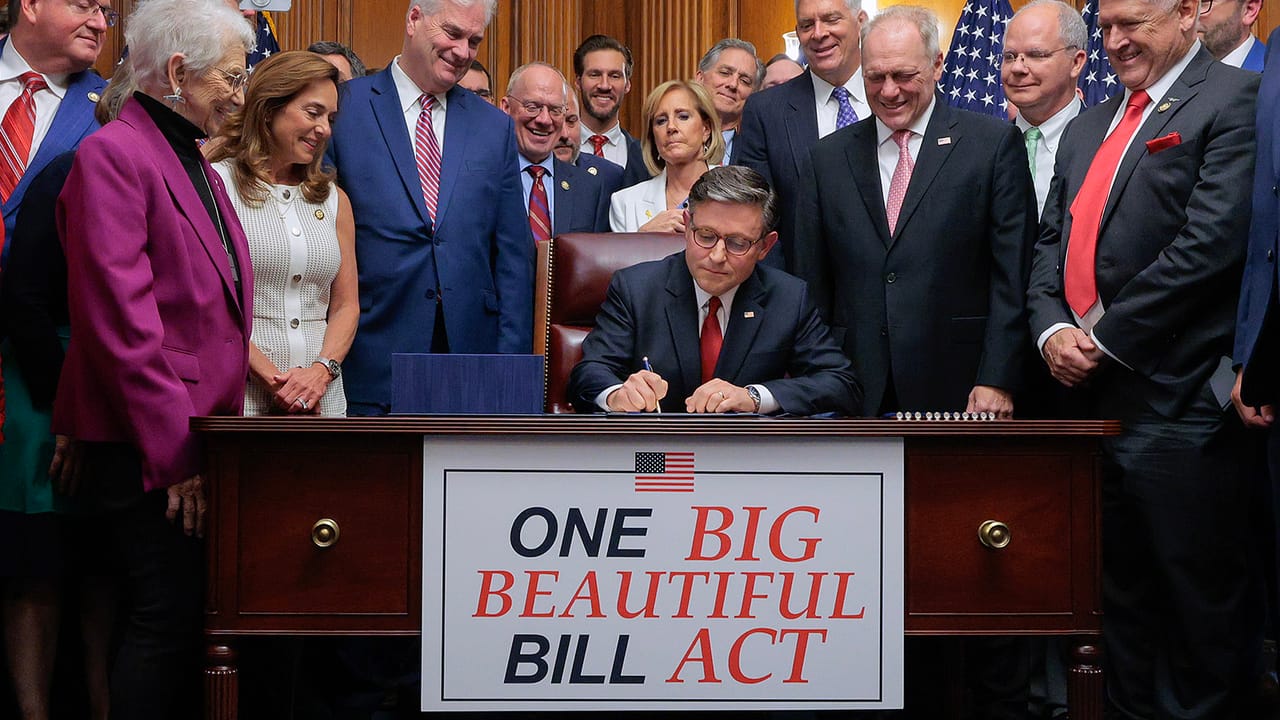
For the first year of implementation, states can choose their error rate from either federal fiscal year 2025 or 2026 to calculate their cost-share. Minnesota’s payment error rate for federal fiscal year 2025 climbed to 12.58%, up from 8.98% in federal fiscal year 2024. That 2025 rate mandates a 15% cost share.
| State Fiscal Year | Estimated Cost Share (15%) | Funding Burden Distribution |
|---|---|---|
| 2028 | About $105 million | Split evenly between state and counties |
| 2029 | About $145 million | Split evenly between state and counties |
Under state law, half of these staggering totals must be borne by counties.
Internal Reforms and Next Steps
Despite the ongoing litigation, DCYF insists it is moving forward with a comprehensive corrective strategy. The state implemented a simplified reporting option in June 2026 designed to reduce reporting errors—a policy already utilized in many states and backed by USDA findings. Additionally, the state has rolled out targeted investments in local agency training, quality assurance staff, and an updated client-facing website.
State officials point out that preliminary data for federal fiscal year 2026 shows reductions in the payment error rate compared to the previous year. However, official federal figures for fiscal year 2026 will not be published by the USDA until June 2027.
As the legal battle plays out, the fundamental question remains whether Minnesota’s independent efforts can satisfy federal benchmarks quickly enough to shield taxpayers from a nine-figure bill.

Hayden Panettiere case closed by South Carolina police – KCRA
Police in Greenville, South Carolina, have officially closed their investigation into the death of actress Hayden Panettiere, ruling...

New 2027 Mazda CX-5 2.5 S Premium AWD SUV in Portland #M0627005
Shoppers navigating the market for a new crossover in the Pacific Northwest face distinct regional pricing structures and...

17 States Haven’t Had a Woman Governor, and 15 Haven’t Had a Woman Senator
The Unbroken Glass Ceilings Across America's Statehouses and Senate Seventeen states have never had a woman governor, and...

How to watch Thunder vs Mavericks: Live stream NBA, TV channel – Yahoo Sports
The undefeated Oklahoma City Thunder travel to face the Dallas Mavericks on Wednesday, October 28, 2026, at 8:30...