8,000 Mississippi Ballots in Limbo as Senate Race Hangs by a Thread
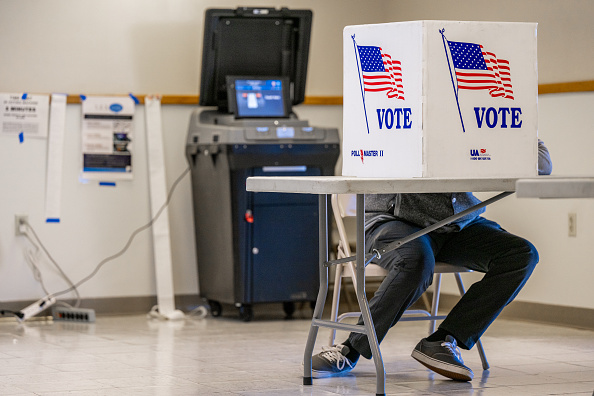
What was supposed to be a routine election night in Mississippi has instead turned into a nail-biter that will be decided by thousands of ballots currently sitting on the sidelines. Democrat Scott Colom holds an extremely narrow lead over Republican incumbent Cindy Hyde-Smith in the state’s closely-watched Senate race, a margin so slender that the victor could ultimately be decided by a handful of cured ballots. As of Wednesday evening, an estimated 8,000 to 12,000 affidavit ballots were left to be counted, Democracy Docket reported.
This isn’t just about one race. The deadline for voters to fix their ballots is fast approaching, and the process, known as “curing,” is now the most critical—and most confusing—part of the election for thousands of Mississippians.
The Affidavit Ballot: Your Vote Isn’t Lost, Yet
So, what happens when a vote is flagged? It’s called an affidavit ballot, and it’s a second chance for a voter whose first attempt was rejected for one reason or another. For example, if someone went to the polls on Election Day but didn’t have the required photo ID, they could cast an affidavit ballot. To make that vote count, they now have five business days to visit their local Circuit Clerk’s office to show an acceptable photo ID or sign a religious objection affidavit. That deadline is this Saturday, November 10.
The list of acceptable ID is specific: a state driver’s license, a U.S. passport, a tribal card, a student ID, or a state-issued pistol permit. It was a missing name.
The larger issue, and the one causing the most widespread problems, stems from a state decision to use a new vendor, Experian, to clean and maintain voter rolls. The data proved unreliable, and tens of thousands of voters were incorrectly marked as “inactive” ahead of the election. If your name was tagged as inactive or simply wasn’t in the pollbook, you were forced to use an affidavit ballot to prove you were who you said you were. These ballots then go through a cure process where election commissioners determine if they are valid.
An affidavit ballot can still be rejected. It won’t be counted if the voter isn’t registered in the county where they cast the ballot, if they forgot to sign the ballot envelope, or if they cast the ballot in a precinct that isn’t associated with their current address.
Lydia Grizzell, the advocacy director for the ACLU of Mississippi, which is observing the ballot curing process statewide, told Democracy Docket that a voter’s designation as “inactive” is primarily due to a change of residence and flawed information from Experian. The ACLU of Mississippi told Democracy Docket that the cure process should be straightforward. Election commissioners should be able to verify a ballot using the Statewide Elections Management System without needing the voter to take extra action. But given the scale of the problem, the ACLU is still urging caution.
“However, we’re encouraging all individuals who have submitted an affidavit ballot to follow up with the Circuit Clerk anyway, just to make sure that it is counted,” Grizzell said. “Just so there wouldn’t be any questions, and if there is any discrepancy, that it is cured while we’re still in this window.”
When the Cure Doesn’t Work: The Wrong-Precinct Problem
Lily Moens, policy director for Mississippi Votes, highlighted a critical issue emerging during the cure process: voters who cast their affidavit ballots in the wrong precinct. The reason? Over 100 precincts in Mississippi were either changed or closed this election cycle, causing widespread confusion.
“In Mississippi, there were over 100 precincts that were either changed or closed, and so it seems that there was confusion around where people were supposed to be voting, and that wasn’t rectified at the polls,” Moens told Democracy Docket. “So, folks ended up casting an affidavit ballot at the wrong precinct.” Those ballots, unfortunately, cannot be cured if the voter is registered at a different precinct.
For anyone who cast an affidavit ballot, Mississippi law mandates they be provided information on how to check if their vote was counted. If it is rejected, they must be told why. Voters can check the status of their ballot on the Secretary of State’s website.
The Mail Ballot Race: A Separate, but Equally Critical, Deadline
The fight over curing ballots isn’t limited to those cast in person. The University of Florida Election Lab reports that more than 120,000 Mississippi voters requested a mail ballot for this election. Like the affidavit ballots, these have a grace period. As long as a mail ballot is postmarked by Election Day, it can be counted for five business days, meaning the final deadline for these to arrive is also November 10.
Earlier this year, Republicans in the state tried to eliminate it, but the move was blocked by a U.S. Supreme Court ruling that upheld the five-day window. If a mail ballot is rejected due to a signature mismatch, election officials must notify the voter within one business day and send them an “Absentee Cure Form.” The form asks for additional information, like a driver’s license number or the last four digits of a Social Security number, to cure the ballot and ensure it is counted.
For now, the clock is ticking. The county-by-county certification deadline is November 13, but every day counts. And for thousands of Mississippians, that race is still on.

Oklahoma City Uber Accident Lawyer Helps Injured Seek Compensation
McIntyre Law reported that recovering from an Uber accident in Oklahoma City means dealing with a complex web...

Giants favored to snap 13-game road losing streak against Eagles
A stunning 3-point spread has the New York Giants favored on the road in Philadelphia for the first...

No. 1 Huskers face No. 12 Oregon Nov. 7, No. 18 Washington Nov. 8
The University of Nebraska volleyball team, ranked No. 1 in the nation, is preparing for an important road...
DHS Reacts to ICE Detainer for Illegal Alien Arrested for Rape in NYC
ICE Seeks to Hold Peruvian Rape Suspect in New York After City Release The detainer asks New York...