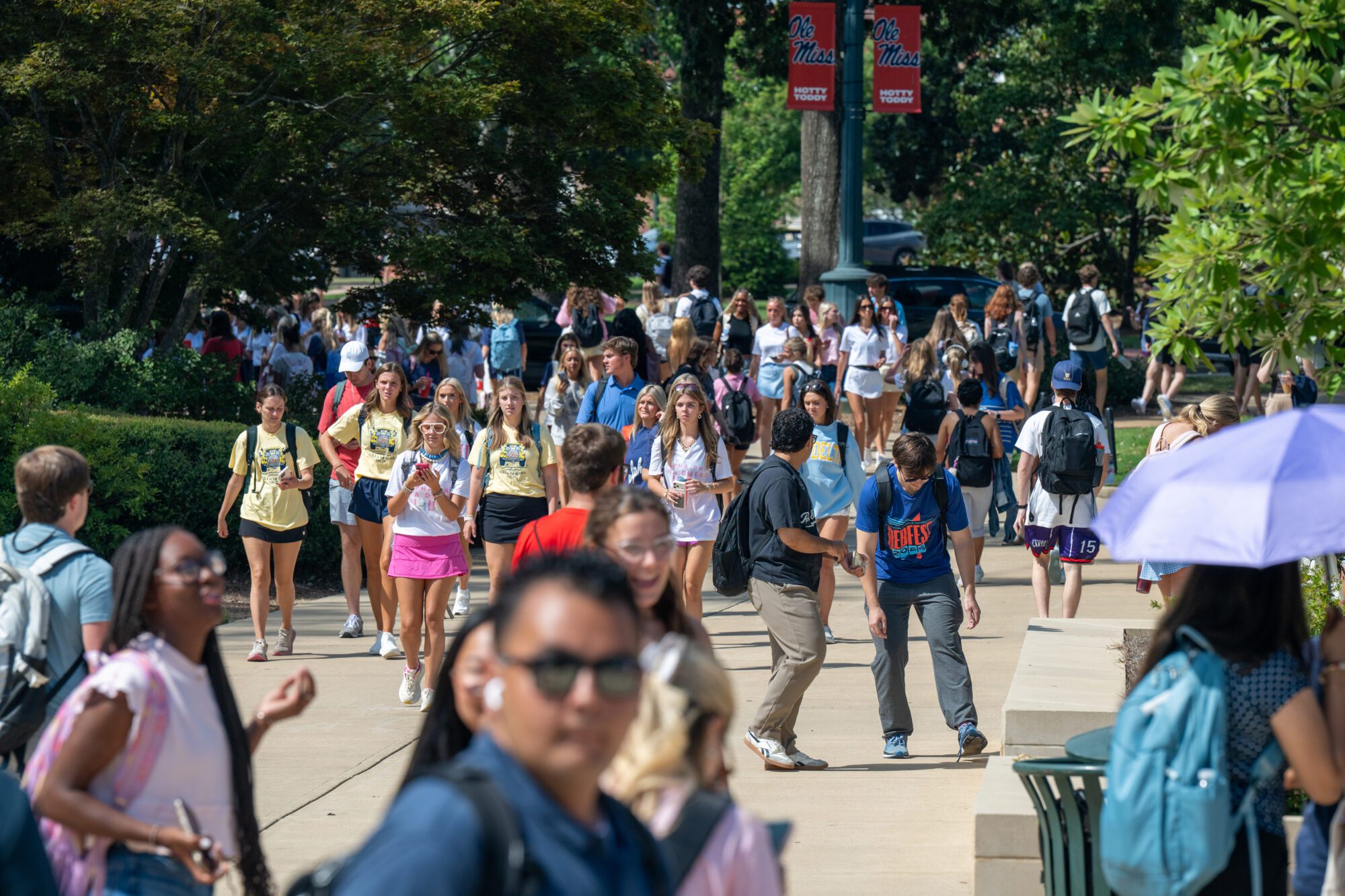
Mississippi public university enrollment dips as demographic shifts loom
Mississippi’s public university system saw a slight decline in student enrollment this fall, as the state’s higher education institutions grapple with a shrinking pool of traditional college-aged students. Total enrollment across the eight public institutions fell to 81,771 for the 2026 school year, a decrease of 190 students from the 81,961 reported in 2025, according to data released by the Mississippi Institutions of Higher Learning.
While the overall drop of 0.2% suggests a period of relative stability, the figures mask a widening gap between growing institutions and those facing significant contractions. As the Clarion Ledger reported, gains at five universities were largely offset by sharp declines at others, most notably at Jackson State University and Mississippi Valley State University.
This trend arrives as educators and lawmakers have spent years warning of an “enrollment cliff.” This phenomenon is driven by a national demographic shift: a decline in birth rates following the Great Recession has resulted in fewer high school graduates entering the pipeline for higher education. The Western Interstate Commission for Higher Education has projected that U.S. high school graduates peaked in 2025 and will continue to decline through 2041.
The divide between growth and contraction
The latest data, which reflects unduplicated enrollment counts as of October 30, reveals a stark contrast in how different campuses are performing. On one end of the spectrum, the University of Mississippi remains the state’s largest institution and its most significant driver of growth. The university enrolled 28,960 students this fall, representing a 1.9% to 2% increase over the previous year.

“Ole Miss is an institution in high demand, and our six years of consecutive growth are proof of that,” University of Mississippi Chancellor Glenn Boyce said in a statement.
The University of Mississippi Medical Center also saw an uptick, adding 87 students to reach a total of 3,270. Similarly, the Mississippi University for Women posted the largest percentage gain in the state, growing by 3.6% to reach 2,457 students. Interim President Scott Tollison noted that the university has seen enrollment grow by more than 12% over the last two years.
However, these gains were not enough to stabilize the state’s total numbers due to heavy losses at specific institutions. Jackson State University experienced the largest numerical decline, losing 691 students to reach an enrollment of 5,773—a 10.7% drop. Mississippi Valley State University saw the most significant percentage decline, falling 13.2% to a total of 1,976 students. Currently, five of Mississippi’s eight public universities have student populations of less than 3,300.
The following table illustrates the enrollment shifts across the state’s major public institutions:
| Institution | 2026 Enrollment | Year-over-Year Change |
|---|---|---|
| University of Mississippi | 28,960 | +468 (approx. 1.9%) |
| Mississippi State University | 23,721 | +158 (0.7%) |
| University of Southern Mississippi | 13,118 | -73 (0.6%) |
| Jackson State University | 5,773 | -691 (10.7%) |
| Mississippi Valley State University | 1,976 | -300 (13.2%) |
Competition and the race for retention
The uneven nature of these numbers suggests that Mississippi’s universities are operating in an increasingly aggressive recruitment environment. As student populations fluctuate, the ability of an institution to attract and keep students becomes a matter of institutional survival and fiscal health.

Dr. Al Rankins, Jr., Commissioner of Higher Education, emphasized that the current climate requires a shift in institutional focus. In a statement released Monday, he noted that the universities must remain “laser focused on recruitment, retention, and positive student outcomes” to succeed in a highly competitive landscape.
The economic stakes of these shifts are significant. For universities facing double-digit declines, the loss of students often translates to reduced tuition revenue, which can impact everything from faculty staffing to campus infrastructure. Conversely, for institutions like Ole Miss or Mississippi University for Women, growth provides a buffer, but it also places increased pressure on resources to accommodate a larger student body.
While some see the stability of the 81,771 total enrollment as a sign of resilience, the underlying data suggests a system in transition. The growing concentration of students at a few large institutions, paired with the shrinking populations at smaller ones, points toward a fundamental restructuring of how higher education is delivered and funded across the Magnolia State.
The stability of the current numbers may only be a temporary reprieve before the full impact of the national demographic decline reaches Mississippi’s campus gates.
Keep reading
Minnesota Records Historic Early Voting Turnout Ahead of Election Day
Minnesota voters set record for early midterm turnout Minnesotans are turning out to vote in unprecedented numbers ahead...

Mayor Sheffield Condemns Shooting of 2-Year-Old in Detroit
A 2-year-old fights for life after shooting on Detroit’s west side A 2-year-old child is in critical condition...

Mayor Scott Cancels Spain Trip to Support Democrats on Election Day
Baltimore Mayor Brandon Scott will no longer travel to Barcelona, Spain, to participate in the Smart City Expo...

Terrance Osborne uses jazz and magnolia motifs for Louisiana sticker
Terrance Osborne uses jazz and magnolia motifs for Louisiana 'I Voted' sticker Artist Terrance Osborne designed the "I...