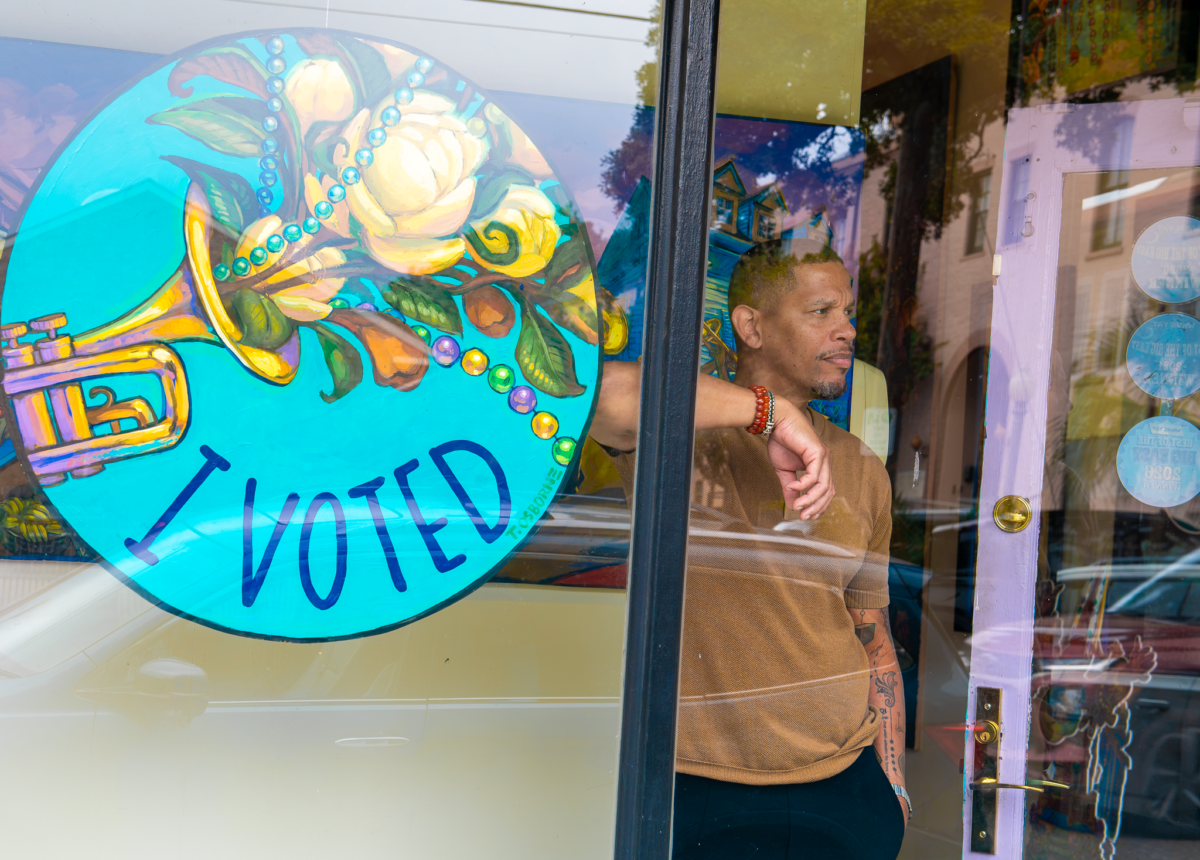
Terrance Osborne uses jazz and magnolia motifs for Louisiana ‘I Voted’ sticker
Artist Terrance Osborne designed the “I Voted” sticker for Louisiana voters this election cycle, incorporating deep cultural symbols ranging from jazz instruments to state flora. In an interview with The Lens, Osborne explained how the artwork serves as a visual bridge between state identity and the specific cultural heartbeat of New Orleans.
The sticker features a trumpet emitting a “jazz bouquet” of flowers, a concept Osborne says was inspired by his mentor, artist Richard Thomas. Thomas, who operated the Visual Jazz art gallery, instilled in Osborne a philosophy of seeing music through a visual lens. By imagining what jazz would look like as it exited the bell of a horn, Osborne created a piece that functions as both a civic marker and a piece of local art.
@TerranceOsborne is giving away FREE posters featuring his 2026 Louisiana “I Voted” sticker design this week! 🎺✨ Stop by his gallery on Nov. 2 or Nov. 5 to grab one while supplies last. No purchase or proof of voting necessary, but you MUST be of voting age. #MagazineStreet pic.twitter.com/UCiacfO7Bq
While the state requested a design that represented Louisiana as a whole, Osborne layered specific regional nods into the composition. He utilized the magnolia, Louisiana’s state flower, to anchor the piece in the broader state identity. However, he also included a string of gold, purple, and green Mardi Gras beads that travels southeast across the design. Osborne noted that this specific placement—running toward the southeastern corner of the state—was a deliberate nod to New Orleans, a gesture he felt was necessary to express the city’s unique importance.
The tension between civic incentives and state regulations
The process of distributing the sticker also highlighted a friction between individual artistic expression and state-level election administration. During the early voting period, Osborne shared on Instagram that he intended to give autographed prints to voters who presented their “I Voted” stickers. This move was intended to celebrate civic participation through a personal connection to the artist.
However, state officials intervened, informing Osborne that as a private citizen, he could not provide items of value in exchange for a voting sticker. Osborne expressed confusion over the ruling, questioning the logic of the restriction when the state itself provides stickers as a form of incentive for voting. While the state maintained its authority to distribute stickers, the regulation prevented Osborne from following through on his original plan to reward voters with his artwork.
“I thought the whole thing was strange because they are giving stickers to people for voting. It’s an incentive. So I said, ‘Isn’t that the same thing?’ They said as a private citizen, I can’t do it, but they can.”
A palette shaped by Xavier University and mentorship
The aesthetic choices in the sticker are not merely decorative; they are rooted in Osborne’s formal artistic training. The specific color palette used in the design was developed during his time in a painting class with Ron Bechet at Xavier University of Louisiana. Osborne credits Bechet with teaching him to refine his color sense, moving from a disorganized approach to a disciplined system of eight core colors that he continues to use in his professional work.
This disciplined approach to art is a theme that traces back to Osborne’s upbringing in the Tremé and 7th Ward neighborhoods. His journey from a student in Richard Thomas’s “Pieces of Power” afterschool program—where he completed his first mural at Hunter’s Field—to a gallery owner on Magazine Street reflects a lifelong engagement with the community’s visual landscape. Osborne, who graduated from the New Orleans Center for Creative Arts and Xavier University, has spent decades translating the spirit of New Orleans into public and private works.
For Osborne, the act of designing the sticker is an extension of the civic advocacy he learned early in his career. He attributes his drive to participate in the democratic process to the influence of Richard Thomas, whom he describes as a constant fighter for the arts and for ensuring community voices are heard. By placing these symbols of jazz, Mardi Gras, and the magnolia on a sticker worn by thousands, Osborne has turned a standard piece of election ephemera into a medium for regional storytelling.
Keep reading

Commentator argues for return to daily life After election day
The Return to Reality After the Election Cycle In a column for the Manhattan Mercury, a local commentator...

University of Iowa Plans Major Renovations for IMU Footbridge
University of Iowa seeks approval for IMU footbridge renovations The University of Iowa is moving to preserve a...
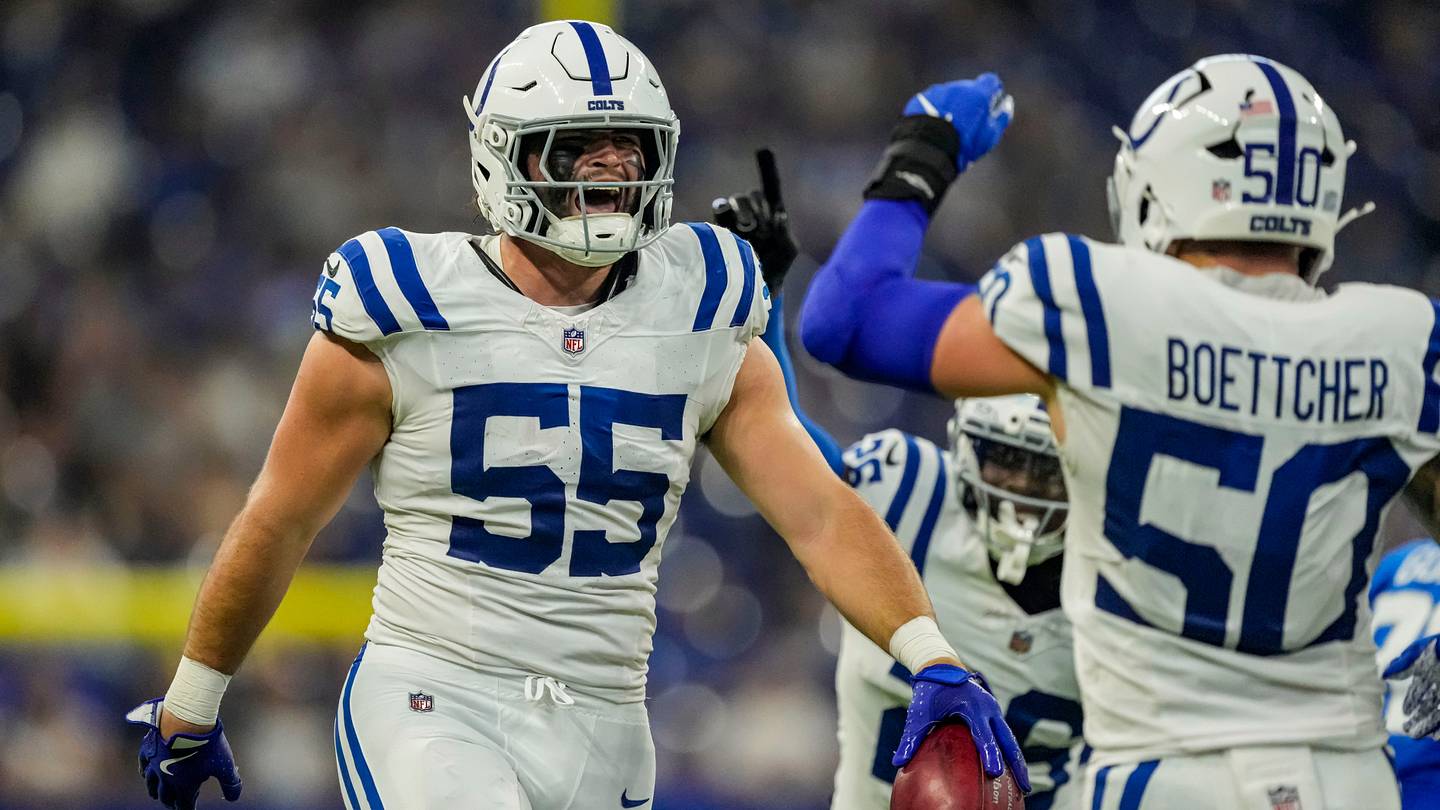
How the Indianapolis Colts’ 2026 Rookie Class Is Faring Through Eight Games
The growing pains of a rebuilding roster CJ Allen finally made his long-awaited first start for the Indianapolis...
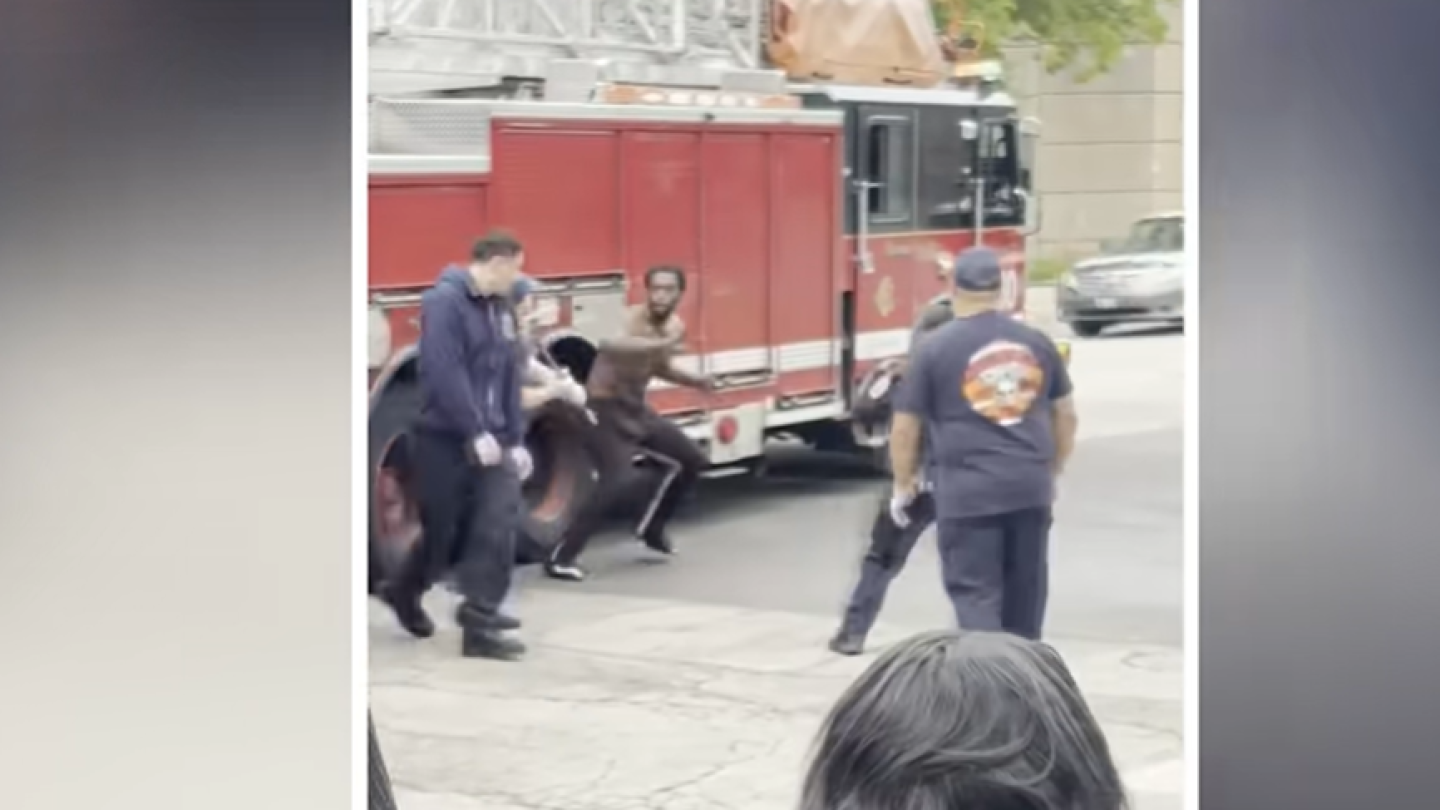
Chicago Firefighter Faces Felony Charges After Striking Man With Halligan Tool
Lamar Brown faces felony charges following Chicago firefighter confrontation Lamar Brown, a 32-year-old Austin resident, is facing felony...