Statistics show that, when abducted, a child’s greatest enemy is time.
“Seventy four percent of children that are kidnapped and later found murdered, are killed within the first three hours after being taken.,” said University of Washington Study.
That reality drove the creation of the AMBER Alert system, a voluntary partnership uniting law enforcement agencies, broadcasters, and other agencies to rapidly broadcast emergency warnings.
The AMBER Plan originated in 1996 as a legacy to nine-year-old Amber Hagerman, who was kidnapped and brutally murdered while riding her bicycle in Arlington, Texas. That community tragedy spurred the Dallas/Fort Worth Association of Radio Managers and local law enforcement in northern Texas to build an early warning system modeled after emergency weather alerts.
Missouri formally established its own system in 2003 when the state legislature passed Senate Bill 30. The Department of Public Safety was given the responsibility to develop a system that would divide the state into regions and provide a coordinated effort between local law enforcement agencies, transportation, and local media.
State protocols require specific conditions to be met before officials can forward an emergency notification through the Alert Missouri program. Law enforcement must hold a reasonable belief that an abduction occurred, and there must be a credible threat of serious bodily injury or death to a victim aged 17 or younger.
Investigators must possess sufficient descriptive details regarding both the victim and the abductor. The child’s name and other critical data elements including the child abduction (CA) flag must also be entered into the National Crime Information Center (NCIC) system.
| Activation Requirement | Operational Standard |
|---|---|
| Victim Age | Child age 17 or younger |
| Threat Level | Credible threat of serious bodily injury or death |
| Database Entry | NCIC system entry with child abduction flag |
When an incident does not meet the AMBER Alert criteria, local agencies retain alternative investigative tools, such as the Missouri Endangered Person Advisory.

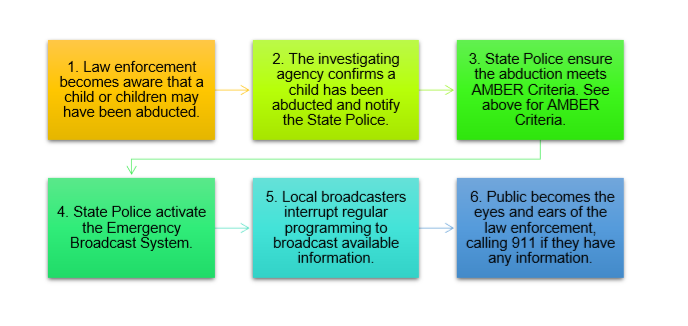
Trained local law enforcement personnel in the community where the abduction occurs must first verify that an incident meets all activation thresholds. Once verified, the local agency contacts Missouri State Highway Patrol Troop F Headquarters to request an alert.
Troop F Communications then contacts the state AMBER Alert coordinator or their designee and initiates a conference call. If approved, the local agency initiates a Missing Person computer entry in MULES as required in the National Child Search Act, completing the necessary request forms for immediate dissemination.
Citizens looking to track active emergencies or subscribe to direct notifications can visit www.MOAlerts.mo.gov for real-time updates.
Related reading

Valley Central vs. CBA Albany Class AA Regional Playoff Preview
Colonie High School will host the Class AA state regional playoff game between Valley Central and Christian Brothers...

Paraná River Displaces 4,547 People Across Argentina’s Litoral
Paraná River Flood Displaces 4,500 Rising ten centimeters in a single day, Argentina's Paraná River reached 5.60 meters...

New Hampshire Voters Strip Republicans of State House Control
New Hampshire voters delivered a decisive electoral shift on November 3, stripping Republicans of control in the state...

Pioneers Claim Shrine Tournament Title After Win Over Pitt-Bradford
Marietta College claimed the Shrine Tournament championship by eclipsing the century mark in a 106-76 win over Pittsburgh-Bradford...