
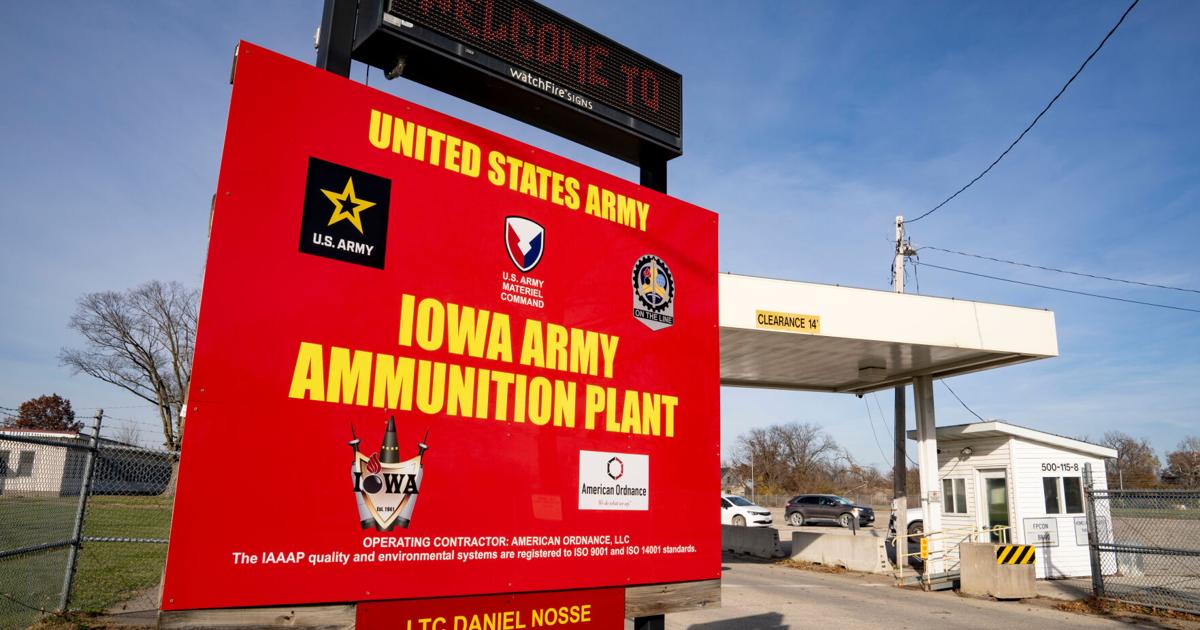
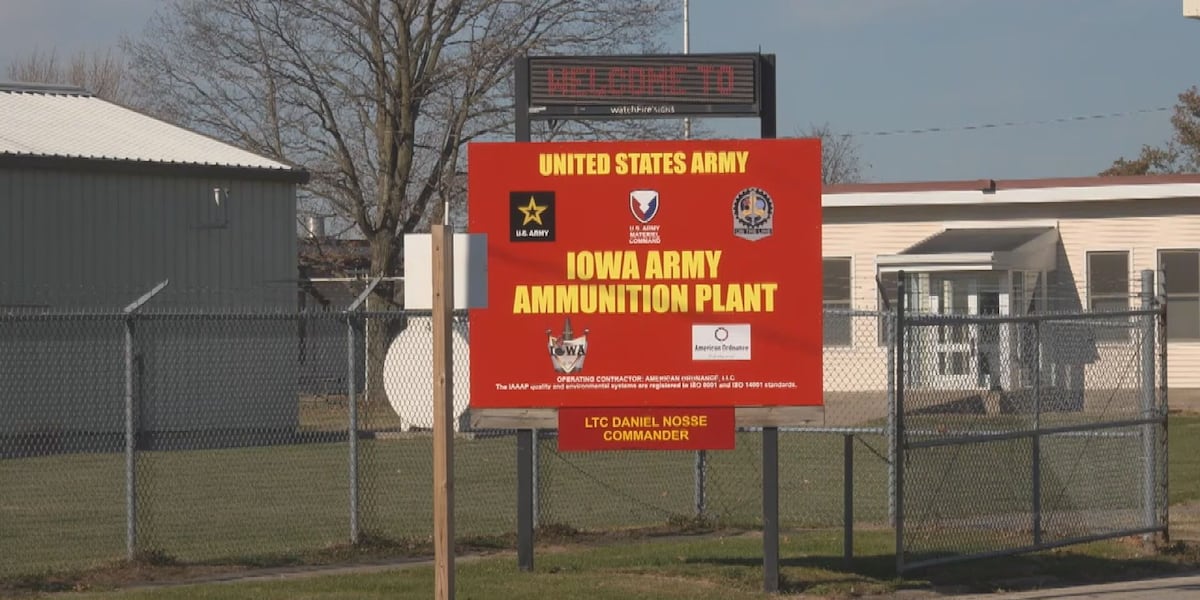
Missouri Gov. Mike Kehoe said Monday that the state expects minimal impacts from the U.S. Army’s planned detonation of about 9,700 pounds of deteriorating lead azide at the Iowa Army Ammunition Plant in Middletown, roughly 57 miles north of the Missouri border, but has activated a multiagency monitoring effort for air, water, agriculture and public health.
“This is not a time for panic,” Kehoe said during a briefing at the state Capitol. “We do not anticipate significant impacts, but we will not allow Missouri to be unprepared.” The Army said Sunday the detonation is scheduled for Wednesday.
Kehoe said Missouri does not control the timing of the federal operation and shares neighboring states’ frustration over how federal officials have handled it. “The states of Iowa, Missouri, and Illinois do not have a say in when this is conducted,” he said, according to the Bevier Bulletin.
His administration has held calls with the White House, Army, U.S. Environmental Protection Agency and other federal agencies but still has limited information. A case is before the 8th U.S. Circuit Court of Appeals.
Department of Natural Resources Director Jake Buxton said 10 Missouri drinking water systems with 13 water intakes lie within 100 miles of the plant. The EPA is collecting untreated surface water samples from systems within that radius before the blast and plans to test untreated and treated water afterward.
Buxton said the department contacted the Hannibal and Louisiana water systems, both of which draw from the Mississippi River, and earlier projections suggest any contamination would reach the river north of Missouri. “All surface water systems have treatment processes in place” capable of removing lead, Buxton said, and could adjust operations if testing warrants.
Public Safety Director Mark James said a National Weather Service meteorologist and a National Guard civil support team specializing in plume modeling are helping forecast particle movement.
The State Emergency Operations Center will open once federal officials provide a firm detonation date, and information will be posted on a Department of Natural Resources landing page. “I would just, admonish folks to please get your information only from trusted sources,” James said.
Department of Health and Senior Services Director Sarah Wilson said projected lead exposure in Missouri is low and the event is expected to be brief. “To be clear, the Department of Health and Senior Services has not communicated that we anticipate this being a public health emergency for Missourians,” she said.
Her agency will track dispersion forecasts and exposure levels, and anyone worried about possible contact with lead dust should consult a local health department or medical provider.
Agriculture Director Chris Chinn, whose family farms in northeast Missouri, said the state does not expect significant consequences for livestock or the food supply and pushed back on online recommendations to move animals indoors or seal barns.
“At our family farm, we could not bring all of our cows into a barn or a shed. It just is not feasible,” Chinn said. She urged producers to consult veterinarians about precautions and testing, noted University of Missouri Extension can test hay for lead, and advised washing down equipment if visible dust appears after the detonation.
Case pending before 8th Circuit Court of Appeals
A case is before the 8th U.S. Circuit Court of Appeals. A case is before that court.
Kehoe said Missouri does not control the timing of the federal operation and shares neighboring states’ frustration over how federal officials have handled it. “But I want to emphasize this is a federal operation,” he said. “The states of Iowa, Missouri, and Illinois do not have a say in when this is conducted.”
Mental health resources activated
Kehoe said he would not see any model affecting central Missouri, Columbia or southwest Missouri. The Department of Mental Health’s Office of Disaster Services plans to provide support as the situation develops, and the Disaster Distress Helpline is available at 1-800-985-5990; Missourians can also call or text 988.

Providence Mayor-Elect Morales Names Nelson-Davies COO, Wood Chief of Staff, Lindberg CFO
Providence Mayor-elect David Morales named three senior staff appointments Monday, installing Economic Progress Institute Executive Director Weayonnoh Nelson-Davies...

COTA Study of Former Greyhound Site Could Revive Downtown Columbus Bus Terminal
Columbus bus riders have waited on Mound Street without shelter, restrooms or real-time information since the downtown terminal...

Maryland Matters Contest Produces Three Top Scorers, Four Total Winners
Anne Zmuda, the vice president of government relations at the Maryland Food Bank; Henry Snurr, the deputy caucus...

50 Best Nashville Holiday Gifts Under $50
StyleBlueprint has rounded up 50 Nashville holiday gifts priced at $50 or less, spanning home decor, clothing, food...