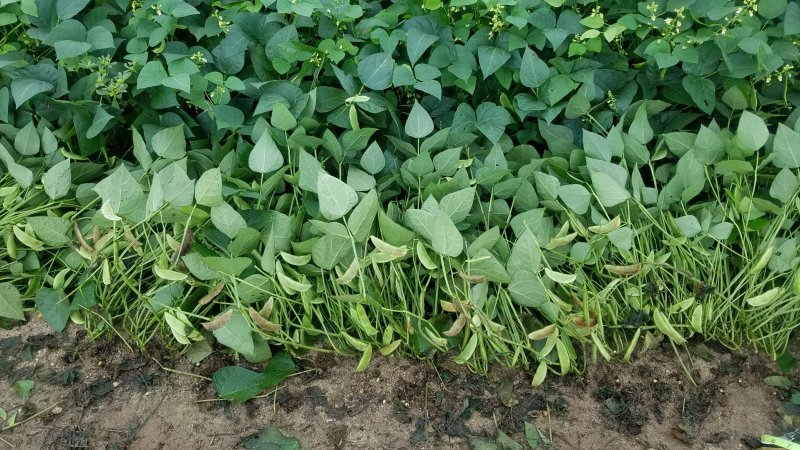
Delaware sweet potato production has collapsed from an average of 440,000 bushels annually in the early 1900s to fewer than 50 acres today, University of Delaware Cooperative Extension reported.
- Extension agents Cory Whaley, Emmalea Ernest and Lyndsie Mikkelsen detailed crop history and holiday preparations.
- Lima beans occupy several thousand acres for processing; pole limas target fresh markets.
- Cauliflower variety trials identified Candid Charm, Aquarius, Bermeo, Bishop and Minuteman as top-yielding.
For Cory Whaley, Extension agent for agronomic and vegetable crops, sweet potatoes remain a Thanksgiving staple. “I always enjoy sweet potatoes,” Whaley said. His favorite is sweet potato fluff, a casserole topped with marshmallow meringue. “It’s like having dessert for dinner.”
Whaley noted the tubers come in white, cream-yellow, purple and red, each with distinct flavor, texture and nutritional profiles. A disease strike in 1940 ended the crop’s dominance, and other commodities took over, University of Delaware reported.
Emmalea Ernest, Extension fruit and vegetable specialist, ties her holiday menu to her breeding work. “I enjoy green baby lima beans mixed with white sweet corn to make succotash, or large-seeded green pole limas with garlic and butter,” Ernest said. Several thousand acres of baby limas are grown yearly for freezing, while pole limas serve fresh markets.
“While lima beans are very important to Delaware, the crop is not grown in very many other areas,” Ernest said. UD research helps manage downy mildew and pod rot. Beyond the table, limas make manjarblanco, a Peruvian dulce de leche, and large seeds feature in traditional games in Ecuador, Peru and Bolivia, Cape Gazette reported.
Lyndsie Mikkelsen, Extension agent for fruits and vegetables, plans a whole head of roasted cauliflower topped with homemade beer cheese sauce this year. “I am very excited to present a whole head roasted cauliflower topped with a ‘healthy’ portion of homemade beer cheese sauce at my table,” Mikkelsen said. Cauliflower, a Brassicaceae crop alongside broccoli and kale, extends the growing season into spring and fall.
Trials at the Carvel Research and Education Center near Georgetown tested 18 varieties for spring planting in 2020 and more than 30 for fall planting across 2019, 2021 and 2022. “The 2020 study concluded that while spring-planted cauliflower is possible, there is a narrow planting window which is very dependent upon weather conditions,” Mikkelsen said. Extension identified Candid Charm, Aquarius, Bermeo, Bishop and Minuteman among the highest-yielding varieties, University of Delaware reported.
Whaley estimates less than 50 acres exist in the state today. “It’s like having dessert for dinner,” Whaley said of his favorite preparation, sweet potato fluff.
Emmalea Ernest, Extension fruit and vegetable specialist, leads a long-term project developing new lima bean varieties and presents trial results to farmers for yield and disease tolerance. Several thousand acres of baby limas are grown yearly for freezing, while pole limas serve fresh markets. “While lima beans are very important to Delaware, the crop is not grown in very many other areas,” Ernest said.
“UD research has helped growers manage problematic diseases like lima bean downy mildew and lima bean pod rot,” Ernest said.
Carvel Research and Education Center sits at 16483 County Seat Highway, Georgetown, Delaware, where University of Delaware Extension specialists conduct vegetable and agronomic trials.
At the same Center, Extension fruit and vegetable specialist Emmalea Ernest leads long-term lima bean breeding and presents trial results to growers for yield and disease tolerance, while the 2025 tour agenda lists her updates on watermelon, cucumbers, peppers and lettuce.
All three vegetables trace lineage to wild ancestors shaped by farmer selection over generations.
Worth a look

Providence Mayor-Elect Morales Names Nelson-Davies COO, Wood Chief of Staff, Lindberg CFO
Providence Mayor-elect David Morales named three senior staff appointments Monday, installing Economic Progress Institute Executive Director Weayonnoh Nelson-Davies...

COTA Study of Former Greyhound Site Could Revive Downtown Columbus Bus Terminal
Columbus bus riders have waited on Mound Street without shelter, restrooms or real-time information since the downtown terminal...

Maryland Matters Contest Produces Three Top Scorers, Four Total Winners
Anne Zmuda, the vice president of government relations at the Maryland Food Bank; Henry Snurr, the deputy caucus...

50 Best Nashville Holiday Gifts Under $50
StyleBlueprint has rounded up 50 Nashville holiday gifts priced at $50 or less, spanning home decor, clothing, food...