
“We lost thousands of dollars in inventory at the stroke of midnight,” John Grady told kfvs12.com.
The former owner of Slaphappy Hemporium in Rosebud, Missouri, is one of many local business owners facing a sudden, forced pivot. As of Thursday, a new state law officially bans the sale of intoxicating hemp products in any retail outlet that does not hold a specific Missouri marijuana facility license.
The legislation, known as HB 2641, fundamentally reclassifies intoxicating hemp-derived cannabinoid products as marijuana under state law. This shift moves products like hemp gummies, tinctures, and infused coffees out of general retail stores and restricts their sale exclusively to licensed dispensaries. For retailers caught selling these items without the proper credentials, the consequences are severe, including potential criminal prosecution and fines of up to $5,000 per transaction.
Amy Moore, director of the Division of Cannabis Regulation, said the law aims to centralize the sale of these substances within the regulated cannabis market.
“It appears the intent of the law is to ensure that only our licensed dispensaries in Missouri sell intoxicating cannabinoid products,” Moore said.
While the law drastically alters how general retailers operate, Moore said that the impact on existing licensed dispensaries will be minimal.
Businesses sue to block unconstitutional hemp law
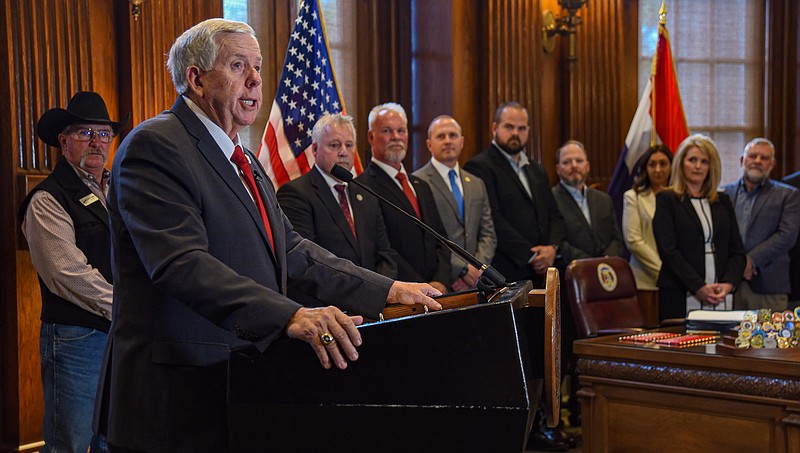
The hemp industry has struggled with the transition. A coalition of businesses, including the MoHemp Trade Association, Lifted Liquids Inc., and MNG 2005 Inc., filed a federal lawsuit in the U.S. District Court for the Western District of Missouri to block the implementation of HB 2641. The plaintiffs argued the law is unconstitutional and conflicts with the federal Farm Bill, which they claim prevents states from blocking the transport of legal hemp across borders. However, courts rejected the request to prevent the law from taking effect.
For some, the legal defeat has meant an immediate end to their previous business models. Grady and his wife rebranded their shop to Grady’s Crooked Halo Mercantile, pivoting from hemp products to selling Italian food and goods.
“Well, we’ve been just trying to liquidate the stock that we have,” Grady said, noting a $45,000 loss in inventory. He questioned why the state’s focus was on existing retailers rather than targeting “bad actors” who might target children.
The debate over consumer safety
The law’s proponents argue the restriction is a necessary step for public safety and child protection. Mitch Meyers, co-owner of BeLeaf Medical dispensaries, believes the move will curb the availability of products that mimic popular candies.
“They’ve created and been selling these products that appeal to kids,” Meyers told kfvs12.com. “They’re very colorful, they look just like the candies that they buy at those same convenience stores.”
Meyers expects the law might lead to an increase in business for licensed dispensaries, noting that these products have been available in his locations since 2019.
The law also extends beyond product types to include branding. Businesses that do not hold a marijuana dispensary license are now prohibited from using the word “dispensary” in their business names. Violating this naming restriction is classified as a class D felony and carries a $5,000 fine per transaction.
A temporary window for hemp drinks
While most intoxicating hemp products are now banned in general retail, a small window of exception remains for certain hemp-derived drinks. Due to an ongoing federal extension related to unsettled federal legislative debates, retailers without a dispensary license can continue to sell some hemp drinks through Dec. 11.
The future of the industry remains tied to the tension between state regulation and federal policy. While Missouri has drawn a hard line with HB 2641, the debate continues in Washington regarding the status of hemp-derived cannabinoids under the federal Farm Bill and the regulatory authority of individual states.

Pennsylvania Facing $7 Billion Structural Deficit by 2030, IFO Report Warns
Pennsylvania's structural deficit could climb past $7 billion by 2030, according to a new report from the Independent...

Southern Oregon Volleyball Enters Cascade Conference Tournament
Southern Oregon University volleyball enters the Cascade Conference Tournament on Thursday in Caldwell, Idaho, needing three wins in...

Oklahoma City Wrestlers Rout Rose State 38-12
Oklahoma City University secured a 38-12 victory over first-year Rose State on Thursday. The Stars utilized six bonus-point...

Vikings GM Confirms Kirk Cousins Will Be the Team’s Starter
“We didn’t acquire Kirk to not play,” Vikings general manager Nolan Teasley said, effectively confirming the team's intent...