
Montana Attorney General Austin Knudsen announced Friday that his office will not defend Initiative 194, a newly approved ballot measure aimed at restricting corporate political spending, in federal court.
The decision creates a shift in the legal battle over “the Montana Plan,” a measure intended as a challenge to the 2010 U.S. Supreme Court ruling in Citizens United v. FEC. While Knudsen stated he will continue to enforce the law until the judicial branch reaches a decision, he said the initiative plainly violates the First Amendment.
“The Attorney General has determined that Initiative 194 plainly violates the First Amendment under the U.S. Supreme Court’s decisions in First Nat’l Bank v. Bellotti and Citizens United v. Fed. Election Comm’n,” the document filed in federal court said.
Initiative 194 passed earlier this month with approximately 66% of the vote, garnering more than 307,000 ballots in favor. The measure seeks to redefine the powers of “artificial persons”—including corporations, unions, and nonprofits—to exclude their ability to spend money on elections.

Supporters of the initiative argue that states should have the authority to regulate how these entities influence political outcomes.
“Two-thirds of Montanans voted to end corporate and dark money spending in our elections. But the Attorney General has decided that the will of the people – the voices of real Montanans – simply doesn’t matter. We won’t stand for it,” said Jeff Mangan, founder and president of the Transparent Election Initiative.
Following Knudsen’s announcement, the Transparent Election Initiative stated it would step in to defend the law in court.
Last week, a group including the Montana Chamber of Commerce, the Billings and Kalispell Chambers of Commerce, and the U.S. Chamber of Commerce filed a federal lawsuit against the measure.
These business organizations claim that the restriction is already causing “immediate and severe chilling effects” on their ability to engage in political speech and plan for future election cycles. They have characterized the initiative as “targeted speech suppression” against the business community.
The legal opposition is not limited to business interests. An earlier challenge was mounted by the Frontier Institute, the Montana Republican Party, and the Montana Family Foundation. These two separate legal fronts—the Frontier Institute challenge and the Chamber’s challenge—have now been consolidated into a single federal case.
Attorneys for the plaintiffs argued in court filings that Montana lacks a legitimate interest in suppressing political speech for the purpose of equalizing the volume of different speakers.
As of Monday morning, no federal court hearings have been scheduled to address the consolidated case.
Related reading

Update Your Contact Information and Location Preferences
Mutiny Presents is bringing Sammy Virji to Salt Lake City on March 6, according to listings on Edmtrain....
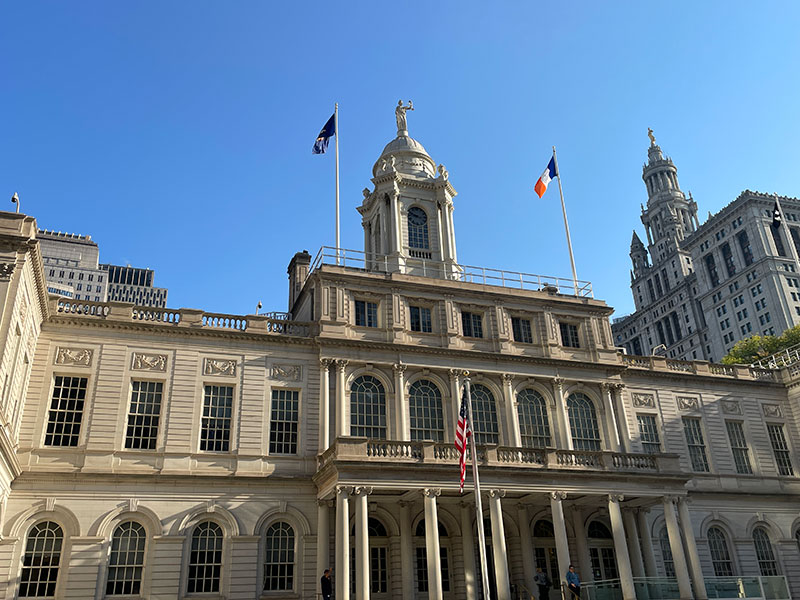
Mayor Mamdani Announces 16 Judicial Appointments to NYC Criminal and Family Courts
Mayor Zohran Kwame Mamdani announced 16 judicial appointments and reappointments to New York City’s Criminal and Family Courts...

Vermont Minimum Wage to Increase by 49 Cents in January
Vermont’s minimum wage floor is set to shift upward on January 1, moving from $14.42 to $14.91 per...

Student Writer Shares Experience with Imposter Syndrome
In a recent column for the Her Campus at Northeastern chapter, a student writer recounts her personal transition...