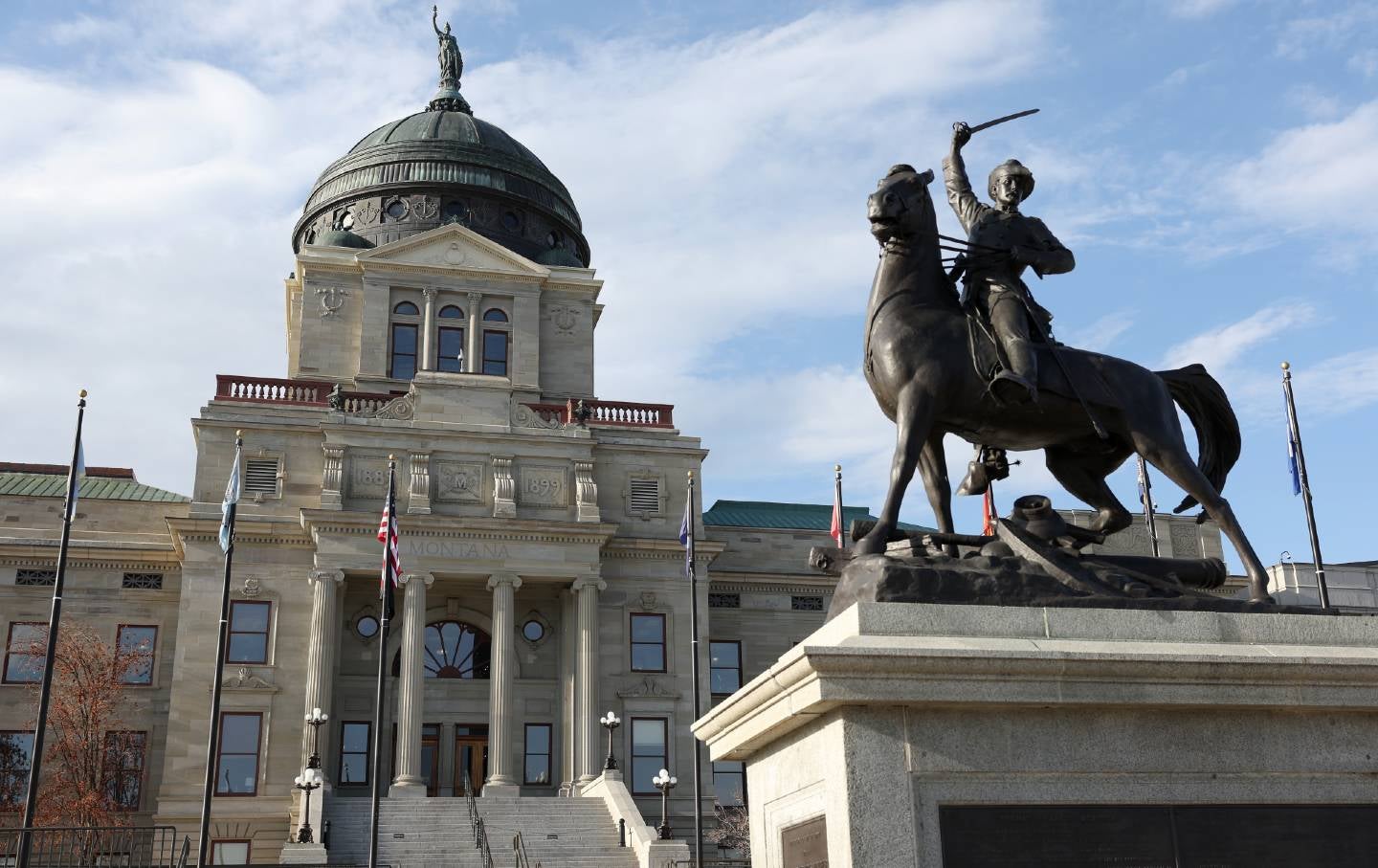
A measure blocking corporations from spending money on elections was backed by two-thirds of Montana voters, pushing back against corporate political funding in a 2024 state that Donald Trump won by 20 points.
Initiative 194, titled the Montana Plan, represents a novel ballot proposition that modifies state statutes to prohibit artificial persons from funding candidates, political action committees, or ballot measures, as reported by The Nation reported.
Over 465,000 Montana voters cast ballots on the initiative, which passed by 66 to 34 percent, according to the Montana Secretary of State election results. Montana has now become the second state, following Hawaii, to leverage its authority over corporate charters to bypass the 2010 US Supreme Court ruling in Citizens United v. FEC.
That ruling held that the First Amendment prohibits the government from restricting independent political spending by corporations and unions. The Montana Plan sidesteps this by redefining the powers the state grants to artificial persons, distinguishing between constitutional rights and state-issued charter powers.
“What I’ve been saying to folks for two years now is, there is a solution,” said Jeff Mangan, former state legislator and Montana commissioner of political practices who is the founder and president of the Transparent Election Initiative, telling The Nation about the flood of corporate and dark money in elections.
Both in-state and out-of-state companies and nonprofits are subject to the regulations of the measure.
Any corporation, nonprofit, labor union, or alternative organization determined to have broken the rules would lose its charter privileges—such as limited liability—and face demands to reimburse its expenditures. The legal theory behind the plan was developed by Tom Moore, senior fellow at the Center for American Progress.
The initiative was greeted with a lawsuit from the Montana Republican Party and conservative groups on election night. The lawsuit, filed by the Institute for Free Speech, argues that the law violates the First Amendment.
“The League of Women Voters of Montana chose early on to endorse the Montana Plan because it aligned perfectly with the League’s goal to ensure that our government serves the people, not wealthy special interests,” Bonnie Lorenzen, the group’s president, told The Nation.
The Montana Chamber of Commerce, the Montana Mining Association, and the Montana Petroleum Association were among the entities that registered opposition. In April, the Montana Supreme Court unanimously dismissed a business group challenge that would have barred Initiative 194 from the ballot.
Governor Josh Green signed Act 11 in May, establishing Hawaii as the initial state to pass legislation grounded in the Corporate Power Reset model. Following New York’s initial introduction of the legislation toward the end of 2025, close to 20 states put forward bills based on this framework over the course of the year.
The law is set to take effect on January 1, 2027. Legal challenges are underway that could reach the US Supreme Court.
Worth a look
Zach Edey and Anthony Davis Trade Defensive and Scoring Plays
The Memphis Grizzlies and Washington Wizards engaged in a closely contested opening period characterized by frequent scoring shifts...

Virginia Tech Softball Announces Five Newcomers for 2027 Class
Virginia Tech softball head coach Pete D’Amour announced the program's 2027 signing class, adding five newcomers to the...

Brooklynne Kadlac Faces Charges After Driving Incident in Montpelier
A New York woman faces felony and misdemeanor charges following a dangerous driving incident in Montpelier on Nov....
People with Parkinson’s & Care Partners Support Group – Central Austin – Eventbrite
People living with Parkinson’s disease and their care partners in Central Austin have a dedicated space to connect...