More than 27,000 crashes on Delaware roads in 2025. That’s a number, but it represents thousands of moments when someone’s life changed in an instant. It’s also the backdrop for a simple, urgent plea from the state: slow down, and move over. As the Delaware Department of Transportation joins National Crash Responder Safety Week, they’re asking drivers to remember the real people on the line when they approach a crash scene, News.Delaware.gov reported.
27,000 Crashes, Countless Lives at Risk
This isn’t just a public service announcement; it’s a call born from stark data. The sheer volume of incidents on Delaware roads means law enforcement, firefighters, emergency medical services, transportation workers, tow truck operators, and public works personnel face danger on a daily basis. The Federal Highway Administration launched this awareness week in 2016. This year’s national theme cuts straight to the chase: “Slow Down, Move Over. Lives are on the Line!” It’s a message that frames every roadside incident as a shared responsibility, not just an inconvenience for passing motorists.
Think about who is out there. Law enforcement officers securing a scene, firefighters assessing damage, EMS personnel tending to the injured, transportation workers directing traffic, tow truck operators clearing the wreckage, and public works employees making sure the road is safe for travel. They are all a part of this delicate, high-stakes ecosystem. When a driver fails to slow down or move over, they aren’t just breaking a law; they are adding to the chaos and jeopardizing the very people trying to restore order.
“There were more than 27,000 crashes on Delaware roads in 2025, and we need everyone to slow down, move over, and be alert when approaching crashes on our roads to protect the people who are working these incidents,” said Secretary of Transportation Shanté Hastings.
The words from Secretary Hastings are a direct translation of the stakes. Her statement shows that this is not a suggestion but a necessary safety protocol. The 27,000 figure isn't just a statistic on a government report; it's a cumulative measure of risk that responders deal with every single day. Each one of those crashes required a response, putting someone in harm’s way on the shoulder of a Delaware highway.

From Proclamation to Pavement
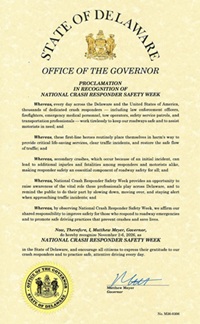
It’s one thing for a state agency to issue a warning. It’s another when the state’s chief executive adds their voice to the chorus. Governor Matt Meyer has issued a formal proclamation recognizing National Crash Responder Safety Week. This isn’t just symbolic paperwork. A governor’s proclamation elevates an issue, signaling that it’s a priority for public safety. It’s a clear message from the highest levels of state government that protecting these responders is a civic duty, not merely a traffic rule.
This observance creates a powerful, recurring touchstone for public education. Every year, the week serves as a focal point to remind Delawareans of the law and the reason behind it. The annual campaign is an attempt to keep that awareness from fading, to ensure that a simple, life-saving action becomes second nature for every driver.
The Human and Economic Toll
The “so what?” for the average Delawarean is direct and personal. If you or a loved one are ever in a car crash, your life may depend on a first responder being able to reach you safely.
The “Slow Down, Move Over” campaign is an effort to increase road user awareness for crash responders.
The campaign’s focus on “lives on the line” is not hyperbole. It is a literal description of the environment responders face. The law is designed to create a buffer of safety, a space where responders can perform their duties without fearing for their own lives.
Delaware’s message is clear and consistent, delivered by its top leaders. The data from 2025 provides a grim reminder of why this effort is so critical. As drivers hit the roads in the coming days and weeks, the simple act of slowing down and moving over is one of the most powerful tools they have to ensure that the next time a responder is called to a crash scene, they come home safely when their shift is over.
Related reading

2026 Milwaukee election errors: Votebeat reports ballot mix-ups, tabulator glitches
A $100 Bet and an Unsealed Machine: Milwaukee's Election Day Flaws On the Tuesday of Wisconsin’s 2026 election,...
West Virginia Eyes upset at No. 15 Texas Tech in Big 12 matchup
Lubbock Lights Up: West Virginia Eyes Upset at No. 15 Texas Tech West Virginia travels to Lubbock this...
Seattle Mariners Name Jason Kanzler New Manager
Mariners Hire Jason Kanzler, a 'White Whale' for the Job The Seattle Mariners have officially named Jason Kanzler...

Hampton Roads Election Takeaways: What We Learned
Hampton Roads Sends a Message, but It’s Not a Single One Tuesday’s election night painted a dramatic national...