
Muhyiddin Yassin Calls for Cabinet Purge Amid Growing Unity Government Friction
Bersatu president Muhyiddin Yassin has publicly urged Prime Minister Anwar Ibrahim to dismiss any ministers who are not aligned with his administration, arguing that internal dissent is actively sabotaging government policy. The former prime minister’s comments, reported by Free Malaysia Today, come as the unity government faces mounting pressure from internal political infighting and public disagreements between coalition partners during the lead-up to the November 14 Melaka state polls.
Sack ministers working against you, Muhyiddin tells Anwar#FMTNews https://t.co/9dUPS9tBBS pic.twitter.com/MtiazLNbI3
Muhyiddin’s stance centers on the principle of collective cabinet responsibility, suggesting that open criticism of the government by its own ministers undermines stability. “If I were the prime minister, I would have sacked them. I would have reshuffled the Cabinet and ensured that those who are not aligned with me could not remain or even be part of the government,” he stated while campaigning in Pengkalan Batu, Melaka. He asserted that such public disputes are likely calculated attempts to bring down the administration led by Anwar.
Escalating Tensions Between Pakatan Harapan and Barisan Nasional
The call for a cabinet reshuffle gains weight as political tensions intensify. While Pakatan Harapan (PH) and Barisan Nasional (BN) maintain a federal alliance, they are set to contest against each other in 23 seats during the upcoming Melaka elections, with BN opting for an electoral pact with Perikatan Nasional instead. According to Malaysiakini, former economy minister Rafizi Ramli has also urged Anwar to consider dropping BN ministers, warning that the growing hostility between the Prime Minister and Umno leaders could paralyze the government’s administrative machinery.
This friction was further highlighted by a public dispute between the Finance Ministry and the Rural and Regional Development Ministry, headed by Deputy Prime Minister Ahmad Zahid Hamidi. The disagreement, which centered on funding allocations for rural road projects, saw Zahid claim that necessary funds were being withheld, while the Finance Ministry maintained the ministry had already exceeded its budget. While the Rural and Regional Development Ministry was eventually granted an additional RM500 million, the public nature of the spat ignited broader concerns regarding government cohesion.
Anwar’s Stance on Cabinet Deliberation
Prime Minister Anwar Ibrahim has attempted to frame these disagreements as standard policy deliberation rather than a structural split. Speaking at a Malam Harapan event at the Pay Fong Middle School hall on November 5, Anwar challenged ministers to air their grievances behind closed doors. “If you agree or disagree, speak up in Cabinet. Tomorrow morning, we have a meeting at 9am. From 9am to 12.30pm, three hours. Speak up,” he noted, as reported by The Star. He emphasized that while differences of opinion are inevitable in a unity government, they must not play out on the campaign trail.
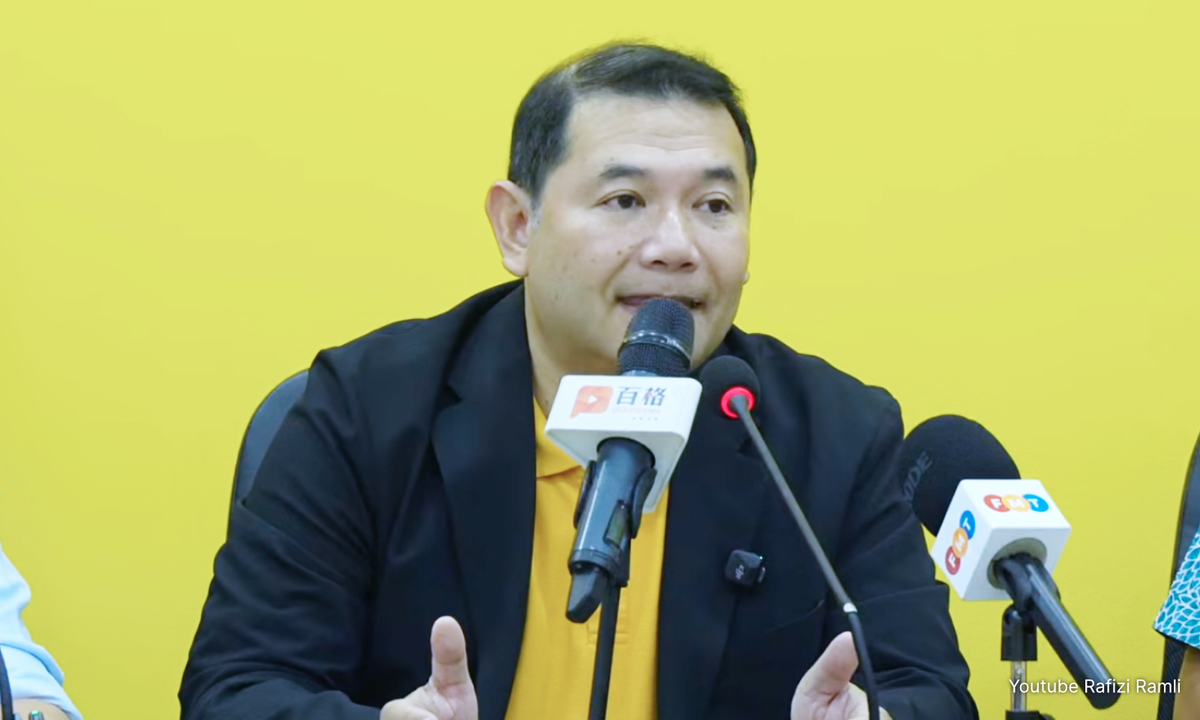
In the Dewan Rakyat, Anwar further addressed the issue in response to Opposition Leader Hamzah Zainudin, characterizing the ministry-level debates as part of the necessary process to ensure policies align with the government’s financial capacity and national priorities, according to AsiaOne.com. He maintained that all major decisions are subject to collective Cabinet responsibility and that the administration continues to monitor economic performance through current data to ensure resilience against global uncertainty.
The Path Toward Potential Reshuffle
The stability of the government remains a focal point as observers look toward future political shifts. Rafizi Ramli noted that the expected resignation of Transport Minister Anthony Loke, following recent developments regarding former prime minister Najib Abdul Razak’s house arrest clemency, could provide a strategic opening for a broader cabinet reshuffle. For the American reader, the situation mirrors the complexities of coalition governance, where the necessity of maintaining a parliamentary majority through confidence and supply agreements often clashes with the divergent electoral interests of partner parties.
As the November 14 Melaka polls approach, the government’s ability to manage these internal contradictions will be tested. Muhyiddin has explicitly criticized BN’s current position, labeling it “increasingly confusing” given that the coalition continues to hold key roles, including the deputy prime ministership, while simultaneously acting as an electoral rival in state contests. Whether Anwar chooses to consolidate his cabinet or continue navigating the friction through internal deliberation remains the primary question for the administration as it prepares for the next general election cycle.
Spain’s largest ship builder signs a deal to aid one of Africa’s strongest navies in modernizing 30-year-old warships built by the same company – Business Insider Africa
Navantia Secures Angolan Naval Modernization Contract for 1990s Patrol Boats “This order from the Angolan government marks another...

Channel 4 Cancels Married at First Sight UK After Welfare Reviews
Channel 4 canceled Married at First Sight UK after 10 seasons following an independent welfare review and serious...

Trump Confirms Minor US Strikes Targeting Iranian Air Defenses
Trump Confirms Targeted Strikes on Qeshm Island President Donald Trump confirmed Friday that U.S. military forces conducted a...

UK officials Weigh hope and risk after US midterm results
Antigua Dinner Interrupted as US Midterm Results Stun UK Government Officials Andy Burnham was eating dinner at the...