National Academy of Medicine President Monica M. Bertagnolli argues a $50 billion federal transformation program cannot fix rural health care while Medicaid cuts strip away the revenue hospitals need to survive.
In an article published in the New England Journal of Medicine, Bertagnolli writes that the Rural Health Transformation Program, established in 2025, offsets only about one-third of the estimated $137 billion in federal Medicaid reductions hitting rural communities over the next decade. “A program designed to transform rural health over 5 years while removing the revenue that keeps rural hospitals viable is working against itself,” she writes.
The White House marked National Rural Health Day by calling the $50 billion Rural Health Transformation Fund the largest investment in rural health in American history, noting every Democrat voted against it. Administration officials, including Health and Human Services Secretary Robert F. Kennedy Jr., CMS Administrator Dr. Mehmet Oz, and HRSA Administrator Thomas Engels, highlighted workforce expansion, telemedicine access, and hospital upgrades already underway across all 50 states.
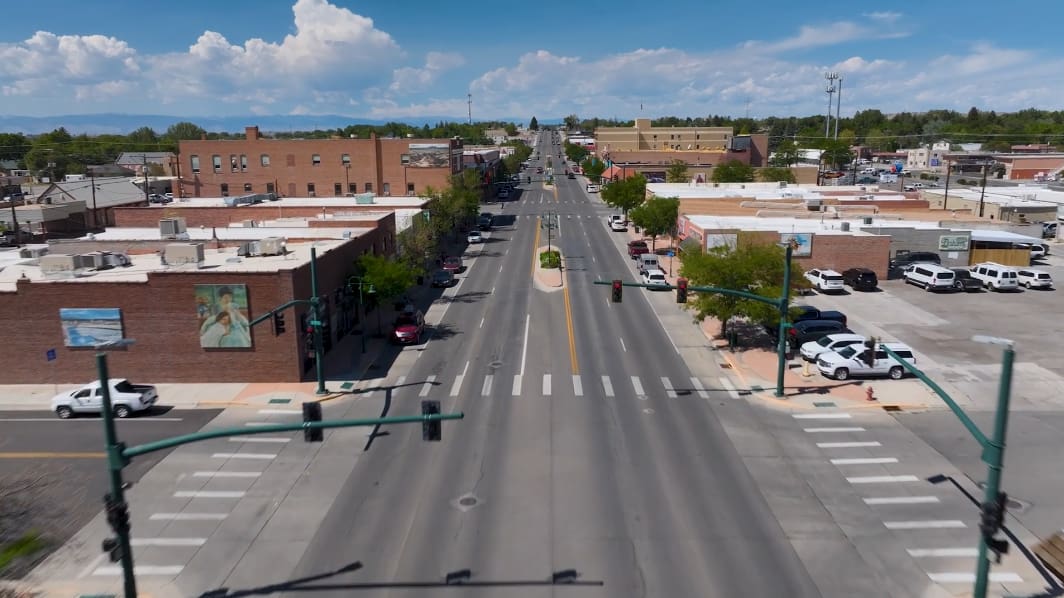
Bertagnolli draws on her own upbringing in rural Wyoming and spotlights Riverton, where residents spent eight years building RiverPeak Health after a private-equity-owned facility cut maternity care and other essential services. The community-owned hospital, scheduled to open in January 2027, will restore labor and delivery, intensive care, and surgery. The Eastern Shoshone Tribe donated land for the project, which braids together local advocates, state and federal financing, and tribal partners.
“Ultimately, the only durable solutions … will be the ones that rural communities build themselves.”
Bertagnolli writes.
The National Academies this year launched a broader Initiative on Rural Well-Being, aiming to connect expertise across sciences, engineering, and medicine to address the economic, infrastructural, and environmental factors shaping rural health. The NAM is also producing a documentary on RiverPeak with Madisonfilm, Inc., slated for screening early next year.
The two accounts present fundamentally different arithmetic. The White House frames the $50 billion as a historic standalone infusion. Bertagnolli frames it as a down payment swallowed by a $137 billion Medicaid reduction over ten years — a structural mismatch she says makes transformation impossible without sustainable reimbursement policy.
Bertagnolli grew up on a cattle ranch in Wyoming, the daughter of first-generation Italian and French Basque immigrants. She earned a BSE in biochemical engineering from Princeton University before receiving her medical degree from the University of Utah School of Medicine.
She later became the first woman to serve as Chief of Surgical Oncology at Dana–Farber Cancer Institute and the second woman to direct the National Institutes of Health. In 2021, she was elected to the National Academy of Medicine, and on July 1, 2026, she began a six-year term as its president, the first woman to hold the position.
Rural hospitals face higher chronic disease rates, workforce shortages, and closure risks that technology grants alone cannot solve. The learning health system model Bertagnolli advocates — continuous data-driven improvement aligned with community priorities — requires payment reform that rewards health outcomes, not just service volume.
Kansas’ Tyran Stokes to Play in Players Era Title Game vs. Houston
Kansas freshman Tyran Stokes will play Thursday night in the Players Era Festival championship game against No. 8...

Owl Attacks Multiple People in Brookline; Police Notify State Wildlife Officials
Brookline police have notified state wildlife authorities after a single owl attacked at least four people in recent...

Columnist: Council Committee Bungled Festival Contract, Led to 2026 Cancellation
In a column for The Portland Press Herald, a columnist argues that the Portland City Council’s Housing and...

Thurmond’s Real Fight Is Over Money, Not Demolition
"Most marriages fail over fights involving money," West Virginia Watch reported, framing the tension between the National Park...