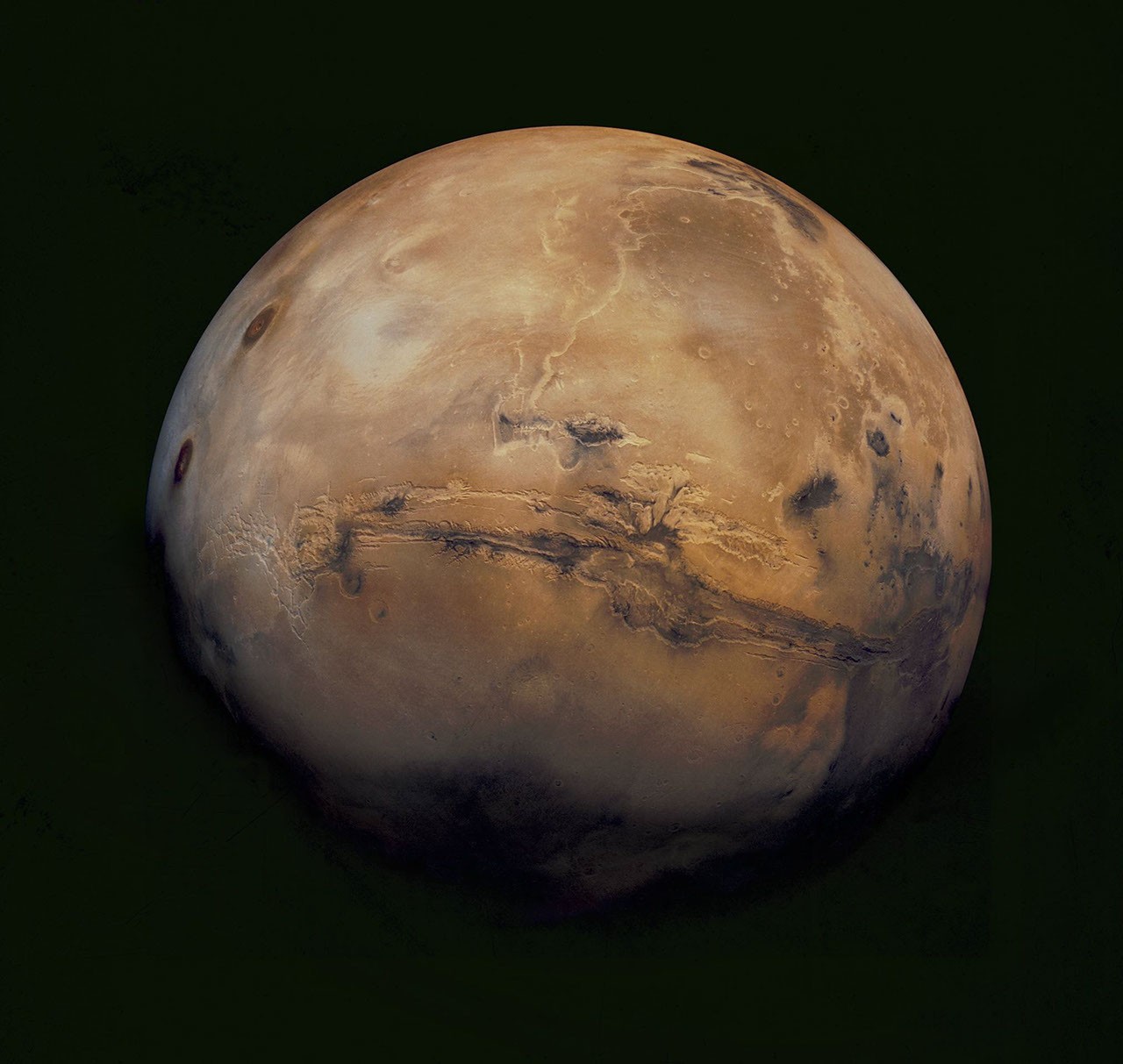
NASA paused active science operations on the Perseverance rover and the veteran 2001 Mars Odyssey orbiter after hardware failures struck both spacecraft in late October and early November 2026.
NASA paused science operations on its Perseverance Mars rover and Mars Odyssey orbiter as engineers investigated separate technical issues affecting communication and orientation.
Radio Failure Triggers Safe Mode
The trouble for Perseverance began on October 30, 2026, when its primary ultra-high-frequency radio failed to send routine electronic pings to the rover’s main computer.
“(or electronic pings) to the rover's main computer. This absence of signal correctly triggered the onboard fault protection, which powered off the unresponsive radio, swapped to a redundant duplicate radio that serves as a backup, and placed the rover into a protective safe mode, when all non-essential systems are shut down.” Perseverance project manager Steven Lee at NASA's Jet Propulsion Laboratory in Southern California said,” said Perseverance project manager Steven Lee at NASA’s Jet Propulsion Laboratory in Southern California.
“Every time it hears the ping, it resets a counter. However, if the radio stops sending the heartbeat due to a fault, after a certain number of missing heartbeats in a row, the computer swaps to the redundant one,” Lee explained.
That sequence involved 25 missed heartbeats, or roughly 100 seconds of silence. Autonomous fault-protection software shut down the unresponsive radio, switched to the backup unit, and placed the rover into a protective safe mode.
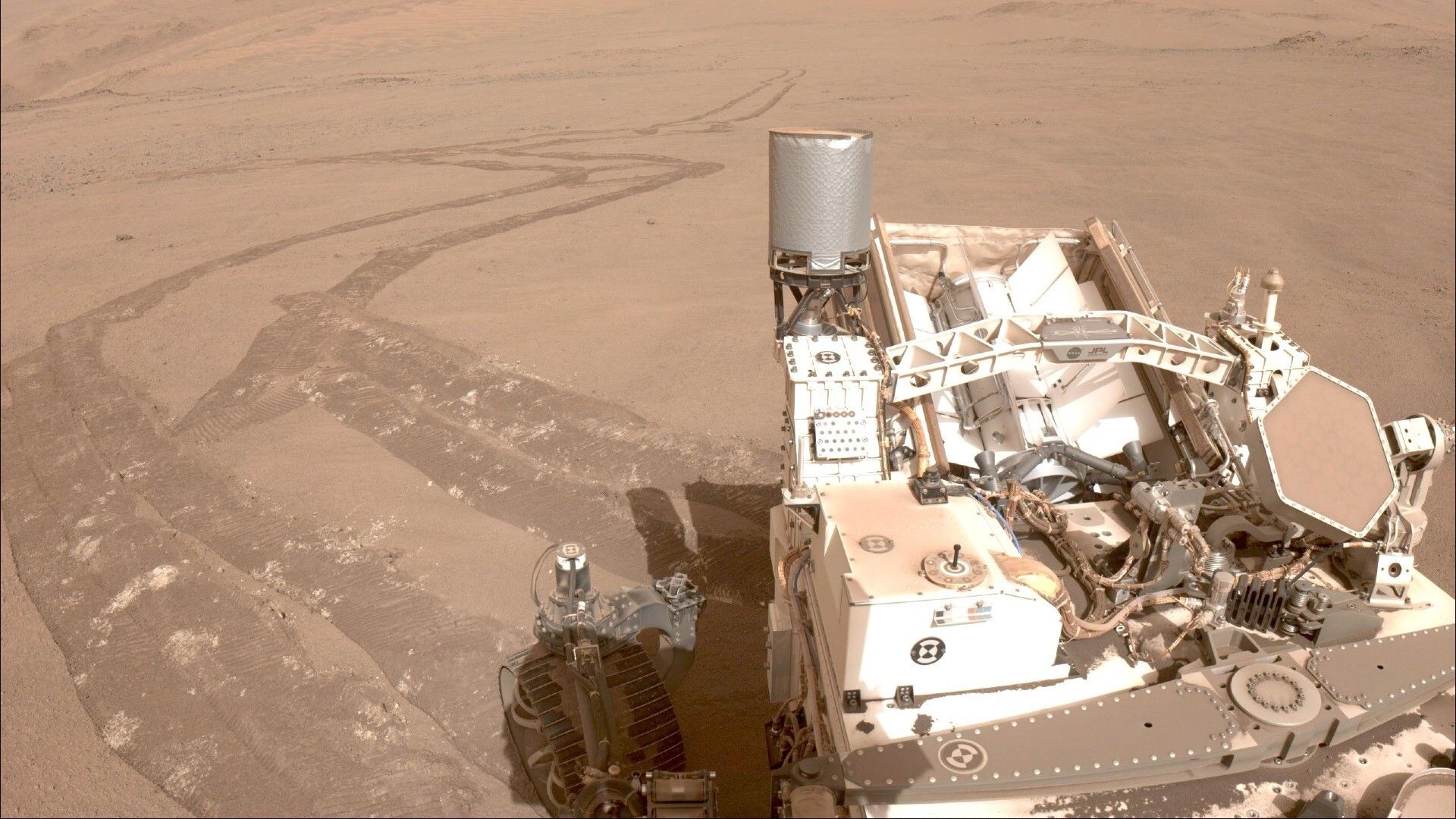
The rover landed inside Jezero Crater in February 2021 to assess the area’s potential to support past life and collect samples for return to Earth. Prior to the radio anomaly, the six-wheeled robot set a new off-Earth driving distance record by rolling past the mark of 28.06 miles (45.16 kilometers) previously set by its smaller cousin, NASA’s Opportunity rover.
Engineers recovered the vehicle from safe mode, but diagnostic data revealed that the backup UHF radio was transmitting at only half of its expected power output. Mission teams stopped using both radios until they can evaluate potential causes and determine if one or both are safe to operate.
Direct Communication Lowers Data Bandwidth
To maintain contact, Perseverance is communicating directly with NASA’s Deep Space Network using X-band communications over its high-gain antenna. This direct connection offers considerably lower bandwidth than orbiting relays provide.
The team has suspended active science data collection because the bandwidth provided by direct X-band transmission is much lower than that of orbital relays, though they intend to restart science by the end of November. NASA will provide further updates as ground teams work the issue.
Mars Odyssey Reaction Wheel Breakdown
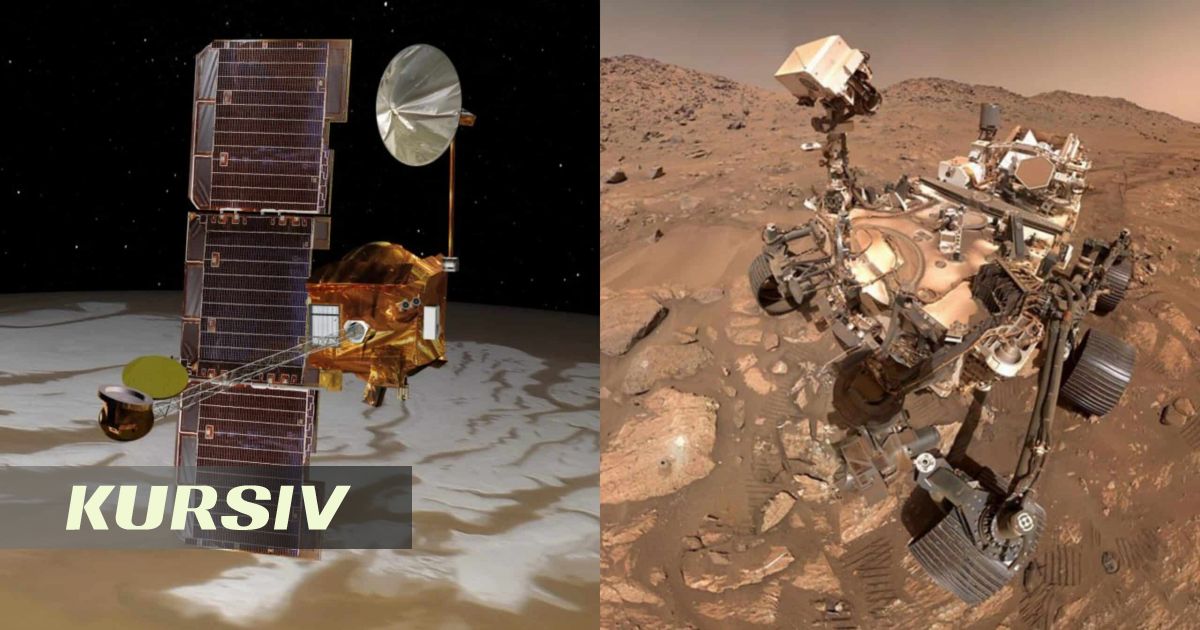
The 2001 Mars Odyssey orbiter entered safe mode between November 4 and 6 after one of its four reaction wheels stopped spinning. The 2001 Mars Odyssey reached Mars orbit in October 2001 to search for water and ice, outlasting its original two-and-a-half-year design life to operate longer than any other mission at the Red Planet.
To keep its antennas pointed at Earth and surface rovers and to keep solar arrays aimed at the Sun without the constant use of fuel, Odyssey needs at least three working reaction wheels—spinning flywheels that generate torque by changing speed. The orbiter previously lost one reaction wheel in 2013.
Without three operating reaction wheels, the spacecraft must rely solely on its hydrazine thrusters to remain oriented. Because the spacecraft carries no direct fuel gauge, engineers estimate remaining propellant by heating tanks and timing how quickly temperatures rise.
Testing Confirms Wheel Recovery Timeline
During one command test, the faulty wheel moved when commanded, offering early encouragement as teams at JPL and Lockheed Martin conduct further testing to confirm whether the wheel is recoverable.
NASA aims for Odyssey to return to science and relay operations during the final week of November 2026, and the agency will provide future updates on the status and timeline.
| Spacecraft | Fault Onset | Failed Hardware | Current Status and Backup Workaround |
|---|---|---|---|
| Perseverance rover | October 30, 2026 | Primary UHF radio missed 25 heartbeats; backup at half power | Direct X-band link via Deep Space Network; science paused |
| 2001 Mars Odyssey | November 4 to 6, 2001 | Second of four reaction wheels stopped spinning (first failed 2013) | Hydrazine thrusters; 1 to 2 months fuel estimated; instruments offline |
DESY, European XFEL Reliably Generate Sub-Atomic X-ray Flashes at 0.04 Nm
Researchers at DESY and European XFEL have reliably produced X-ray laser flashes with a wavelength of about 0.04...

Two Studies Reopen Primordial Black Hole Windows, Papers Show
A new model shows that microscopic primordial black holes could have reheated the early universe after inflation, and...
Chengdu University Study Finds Atmosphere Gained Oxygen in Three Pulses
Earth's atmosphere gained oxygen in three distinct pulses, each arriving hundreds of millions of years before the deep...

Bao, Huang and Wang Develop FFLE-Net for Real-Time Small Aerial Target Detection
Researchers built a compact neural network framework to detect small, densely packed targets in aerial imagery at real-time...