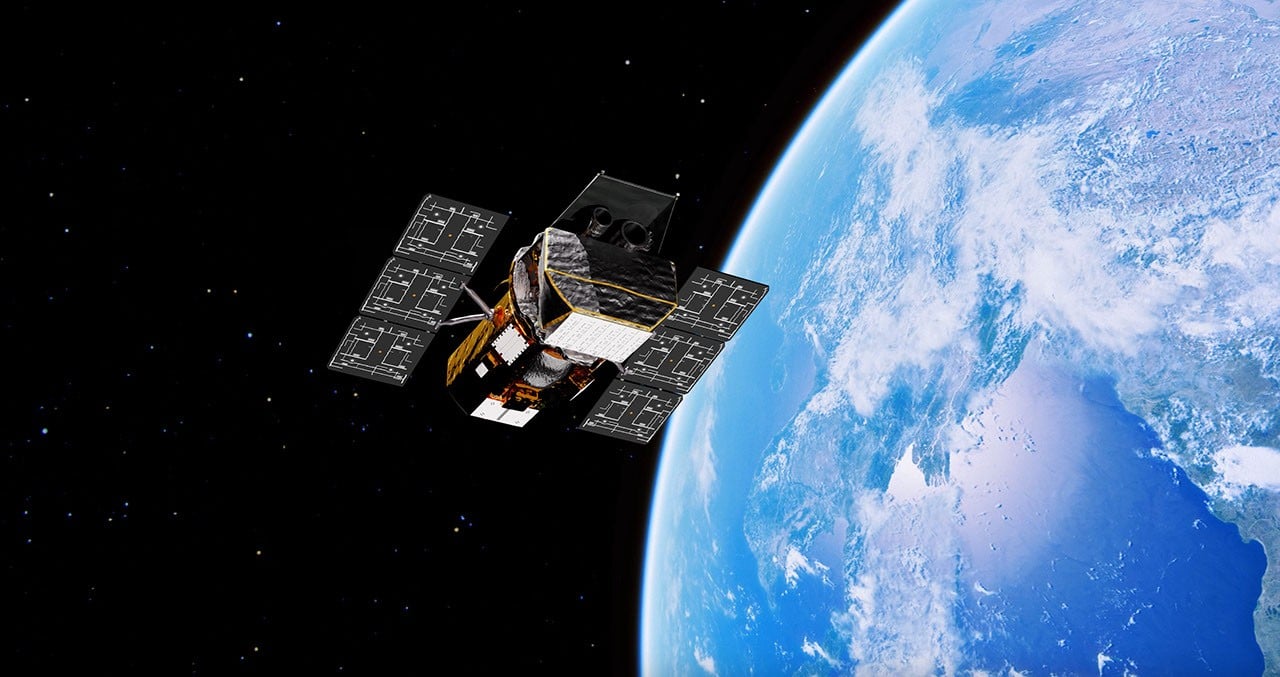
NASA’s Neil Gehrels Swift Observatory re-entered Earth’s atmosphere at 7:39 a.m. EST on Wednesday over the North Sumatra region of Indonesia, the U.S. Space Force confirmed, capping a 22-year mission that began with a November 2004 launch.
The re-entry occurred at approximately 3.4 degrees north latitude and 98.6 degrees east longitude, NASA reported. Satellite tracker Jonathan McDowell, citing U.S. Space Force data, confirmed the reentry over northern Sumatra. The 3,200-pound spacecraft largely burned up during descent, though the agency cautioned that some components may have survived to reach the surface.
Space Force reports SWIFT reentered at 1239 UTC Nov 4 over 99 deg E, 3 deg N over Northern Sumatra
A Two-Year Design That Lasted 22 Years
Swift launched in November 2004 as a first-of-its-kind multiwavelength observatory built to chase gamma-ray bursts, the universe’s most powerful explosions. It was designed for a two-year prime mission.
Instead, it observed more than 2,000 gamma-ray bursts and 1,400 supernovas, and its data contributed to more than 7,000 scientific papers.
The telescope lifted off aboard a Northrop Grumman Pegasus XL rocket from Kwajalein Atoll in the Marshall Islands. Almost immediately after launch, Swift started discovering things,
says astrophysicist Lynn Cominsky of Sonoma State University in Rohnert Park, Calif. The observatory was named for Neil Gehrels, the mission’s principal investigator who died in 2017.
Astrophysicists including Brad Tucker of the Australian National University used Swift to study cosmic explosions such as supernovas, stellar collisions and stars being ripped apart by black holes. With scientists, if you give them a tool to do something, they will other find other things that you can do with that tool,
says astrophysicist Phil Evans of the University of Leicester in England. Swift expanded knowledge of active galaxies powered by supermassive black holes, stars undergoing X-ray flares, and comets and asteroids in our own solar system.
In 2025, Swift detected hydroxyl on the interstellar object 3I/ATLAS, indicating the presence of water—a result that may help answer how Earth obtained water on its surface. When high-energy neutrinos were detected in 2017 by the IceCube Neutrino Observatory—whose principal investigator Francis Halzen won the 2026 Nobel Prize in physics—Swift helped pinpoint their source as a supermassive black hole.
The telescope made its final science observation on October 20, when its orbit had decayed to 275 kilometers. By that point, the orbit had descended to just below 171 miles above Earth, making continued operations impossible. Dr. Tucker captured the mood: It’s a sad ending, but it was up there for 22 years.
S. Bradley Cenko, Swift’s principal investigator at NASA’s Goddard Space Flight Center, explained the workflow the telescope perfected: Swift needed to detect and locate gamma-ray bursts, communicate their position to other observatories, and then swing its telescopes around to image the burst locations before their afterglows faded out.
The sequence typically took about a minute.
The $30 Million Rescue That Failed
In September 2025, NASA awarded Arizona-based Katalyst Space Technologies a $30 million contract to build and launch a robotic spacecraft that would grapple Swift and boost it to a higher orbit. The 5-foot-tall LINK spacecraft launched July 3, 2026, also aboard a Northrop Grumman Pegasus XL rocket from Kwajalein Atoll, and captured an image of one of Swift’s solar panels in August 2026.
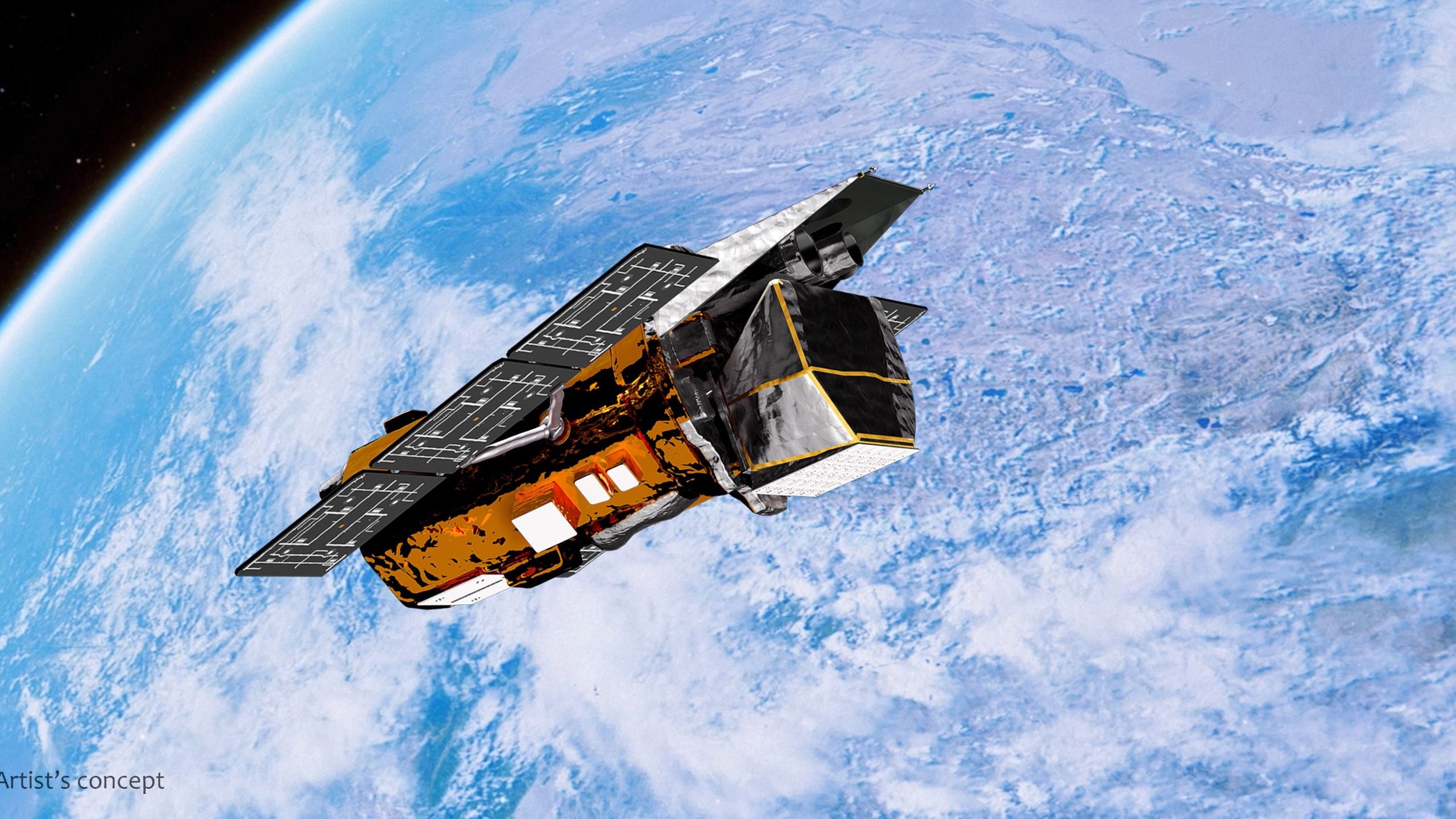
The mission aimed to lift Swift back to about 370 miles high, potentially extending its operating life by a decade or more, and Katalyst developed the craft in only nine months. By August 19, NASA and Katalyst announced publicly that LINK could not complete the boost maneuver. NASA called off the effort in August and shut Swift down on October 20. LINK operated in space for 85 days before its own atmospheric reentry on September 25, 2026. Katalyst said it would “apply data and lessons from LINK’s mission to its next generation of spacecraft,” and a company representative called LINK “the foundation we can build on.” Shawn Domagal-Goldman, acting director of NASA’s Astrophysics Division, said: From the beginning, this was a high-risk, high-reward mission.
Debris Risk: 1 in 2,100 Across a 41-Degree Band
Before re-entry, NASA estimated the chance of debris harming anyone on Earth at roughly 1 in 2,100, far lower than the lifetime odds of being struck by lightning, 1 in 15,300. The Aerospace Corporation’s Parker Wishik, a spokesperson, noted in an email that the expected casualty risk was less than 1 in 10,000, where “casualty” refers to serious injury or death.
Surviving fragments could have fallen anywhere between 20.6 degrees south and 20.6 degrees north latitude, a band covering much of Central and South America, central Africa, southern India, Southeast Asia and northern Australia, plus vast ocean stretches. NASA’s projections placed the debris shower in a broad swath stretching nearly 1,500 miles in latitude above and below the equator.
Experts noted that some parts could survive reentry, such as tungsten components, which are denser than lead, and mirror parts. For reference, 100 kilometres is where we call space 'space '; 120 kilometres is really when you're coming down in a few orbits,
Dr. Tucker said.
The Rapid-Response Gap Left Behind
Swift’s defining trait was speed. It could swivel its telescopes to cover 50 degrees in under 75 seconds; Hubble needs about 15 minutes to turn 90 degrees. That slewing ability let Swift’s alert network summon observatories worldwide to transient events. By 2015 it had detected its 1,000th gamma-ray burst. To conserve power and slow the rate at which the spacecraft was dropping out of orbit, the instruments remained off for months before being reactivated for the final observations.
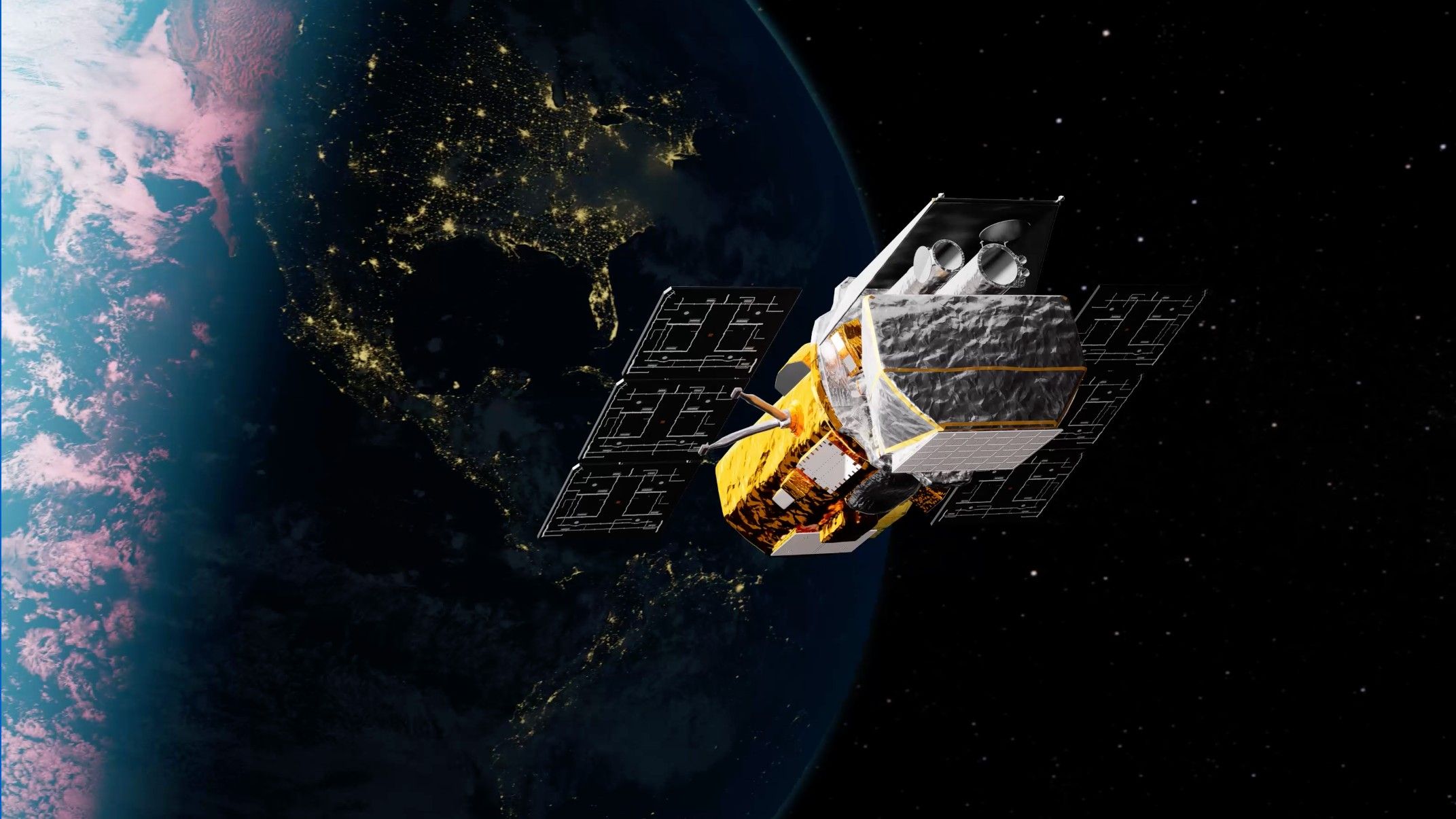
No current satellite fully replaces that rapid multiwavelength response. NASA predicts the Hubble Space Telescope, about 8.4 times heavier than Swift, will make its own uncontrolled entry sometime in 2033 or 2034. NASA issued a Request for Proposals to commercial companies asking how they might boost or prolong Hubble’s life; the RFP states there is no replacement for Hubble expected before the 2040s, and NASA’s analysis shows a 10% chance Hubble will deorbit by 2032 and a 50% chance by 2033. Hubble's going to have a very similar fate as well,
Dr. Tucker said.
The data archive remains fully accessible through the HEASARC Swift data archive, where it will continue to yield new discoveries as researchers apply improved analysis techniques for years to come. Principal Investigator Brad Cenko noted that Swift produced 284 refereed papers carrying his name alone, with more than 30,000 combined citations.
Keep reading

Texas Senator James Talarico reveals type 1 diabetes diagnosis
"I Was Lucky to Be Alive": How a 25-Mile Campaign Walk Led Texas Senator James Talarico to a...
Marcos to Announce Next Supreme Court Chief Justice This Week
Five associate justices are in the running to replace Chief Justice Alexander Gesmundo, who retires Friday, and President...

MRA’s RARE Registry 2026 Report Reveals New Insights on Acral, Mucosal Melanoma
The Melanoma Research Alliance released its RARE Registry 2026 Data Report on July 30, 2026, giving researchers and...

11 Rescue Personnel Missing After Boats Capsize in Telangana’s Khammam District
The incident marks a grim turn in a rescue operation that began when five fishermen ventured into the...