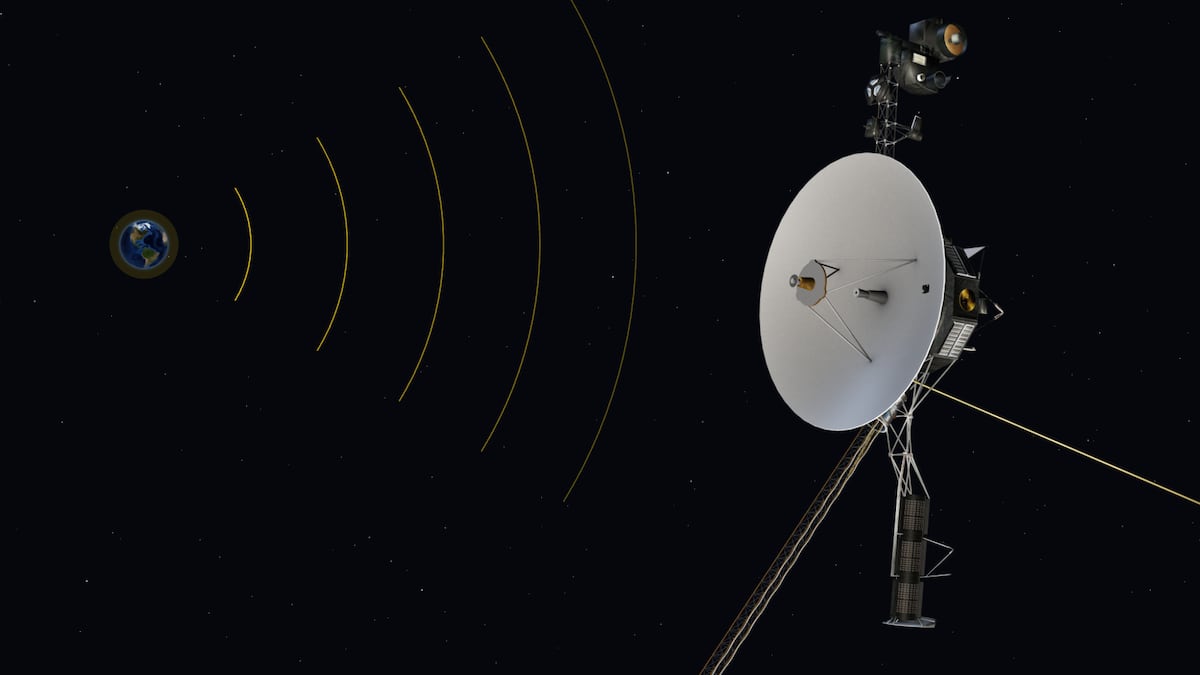
NASA’s Voyager 1 spacecraft reached a distance of one light-day from Earth on November 18, becoming the first human-made object to travel that far, only to stop transmitting science data the same week.
The milestone means a radio signal moving at light speed now needs 24 hours to reach the probe and another 24 hours for the reply — a two-day round trip for any command. Engineers confirmed the distance using the probe’s carrier signal and trajectory calculations after the spacecraft fell silent on November 14.
Only two of Voyager 1’s ten science instruments remain powered: the magnetometer and the plasma wave subsystem. The flight data subsystem, which packages instrument readings for transmission, appears to be the source of the blackout — the same component that failed in November 2023.
- Voyager 1 passed one light-day (about 16.1 billion miles) on November 18, 2026.
- Science data stopped flowing on November 14; only a carrier signal remains.
- The flight data subsystem, repaired once in 2024, is the suspected culprit.
- Voyager 2, on a different trajectory, will not reach one light-day until 2035.
Light-Day Threshold Crossed at 16.1 Billion Miles
One light-day equals roughly 16.1 billion miles (25.9 billion kilometers). For perspective, light reaches the Moon in 1.3 seconds and Neptune in about four hours; Voyager 1 now sits another 20 light-hours beyond Neptune. The probe crossed the mark at 5:16 a.m. EST on November 18, though ground controllers could not confirm it until the following day because of the 24-hour signal lag.
Dave Gallagher, director of NASA’s Jet Propulsion Laboratory, called the achievement “yet another historic feat on an extraordinary voyage of discovery.” The spacecraft launched September 5, 1977, from Cape Canaveral atop a Titan III/Centaur rocket, 16 days after its twin, Voyager 2. A rare planetary alignment — occurring roughly every 175 years — let both probes use gravity assists to tour the outer planets.
A Familiar Silence Returns
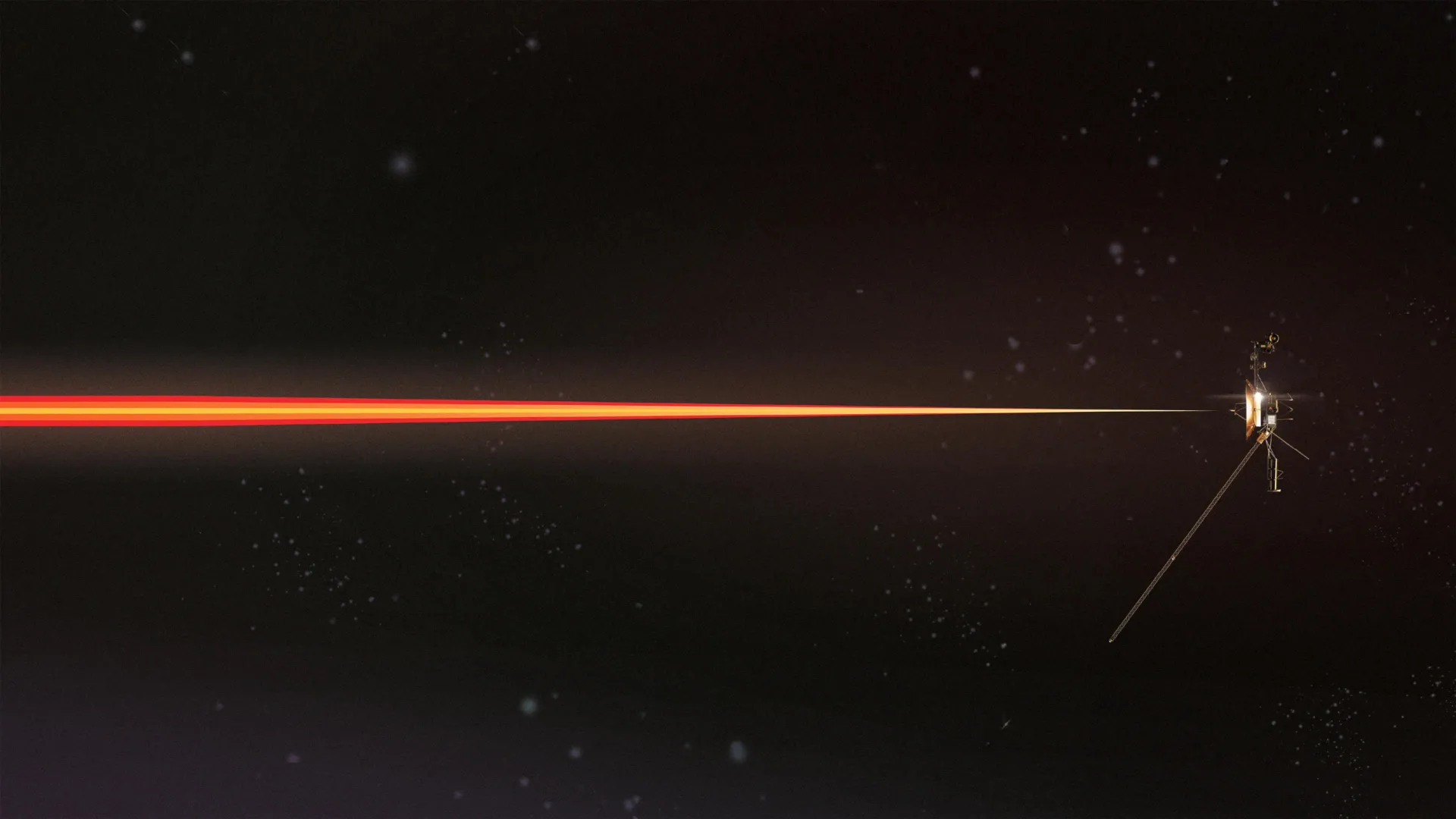
NASA detected the latest data loss on November 14, five days before the light-day milestone. The spacecraft still broadcasts a carrier signal, confirming its antenna remains pointed at Earth and its navigation computer is functioning. But the science and engineering telemetry that normally rides that carrier has vanished.
The pattern mirrors the November 2023 anomaly, when a single chip in the flight data subsystem (FDS) failed. Engineers spent five months rewriting code to bypass the bad chip, dividing the program into sections that could fit in the remaining memory. By June 2024, all four then-operating instruments were sending data again. Now, with only the magnetometer and plasma wave subsystem still active, the same computer is again the prime suspect.
“The anomalies have become normal for us,” mission manager Kareem Badaruddin told CNN. “An engineer with a problem is like a dog with a bone.”
Discoveries That Rewrote the Textbooks
Voyager 1’s prime mission ended after its Saturn flyby in November 1980, but the encounters at Jupiter and Saturn transformed planetary science. At Jupiter in March 1979, the probe revealed a turbulent atmosphere and discovered active volcanoes on Io — the first seen beyond Earth.
“As we got closer, scientists kept saying the surface is getting younger and younger, because they didn't see any big craters, no medium sized craters, no little craters — until finally parts of its surface are just minutes old,” project scientist Linda Spilker recalled in an interview with Sky & Telescope.
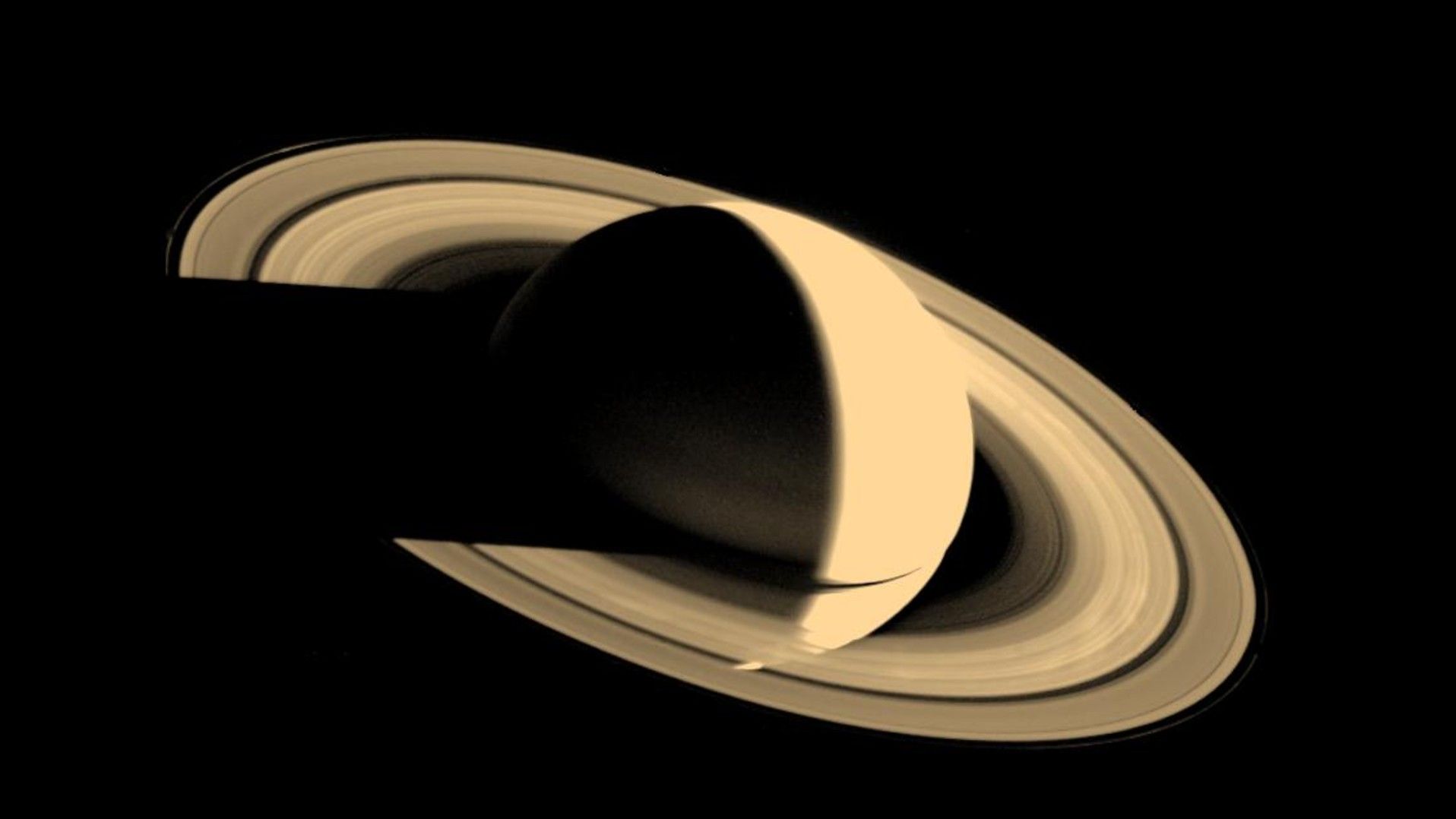
At Saturn, Voyager 1 found a previously unknown ring, five new moons, and a dense, hazy atmosphere on Titan that hid the moon’s surface. The Titan flyby bent the probe’s trajectory up and out of the planetary plane, sending it toward interstellar space and preventing visits to Uranus and Neptune — a grand tour completed only by Voyager 2.
Spilker Reflects on Voyager’s Remarkable Longevity
Linda Spilker, Voyager project scientist at JPL, said in a recent interview that she never imagined the mission would last this long, comparing its exceptional longevity to the Cassini spacecraft she also worked on, which studied Saturn from 1997 to 2017. Spilker has been with the mission teams since before the Voyagers launched into the outer solar system 49 years ago, Sky & Telescope reported.
“What Voyager has taught me is to expect the unexpected,” Linda Spilker, Voyager project scientist at JPL, told Live Science.
Spilker told Popular Science she is anxious to see the magnetic field direction rotate from the heliospheric orientation to that of the pristine interstellar medium. She added that she hopes to see Voyager 1 cross into the predicted hot hydrogen wall, calling it a long shot but a goal she would like to witness while the probe is still operating.
Team Adapts as Junior Engineers Step Into Critical Roles
Even the most junior team members are taking on key responsibilities as the mission enters its final phase. Mission manager Kareem Badaruddin told Space.com in an email that engineers Nshan Kazaryan and Bhavana Gupta have demonstrated their value consistently and are preparing for greater responsibility in the future.
Badaruddin described the recurring anomalies as normal for the team, telling CNN that an engineer with a problem is like a dog with a bone. Some retired specialists have returned to contribute their knowledge of the flight data system, including an expert who recently turned 90, according to a JPL interview published by Sky & Telescope.
Voyager 2 Trails on Slower Path
Voyager 1’s cosmic ray subsystem was turned off in February to conserve energy, leaving only two instruments active on the more distant probe.
Interstellar Science on a Shrinking Power Budget
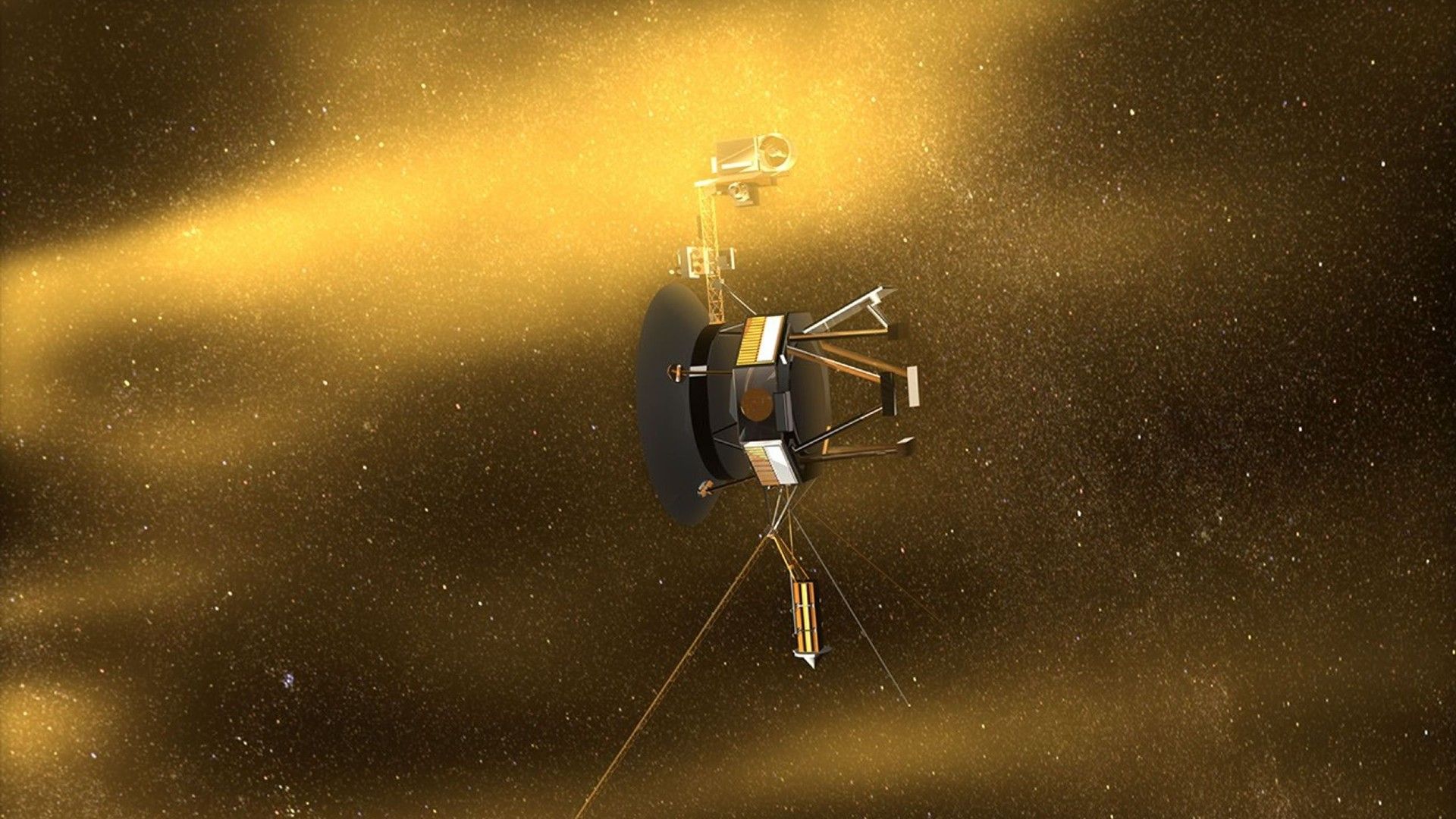
Voyager 1 crossed the heliopause — the boundary where the Sun’s magnetic bubble gives way to interstellar space — in August 2012. Its remaining instruments now measure the interstellar magnetic field, plasma density, and energetic particles in a region no other spacecraft has reached. The probe loses about four watts of power each year as its plutonium-238 generator decays, forcing the team to shut down instruments one by one.
Shining bright across the solar system! On Nov. 18, the Voyager 1 spacecraft will pass an extraordinary milestone, a distance reached by no other human-made object: one light-day away from Earth. And we're celebrating with a special message for the spacecraft! pic.twitter.com/CHgYMKrbhL
The cosmic ray subsystem on Voyager 1 was turned off in February to conserve power. Voyager 2, which entered interstellar space in November 2018, still operates its cosmic ray subsystem along with its magnetometer and plasma wave instrument. Both spacecraft are expected to go dark no later than 2036.
Engineers are analyzing the carrier signal and memory readouts to diagnose the FDS fault. The two-day light lag means each test cycle consumes 48 hours. Meanwhile, Voyager 2 continues its own interstellar observations on a slower track, not due to reach one light-day until November 2035.

“I wonder where we will finally reach the point where the sun doesn't influence what we're seeing, and we're in the pristine interstellar medium — and I hope that happens while Voyager 1 is still operating,” Spilker said.
NASA’s Jet Propulsion Laboratory manages the Voyager mission and operates the Deep Space Network that provides the sole communications link with the spacecraft. JPL’s flight team therefore sends carefully sequenced command loads rather than real-time instructions, relying on the spacecraft’s fault-protection software to execute critical actions autonomously during the 48-hour silence between transmission and confirmation.
That boundary crossing would mark a historic milestone for the mission before its power reserves are exhausted.
Related reading
Vermont’s $80M Workday Rollout Uncertain After ‘Unsatisfactory’ Audit Finds Major Gaps
Vermont expected a modern payroll and finance platform; instead, a six-year, $80 million Workday rollout is on pause...
FRA Withdraws $659M for Amtrak Bridgeport Move, Casting Doubt on White Sox Stadium
The Federal Railroad Administration on Monday withdrew $659 million in grants for a plan to move Amtrak’s maintenance...
Recount Flips Franklin NH House Seat to Democrat by One Vote
A recount in a Franklin state House race flipped the seat to Democrat Vivian Marie Hall, who defeated...

Missouri Sports Betting Tax Revenue at $15.1M With Two Months Left to Report
Missouri collected $15.1 million in sports betting tax revenue, more than triple the pre-launch estimate, with two months...