
Taoiseach Micheál Martin acknowledged “the suffering and sacrifice” of the Peterhead Men in the Dáil on Friday, recognising 36 prisoners held in UK jails years after the Civil War ended.
- Labour leader Ivana Bacik sought State acknowledgment during the centenary year of their 1926 release.
- Most of the 36 men were held in Peterhead prison in Scotland, known for brutal hard labour.
- The final two prisoners, Thomas McShea and Patrick Johnson from Bundoran, were freed in July 1926.
- A new publication, The Forgotten Peterhead Men, launches Friday at Mohill Community Library in Co Leitrim.
Dáil statement marks centenary
Martin told the Dáil the men were detained in “repressive and squalid conditions” and said “commemorating their suffering and sacrifice is important and appropriate,” RTÉ reported. Bacik had described them as “often known as the forgotten men of the Irish Revolution” and “the last political prisoners of the War of Independence.”
Cross-border raids organised by Collins
The prisoners were jailed for offences in Northern Ireland in 1922 and transferred to UK prisons — one to Aberdeen, two to Kent, the rest to Peterhead. Dr Pádraig McGarty, a relative of one prisoner, told RTÉ the group included both pro-treaty and anti-treaty men. “There were groups that were set up by Michael Collins in his bid to destabilise the newly existing state of Northern Ireland,” he said.
“They were on cross-border raids organised by Michael Collins. They were captured and then sent to jail in Scotland.” He believes the episode itself was “probably a little bit embarrassing to the existing government” as it was “a covert action in many respects set up by Michael Collins”.
Brutal regime at Peterhead
Peterhead was “a hard labour prison, a notorious brutal regime, where every day they had to go and break stones in a in a granite quarry,” Dr McGarty said. Most were released in January 1926; the last two, McShea and Johnson, walked free in July 1926 after a diplomatic effort led by the Free State government under W.T. Cosgrave.
Their release followed the Boundary Commission report in December 1925. Dr McGarty said the prisoners were “finally released after a long diplomatic effort by the Irish Free State government in the 1920s, led by WT Cosgrove”.
Families’ long campaign recognised
Dr McGarty said the Taoiseach’s recognition “means a lot,” calling it “huge for the families” who worked to have the men’s service acknowledged. Last July, relatives held a briefing in Leinster House hosted by Senator Nessa Cosgrove for a cross-party group of TDs and senators.
Dr McGarty told RTÉ attendees “couldn’t believe that this happened in the 1920s, especially with a sitting government TD.” Seán McCurtin was elected as a Cumann na nGaedheal TD for Tipperary in 1923 while still imprisoned; he later became the county’s state solicitor.

Centenary events conclude with book launch
Cathaoirleach of Leitrim County Council Mary Bohan said the book “highlights a lesser-known aspect” of history. Her Longford counterpart Gerry Hagan called it “valuable research” that records the stories of Longford men Joseph Lee, Frank Reilly and William Reilly. Senator Cosgrove described the Taoiseach's acknowledgment as “a fitting end to their centenary year.” The book launches Friday evening at Mohill Community Library.
Worth a look

Phase 1 Trial Opens for SAR445877 Combo With Chemo as First-Line MSS CRC Therapy
A phase 1 trial testing an experimental immunotherapy combination as first-line treatment for microsatellite-stable metastatic colorectal cancer opened...
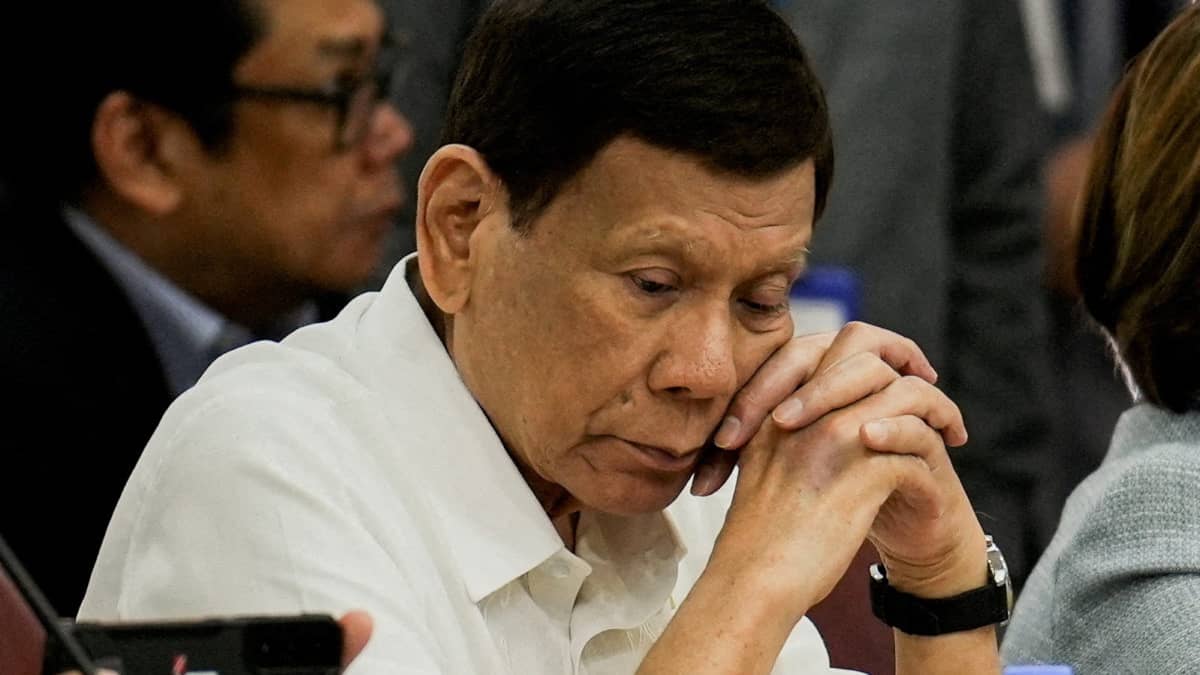
Supreme Court Dismisses Duterte Habeas Corpus Petitions 9-4 as Moot
The Supreme Court dismissed the consolidated habeas corpus petitions challenging former President Rodrigo Duterte's arrest and transfer to...

Later-Born Generations Enter Old Age With Better Memory and Slower Decline, Study Finds
Later-born generations reach old age with stronger memory and lose it more slowly, a study of roughly 219,000...

Pahalgam Hits Season’s Low of -4.6°C as Kashmir Valley Shivers Under Intense Cold
Pahalgam dropped to minus 4.6°C on Monday, the coldest night recorded in the Kashmir Valley this season, Kashmir...