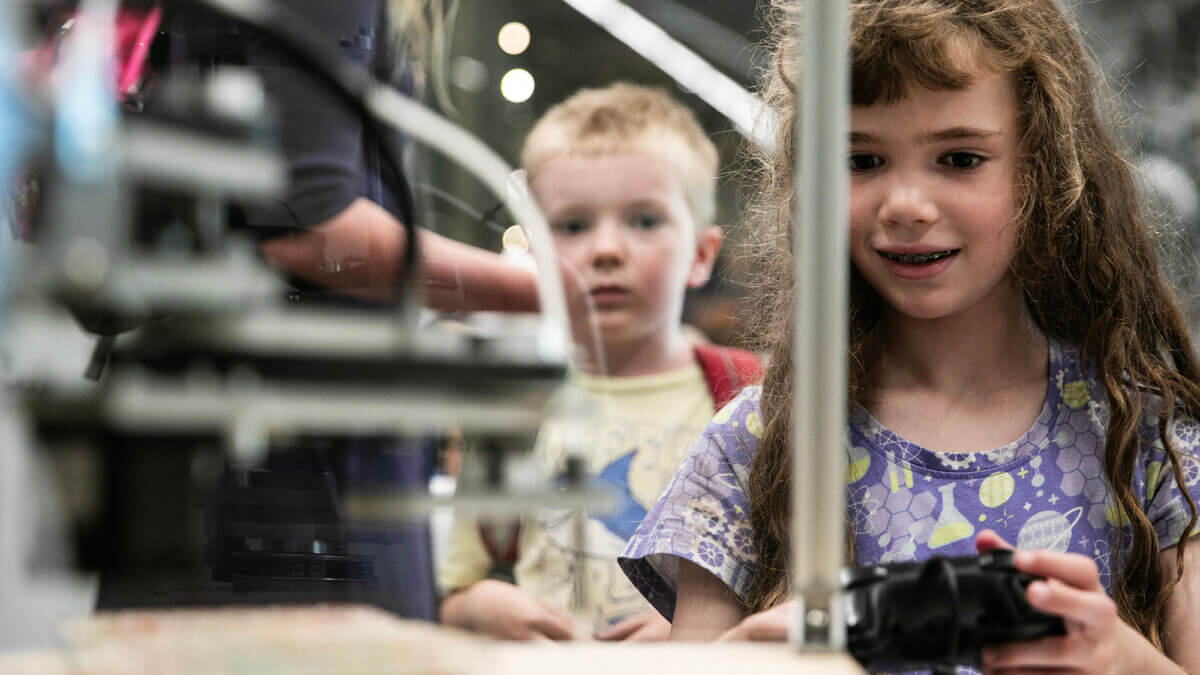
ScienceFest returns to Salt Lake City
The Natural History Museum of Utah opens its doors for a two-day immersion into the mechanics of the natural world this weekend. Beginning Friday, Nov. 7, and running through Saturday, Nov. 8, the institution will host ScienceFest, an event designed to bridge the gap between academic research and public curiosity, TownLift reported.
Whether you're a child with crayons, a budding artist, or a talented painter, the Natural History Museum of Utah is inviting Utahns of all ages to join a dinosaur art contest for its next billboard. Learn more: https://t.co/fD1lvtoIIG pic.twitter.com/KDhBKrcv4C
Held in collaboration with the University of Utah’s College of Science, the festival transforms the museum at 301 Wakara Way into a series of active laboratories and demonstration spaces. For families and students, the event serves as a rare chance to engage directly with professionals working in fields ranging from robotics and physics to medicine and natural history.
The programming is structured to balance observation with participation. The university’s physics and chemistry departments have scheduled live demonstrations at noon, 1 p.m., and 2 p.m. on both days. These segments are intended to provide a high-visibility look at core scientific principles, while other areas of the museum offer deeper, behind-the-scenes access to active university research facilities.
The intersection of research and public access
While standard museum admission covers the primary ScienceFest activities, the event also includes specialized workshops that require separate registration and additional fees. These sessions lean into the intersection of art and empirical study, featuring activities like scent creation, alcohol inks, sunlight photography, and origami.
These workshops serve a specific demographic: those looking to understand how the rigor of scientific inquiry informs creative practice. By offering these sessions, the organizers are attempting to widen the definition of who participates in science, moving away from purely academic presentations toward a more interdisciplinary model.
The festival aims to demystify complex subjects—such as the mechanics of volcanic eruptions, the intricacies of ocean mapping, and the development of robotic exoskeletons—by placing the researchers themselves in the room with the public. It is a calculated effort to foster interest in STEM fields by showing the human side of discovery rather than just the final output of a paper or a technical report.
Logistics and participation
The museum will operate on its standard schedule for the festival, with doors open from 10 a.m. to 5 p.m. on both Friday and Saturday. For those interested in the specific workshop offerings or looking to secure tickets in advance, the museum has launched a dedicated ScienceFest portal, which serves as the primary hub for registration and event updates.
Because the event is included with general museum admission, the festival is expected to draw a high volume of visitors, particularly families and school-aged children interested in hands-on learning. The inclusion of behind-the-scenes tours of university laboratories represents a significant departure from standard museum programming, offering a glimpse into the actual environments where Utah-based research is currently unfolding.
The event highlights a broader trend in public education: the shift toward experiential learning. By moving the conversation out of the lecture hall and into the museum, the University of Utah and the Natural History Museum are positioning the local community as active participants in the scientific process rather than passive observers.
Worth a look

Nasdaq Rebounds as Chip Stocks Recover from AI Regulation and Jobs Data Fears
Nasdaq Rebounds as Semiconductor Equities Shake Off Correction Fears The Nasdaq Composite staged a recovery on Friday, clawing...

Wyoming Digital Government Summit focuses on AI and cybersecurity
Wyoming’s Digital Shift: Cybersecurity and AI at the Forefront On May 20, 2026, state and local government leaders...

Dillard’s to Close Citadel Mall Location After 34 Years
Dillard’s to Exit Citadel Mall After 34-Year Run The West Ashley retail landscape is losing one of its...

Virginia Beach Launches Military-Themed Gingerbread Holiday Trail
Virginia Beach Expands Holiday Gingerbread Tradition to Military Families The annual gingerbread competition in Virginia Beach is evolving...