
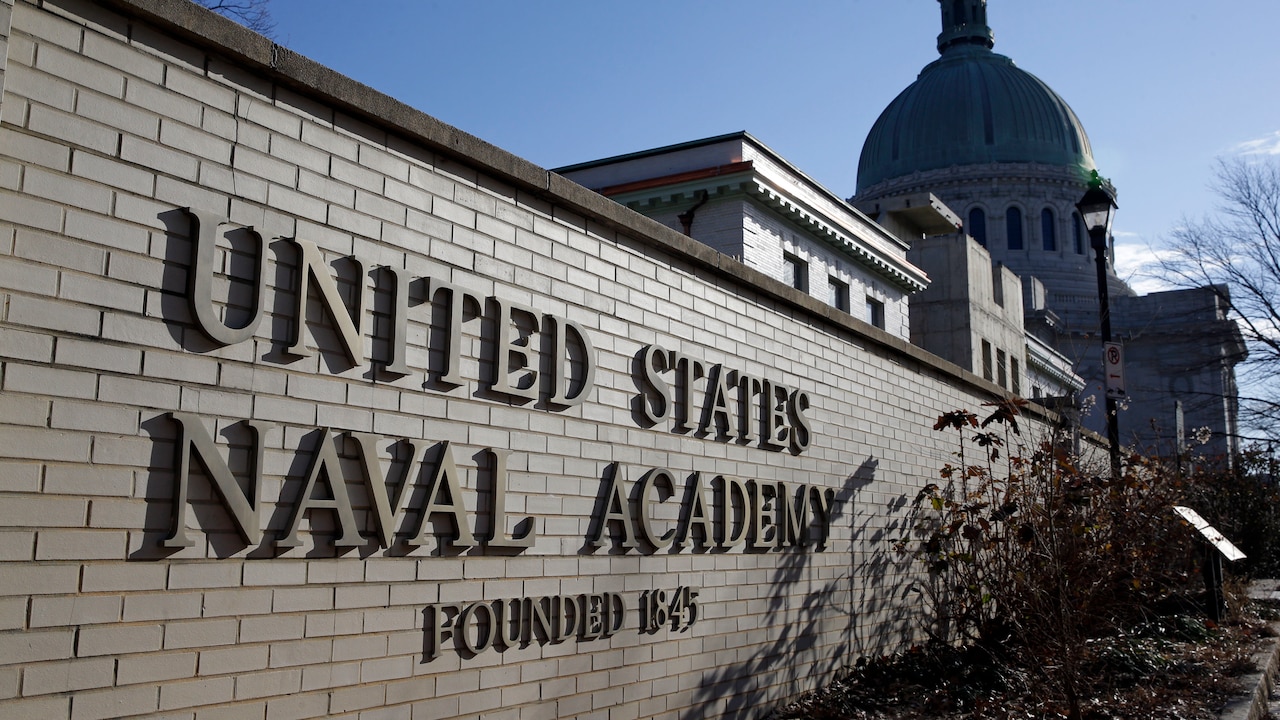
A civilian professor at the U.S. Naval Academy has filed a federal class-action lawsuit challenging the Navy’s abrupt elimination of tenure review procedures for approximately 78 incumbent tenure-track faculty. The suit, filed in the U.S. District Court for the District of Maryland, alleges the Naval Academy violated the Administrative Procedure Act by dissolving the evaluation committee and canceling promised reviews without a transition process.
What triggered the lawsuit?
Defense Secretary Pete Hegseth's memo abruptly eliminated tenure reviews for 78 civilian faculty mid-probation at the Naval Academy, prompting a lawsuit.
The dispute began with a September 29, 2026 memorandum from Defense Secretary Pete Hegseth directing military service academies to “immediately cease appointing civilian employees to tenured positions,” arguing that “civilian academic norms” diluted “warfighting lethality,” Forbes reported. Hegseth’s memo preserved tenure for civilians who already held it and left active-duty military faculty untouched, but it omitted guidance for faculty mid-probation, CASRAI reported.
In his memo, under the subject line “Refocusing the Military Service Academies on Warfighter Education,” Hegseth wrote that to ensure that the U.S. Military Academy at West Point, the U.S. Naval Academy and the U.S. Air Force Academy remain firmly focused on a warfighting mission, “we must address the structural mechanisms that have allowed civilian academic norms to dilute our focus on lethality.”

How did the Naval Academy implement the directive?
On November 2, Provost Samara L. Firebaugh issued PROVOSTINST 12335.1E, which rescinded institutional tenure procedures and dissolved the Yard-Wide Promotion and Tenure Committee — the faculty body that evaluated dossiers, gathered external peer reviews, and recommended tenure to the superintendent, CASRAI reported. The instruction provided no transition procedure for incumbent tenure-track faculty, according to the complaint cited by Inside Higher Ed. Meanwhile, the Academy’s Faculty Handbook still allowed tenure consideration.
Who filed the suit and what does it claim?
The proposed class action was filed in mid-November on behalf of an anonymous plaintiff identified as “Professor Doe 1” by litigation boutique Holon Law Partners, led by partner Jason Ehrenberg, CASRAI reported. The complaint names the Department of the Navy, Acting Secretary Hung Cao, Superintendent Michael J. Borgschulte, and Provost Firebaugh as defendants in their official capacities.
The lawsuit brings two counts under the Administrative Procedure Act. First, it argues PROVOSTINST 12335.1E was arbitrary and capricious because officials reversed established personnel policy without addressing the reliance interests of faculty who built careers around promised sixth-year reviews, citing Supreme Court precedent including FCC v. Fox Television Stations (2009) and Department of Homeland Security v. Regents of the University of California (2020), CASRAI reported.
Second, it asserts the Navy breached statutory and contractual commitments by dissolving the evaluation committee without a substitute.
“These people are losing their rights fairly immediately,” Ehrenberg said, noting the firm identified the 78 affected faculty through faculty senate reports and conversations with academy personnel, The Banner reported.
Plaintiff seeks injunction to preserve tenure eligibility
The plaintiff is not asking the court to grant tenure. The filing requests a court order to keep the Yard-Wide Promotion and Tenure Committee intact and to sustain evaluation pathways until the case is decided on its merits, CASRAI reported.
“The plaintiff is not seeking an order that automatically awards them tenure. Rather, they ask for injunctive relief that protects their tenure eligibility while a final ruling is decided and, ultimately, the opportunity to undergo ‘lawful consideration’ for tenure under the existing review framework,” Inside Higher Ed reported.
Ehrenberg said he plans to file a preliminary injunction if the academy “continues to go down the path they’re going down,” The Banner reported.
What are the stakes for accreditation and research?
The Naval Academy is accredited by the Middle States Commission on Higher Education, whose standards mandate published, transparent procedures for faculty appointment, promotion, and governance. Civilian professors lead research funded by the Office of Naval Research, DARPA, and the National Science Foundation; career precarity risks project delays and faculty departures, particularly for multi-year defense grants that rely on stable principal investigator arrangements linking civilian specialists with rotational military officers.
Court proceedings continue through early 2027
The case is pending before the U.S. District Court for the District of Maryland. Key preliminary steps include motions to proceed under pseudonym and for a preliminary injunction.
The Department of the Navy and defense officials are required to submit formal responses under federal scheduling rules, setting the stage for key rulings in early 2027, CASRAI reported. Lt. Ronan Williams, a Navy public affairs officer, said “we do not comment on ongoing litigation,” The Banner reported.
Worth a look
Saint-Gobain Renoves Delaware Memorial Bridge with UHPC
Saint-Gobain supplied custom admixtures through its Chryso brand for the ultra-high-performance concrete deck rehabilitation of the Delaware Memorial...
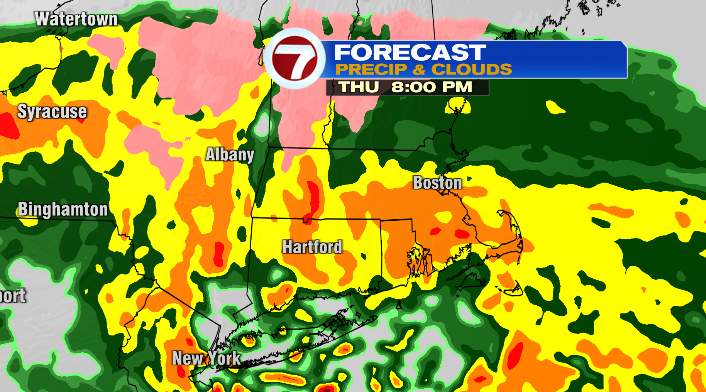
Thanksgiving Storm Brings Rain Wind Advisory to Boston Area
A storm moving north through the Mid-Atlantic is set to bring rain and wind to the Boston area...

Eric Thomas Advises on Fallout From Friends’ Canceled Overseas Trip
In a column for the Chicago Tribune, advice columnist R. Eric Thomas examines the fallout from a canceled...

Nvidia Pauses AI Server Shipments to Four Southeast Asian Nations Over U.S. Export Controls
Nvidia has told manufacturing partners to halt shipments of AI servers to Malaysia, Singapore, Thailand and Indonesia, the...