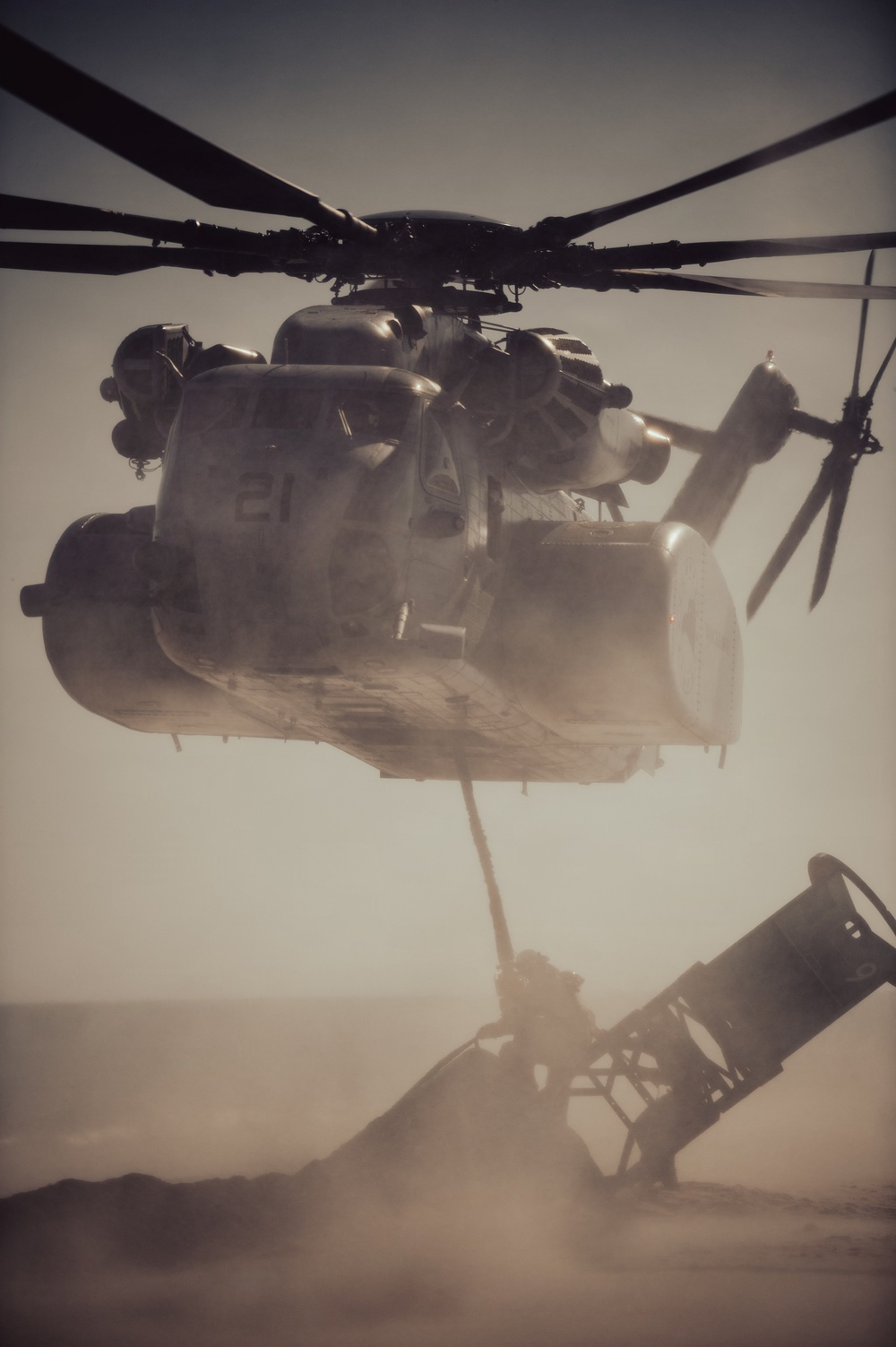
A U.S. Navy MH-53E Sea Dragon helicopter recovered Chesapeake Bay Southern Approach Lighted Buoy 9 on Wednesday from Back Bay National Wildlife Refuge in Virginia Beach, Virginia.
The joint operation involved the U.S. Navy and the U.S. Coast Guard, with crew members from Coast Guard Cutter Maple observing from the beach.
Members of U.S. Navy Helicopter Mine Countermeasures Squadron 15 (HM-15) secured the buoy to a lifting assembly beneath the MH-53E Sea Dragon helicopter during the recovery on November 18, 2026, in Virginia Beach, Virginia, according to a U.S. Coast Guard photograph by Petty Officer 2nd Class Matt Thieme.
The buoy was driven ashore in September during a storm, and the U.S. Coast Guard said the buoy “washed ashore in September during a storm,” according to the U.S. Coast Guard.
The buoy was recovered for transport to Coast Guard Cutter Frank Drew for repairs before it could return to service, as the Coast Guard said.

The operation also involved the Virginia Department of Wildlife Resources, per the captions.
Lighted buoys like this one help mark the shipping approach to the Chesapeake Bay, and the Coast Guard said the operation supports its job to “maintain critical navigational infrastructure.”
The MH-53E is the U.S. Navy’s largest helicopter and HM-15 is one of only two squadrons still flying it, although the U.S. Navy plans to replace the aging Sea Dragons and its Avenger-class minesweepers with uncrewed minehunting boats.
Lighted buoys help mark the shipping approach to the Chesapeake Bay. This largest estuary in the United States covers a drainage basin of 64,299-square-mile (166,534 km2) and is located in the Mid-Atlantic region, primarily separated from the Atlantic Ocean by the Delmarva Peninsula.
“The buoy washed ashore in September during a storm,” the Coast Guard said.
Related reading

Bruno Mars Mourns Death of Father Musician Peter Hernandez
Bruno Mars is mourning the death of his father, musician Peter Hernandez, who died at the age of...

MLS announces Chicago Fire FC vs Charlotte FC in 2026 MLS Cup Playoffs Game 1
Chicago Fire FC (No. 4) and Charlotte FC (No. 5) meet Sunday for Game 1 of their Eastern...

Mamou Brings French and Creole Cuisine to New Orleans
MaMou opened on a corner of the French Quarter where St. Philip Street meets Rampart Street in November...

Maryland Interim Coach Blames Discipline For USC Loss
Maryland interim coach Aazaar Abdul-Rahim blamed himself and his team's lack of discipline for Saturday's 35-21 loss at...