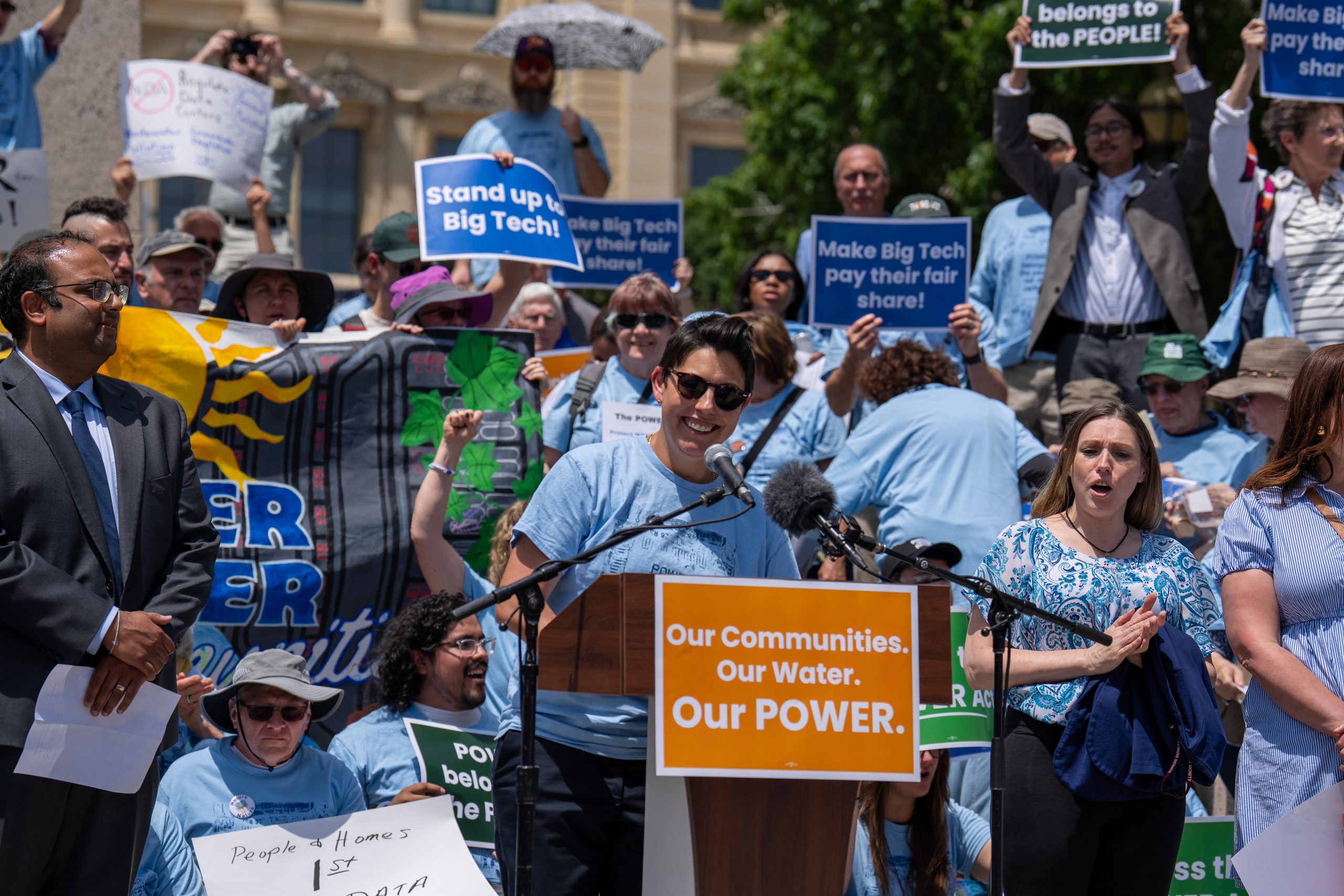
“Time is up,” Lori McKiernan told the crowd gathered under the Capitol dome Wednesday. “Our legislators must take action on data centers.”
Nearly 600 Illinoisans arrived by bus, car and Amtrak for the Illinois Environmental Council’s POWER Act Lobby Day, pressing lawmakers to pass what sponsors call the most comprehensive data center legislation in the nation.
The rally came two days after the Illinois EPA and Illinois Power Agency proposed extending emission limits for 11 gas- and oil-fired plants from 2030 to 2033 — a move advocates say is driven by the explosive energy demand of hyperscale data centers.
At stake is whether Illinois honors the Climate and Equitable Jobs Act’s timeline for closing polluting plants or lets Big Tech’s appetite for electricity rewrite the state’s climate commitments. Since the POWER Act (SB4016/HB5513) was introduced in February, developers have proposed at least 4,200 megawatts of new data-center load on more than 2,000 acres of mostly former farmland, Capitol News Illinois reported.
The CyrusOne flashpoint
In Sangamon County, a CyrusOne campus approved behind closed doors would consume three times the electricity of the entire City of Springfield and bring 420 backup diesel generators, McKiernan, a Springfield community advocate and Sierra Club Illinois volunteer, told Illinois Environmental Council. The community had no chance to negotiate a Community Benefits Agreement.
“Communities like mine across Illinois are tired of fighting alone for basic protections without help from the state legislature,” she said. “We need the POWER Act to ensure transparency and accountability are the norm.”
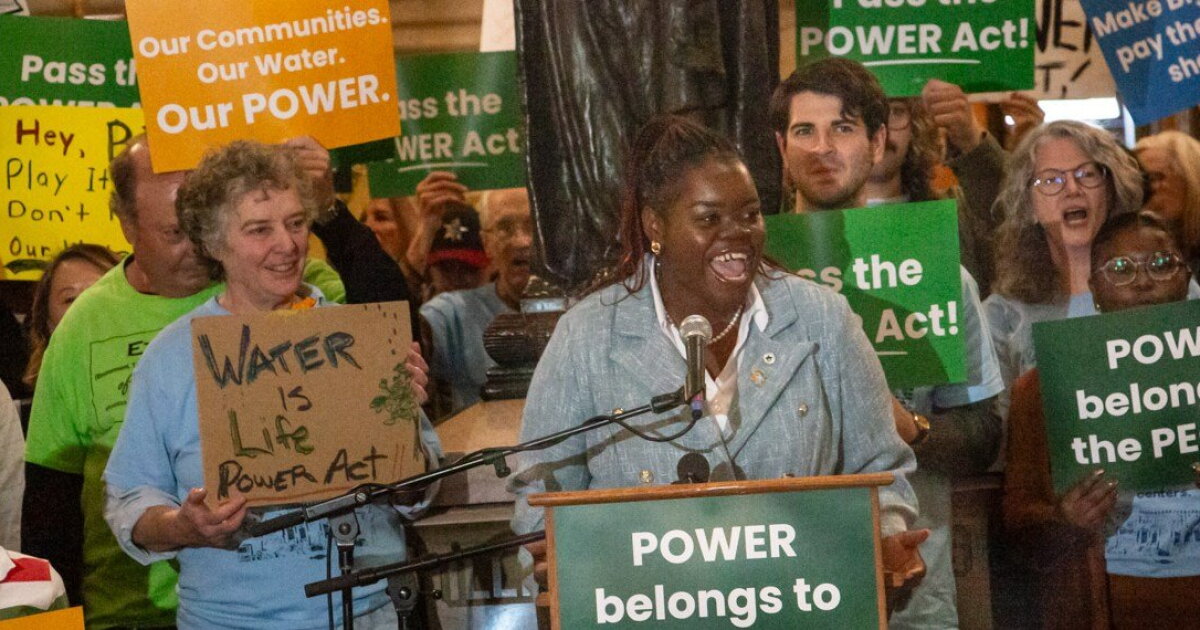
What the bill would do
The roughly 1,000-page measure would require data centers to pay for the new energy they consume, mandate public reporting of water usage, cap noise and diesel-generator emissions, and ensure local community benefit agreements before projects advance. It would also update water laws that Andrew Rehn, Climate Policy Director with Prairie Rivers Network, described to Illinois Environmental Council as “18th-century water law grappling with 21st-century technology.”
“Illinois currently has 18th-century water law grappling with 21st-century technology, but thankfully we have an innovative, fresh solution in the POWER Act.”
House Leader Robyn Gabel, the bill’s House sponsor, told Illinois Environmental Council the legislation responds to “the recent election results, stories from constituents and communities across the state, and the outsized impact data centers have on our environment and communities.”
Sen. Ram Villivalam, the Senate bill sponsor, called it a “big solution” for a “big problem” and the “most comprehensive data center legislation in the nation,” Capitol News Illinois reported.
“You’re here because this matters,” Villivalam told the crowd. “When something affects your families, your homes, your neighbors, and of course our bills, your voices deserve to be heard.”
That solution is the POWER Act,” said Rev. Dr. Otis Moss III of Faith in Place Action Fund.
The counterweight: reliability vs. climate goals
State agencies argue the plant extensions are necessary to prevent blackouts as demand surges. The 2026 Reliability Mitigation Plan released on Monday, November 16, by the Illinois EPA and Illinois Power Agency proposes extending the 2030 emission limits for polluting gas- and oil-fired power plants to 2033 to guarantee enough energy supply to meet growing demand.
Environmental advocates counter that the reliability crisis is manufactured by unchecked data-center growth and that ratepayers should not subsidize fossil-fuel extensions for private corporations.
“Data centers claim to be the technology of the future, and yet they’re proposing extending the life of gas and coal plants to operate their facilities. They’re operating behind closed doors, ignoring the concerns of local communities. And they’re sucking up our resources to line their shareholders’ pockets. That’s the past. That’s regression. And those days are over here in Illinois.”
“But as I look at this crowd today, I think big tech should be intimidated by us,” Caldwell said.
The Senate Energy and Public Utilities Committee held a hearing on the bill at 4:30 p.m. Wednesday. No vote is expected this week, but lawmakers could take it up during the final days of the veto session next month, Capitol News Illinois reported.
Keep reading

NJ Woman Confronts Black Teen in His Own Neighborhood, Demands “Where Do You Live?
A Black teenager walking through his own Burlington Township neighborhood found himself interrogated by a white woman who...

Walter Tobey House Is 2026 Carson City Historical Ornament
The Walter Tobey House stands as the Carson City Historical Building Ornament Collectable for the 2026 Holiday Season,...
2013 Lincoln MKX Brake Pad Service & Inspection at Herb Chambers Lincoln of Norwood
Managing four-wheel friction demands on a 4,413-pound sport utility vehicle requires specific condition checks, according to service details...

New Hampshire State Agencies Published Their Ideal Budgets for the Next Two Years
New Hampshire state agencies published their ideal budgets for the next two years, launching the months-long process to...