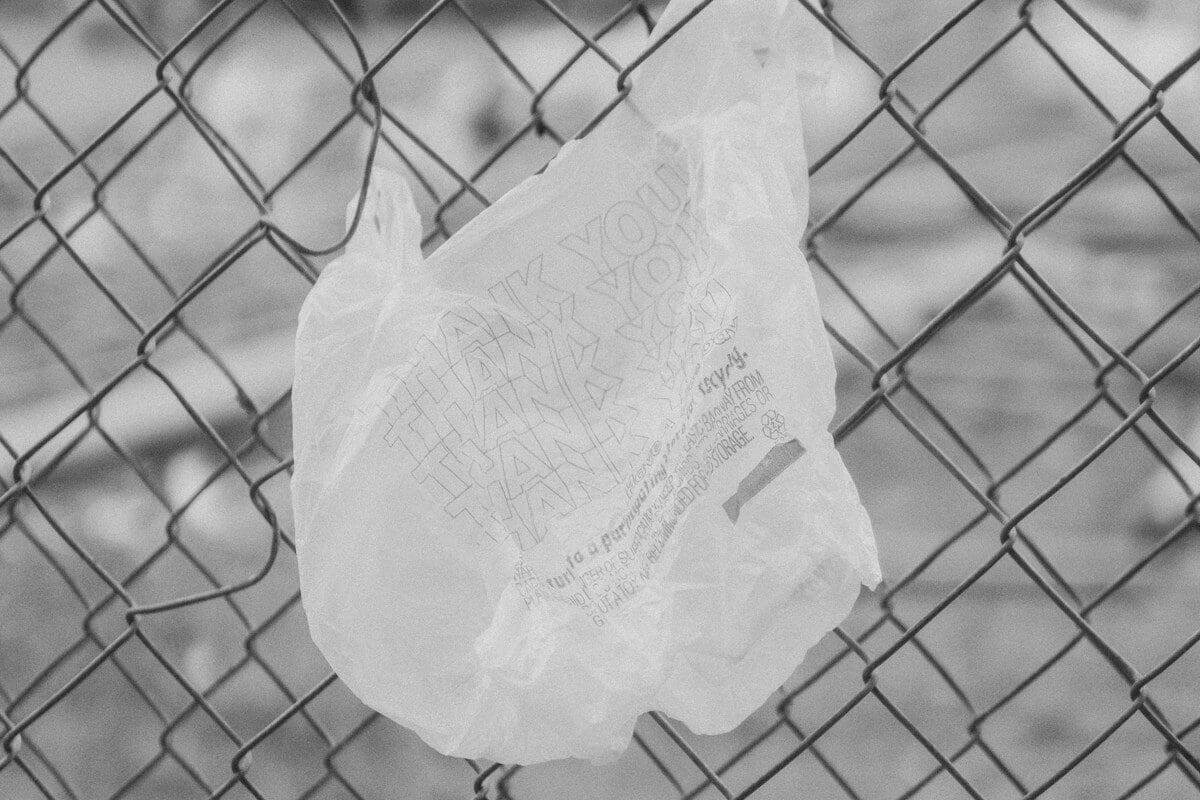
No Montana city or county can regulate single-use plastics because a 2021 state law strips local governments of that authority.
Billings cannot ban them, and neither can Bozeman, even though local voters tried to do just that.
House Bill 407 blocks every route a community might take to curb auxiliary containers. That statutory term covers plastic bags, cups, bottles, straws, and foam takeout boxes. The ban applies equally to city council ordinances, county resolutions, and citizen initiatives where residents gather signatures to put a measure on the ballot.
Bozeman sits at the center of this legal standoff. During November 2024, 63 percent of voters in Bozeman passed a measure prohibiting foam containers and plastic carryout bags at area businesses while permitting straws strictly upon request. The ordinance has never taken effect.
The Path to HB 407
The Montana House endorsed HB 407 by a vote of 64 to 35 in February 2021. Every Democrat voted no, joined by two Republicans in the 100-member chamber. The Senate passed the bill on March 31, and it became law that April.
Supporters argued that local businesses need one statewide standard instead of a confusing patchwork of local rules. Yet the Legislature has adopted no statewide plastics standard since passing the restriction.
Legislators tried to repeal the law twice through HB 413 in 2023 and HB 160 in 2025. Neither bill reached the governor’s desk.
Constitutional Questions in Court
Article II, Section 3 of the Montana Constitution guarantees the right to a clean and healthful environment. Article IX, Section 1 places a duty on both the state and individual residents to maintain and improve that environment for present and future generations.
Article XI lets cities and counties govern themselves within limits set by the Legislature. A city with a self-government charter, such as Bozeman, may use any power that state law has not explicitly taken away.
Ruling in December 2024, the Montana Supreme Court applied that boundary to establish that the Legislature holds the same authority to limit voter-led initiatives as it does municipal city councils. However, the justices left one major question undecided: whether HB 407 itself violates the constitutional right to a clean and healthful environment.
The Helena Jury Trial
That undecided question goes to trial in Lewis and Clark County District Court. Cottonwood Environmental Law Center, a Bozeman nonprofit, brought the case alongside several co-plaintiffs, including Billings residents.
Juries decide disputed facts while judges decide what the law means. Cottonwood stated it will show jurors that lawmakers heard testimony about plastic in Montana’s rivers and wildlife before voting to block local action without offering any statewide alternative.
Defending the legislation, the State of Montana maintains that HB 407 violates no constitutional protections whatsoever. A verdict for the plaintiffs would strike down the statute, though either side can appeal to the Montana Supreme Court.
Bozeman, the Gallatin County seat and Montana’s fourth-largest city with 53,293 residents in 2020, traces its name to John Bozeman, the Georgia frontiersman who blazed the Bozeman Trail in 1863 and platted the town the following year.
The Bozeman Trail closed in 1868 after Red Cloud’s War, yet the valley’s fertile land kept drawing settlers. In 1866, Nelson Story drove roughly 1,000 Longhorn cattle over that same contested route, establishing one of Montana’s earliest major herds and later donating land for Montana State University.
On December 14 and 15, a jury in Helena will hear the challenge to HB 407.
Worth a look

Lawmakers Grill Tennessee Safety, THP Officials at Sunset Hearing
“We are trained for every operation we’ve taken part in, and I think the troopers were professional and...
OCCA Warns Stable Revenue Forecast Insufficient for Community College Costs
Oregon’s latest revenue forecast projects roughly $245 million in additional General Fund money, a stable outlook that still...

Providence Opens Its 100th Season of Men’s Basketball Against VCU on Monday, Nov
Providence opens its 100th season of men's basketball against VCU on Monday, Nov. 2 at the AMP, a...

LeBron James Denies Telling 76ers to Be Patient as Source Claims
LeBron James saw an Instagram graphic quoting a Sixers source saying he had asked for patience, and fired...