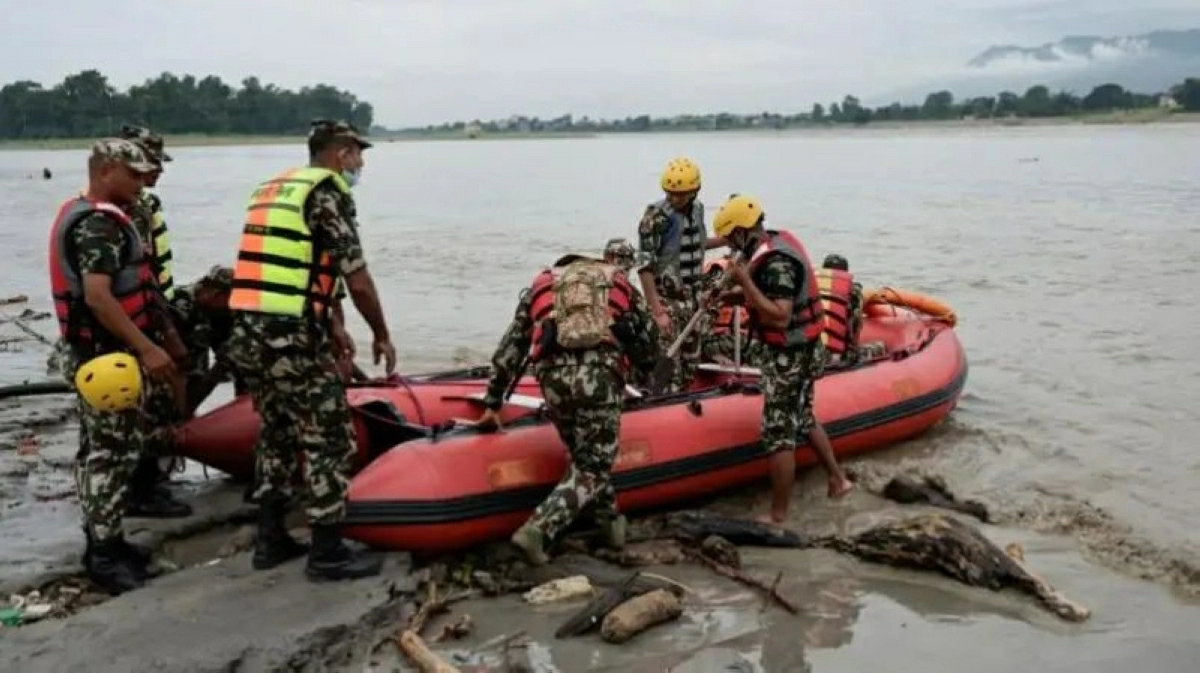
Following a catastrophic Himalayan flood triggered by a glacier collapse on the Nepal-Tibet border, the known death toll reached at least 919 people by Monday, August 31, 2026, while the number of missing soared to 4,793. Rescuers are racing against time to reach hundreds of workers trapped inside blocked hydropower tunnels.
The massive flash flood, which roared down the border region on Wednesday, carved a devastating path through valley settlements, mountain passes, and cross-border locations in Tibet. Nepali authorities and international specialists are confronting severe operational hurdles as continuous bad weather, deep silt, and secondary geohazards complicate rescue efforts.
Hydropower Tunnels and the Crisis of the Missing
The scale of the missing persons tally climbed sharply as disaster management agencies updated their counts. Nepal’s National Disaster Risk Reduction and Management Authority reported that the national missing total reached 4,247, which includes 3,655 Nepali citizens and 592 foreign nationals. Across the border in China, state media confirmed 16 deaths and 546 missing individuals in Tibet, bringing the overall cross-border toll to 919 dead and 4,793 missing.
Among those unaccounted for are hundreds of workers stationed along hydropower project sites. According to disaster management officials, 933 workers on hydropower developments along the torrent’s path are currently missing. Rescue teams, aided by specialized experts from China and India, are focusing their overnight operations on reaching approximately half a dozen hydropower project tunnels choked with mud, ice, and rock debris.
Nepal army spokesperson Raja Ram Basnet said a large amount of debris has been deposited, posing a challenge to open the tunnels, with the main focus on opening them.
Heavy equipment, earth-moving machinery, and soldier-operated torchlights have been deployed in dark, hazardous pits to locate entryways into blocked infrastructure such as the Chilime Hydropower Plant. Prime Minister Balendra Shah noted in a weekend statement that compiling a complete damage assessment remains exceptionally difficult due to the adverse terrain and ongoing risks, even as nearly 21,000 security personnel, volunteers, and civilian workers push forward with rescue operations.
Cross-Border Coordination and International Aid
The international dimension of the disaster spans several countries. The U.S. State Department noted that approximately 85 American citizens remained unaccounted for, while the Nepal Red Cross estimated that more than 90,000 people have been affected by the deluge. Rescue operations have successfully brought more than 10,400 people to safety, including 277 foreign nationals.
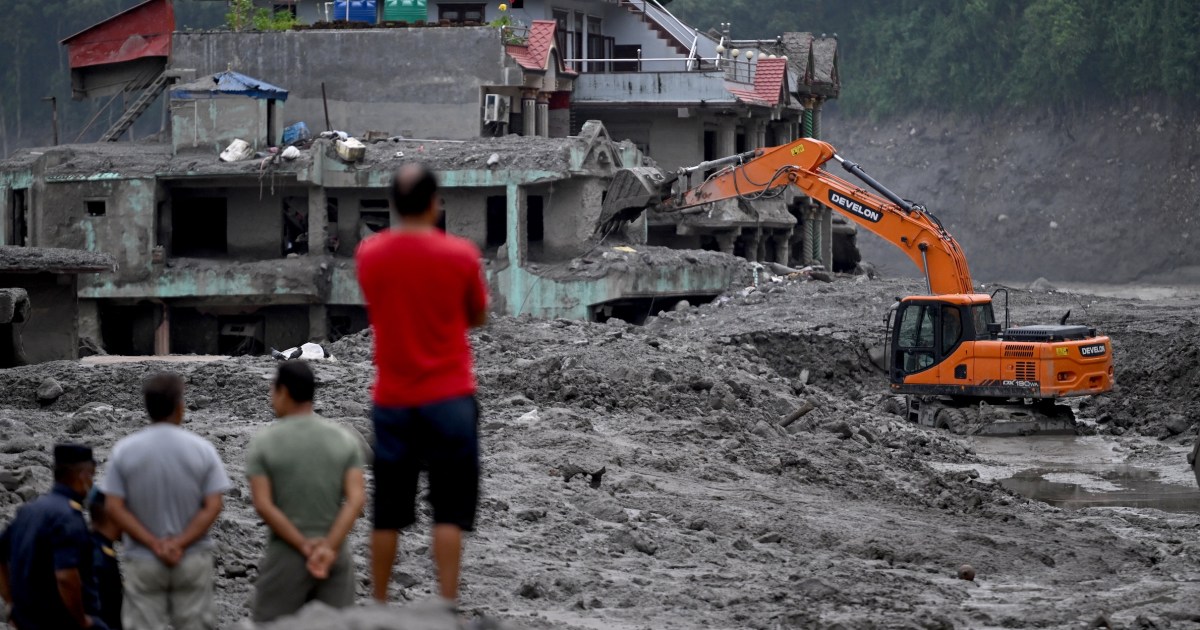
India has ramped up its support by deploying a 19-member specialized forensic team to Kathmandu to assist with DNA analysis and victim identification, while an Indian tunnel rescue team collaborates directly with the Nepali Army at Chilime and Langtang. In Uttar Pradesh, Indian authorities recovered 17 bodies from rivers flowing out of Nepal, though those recoveries remain separate from the official casualty totals. Meanwhile, the Indian foreign ministry reported that 275 Indian nationals and an additional 128 people of Indian origin remain missing in Nepal.
On the northern side of the border, Chinese President Xi Jinping stated that Beijing is mobilizing all available resources to locate the missing. Chinese state broadcaster CCTV reported the deployment of more than 2,100 rescue workers, life-detection equipment, and at least 220 million yuan in financial support for relief operations.
Secondary Lake Risks and Geological Hazards
Compounding the human toll is a cascading series of secondary environmental hazards. The initial glacier collapse formed a barrier lake that prompted repeated suspensions of rescue operations due to fears of sudden overflowing. Although Chinese state media reported that a secondary barrier lake formed downstream had naturally drained and is basically cleared
, heavy rains in Gyirong and surrounding areas continue to threaten rescue crews.
Investigators have identified eight high-risk locations for geological disasters along the river corridors. Chinese state media attributed the initial catastrophe to glacier instability under the long-term effects of global warming
, characterizing the event as a new and prominent feature of cryosphere disasters
on the Tibetan plateau. Authorities continue to monitor an expanded impact crater near the glacier collapse site on the Nepalese side, which spans 174,000 square meters and holds an estimated 2.5 million cubic meters of water that could trigger downstream chain reactions if breached.
Related reading
US-Iran War Disrupts Oil and Natural Gas Routes
Physical oil prices surged past $154 a barrel and freight rates, shipping insurance, and fuel costs escalated worldwide...

Trump Fires White House Press Secretary
President Donald Trump dismissed White House Press Secretary Katie Zacharia on Friday, October 16, 2026, after a turbulent...

Norwegian Teen Sentenced for UK Murder Plot
Johannes Kongsnes Natland, a 19-year-old Norwegian footballer, was sentenced to 20 years' detention for conspiracy to murder after...

Zimbabweans See Mixed Results in Democracy Under Mnangagwa
Afrobarometer’s latest report reveals mixed public perceptions of Zimbabwe’s democracy over the past five years, with only one...