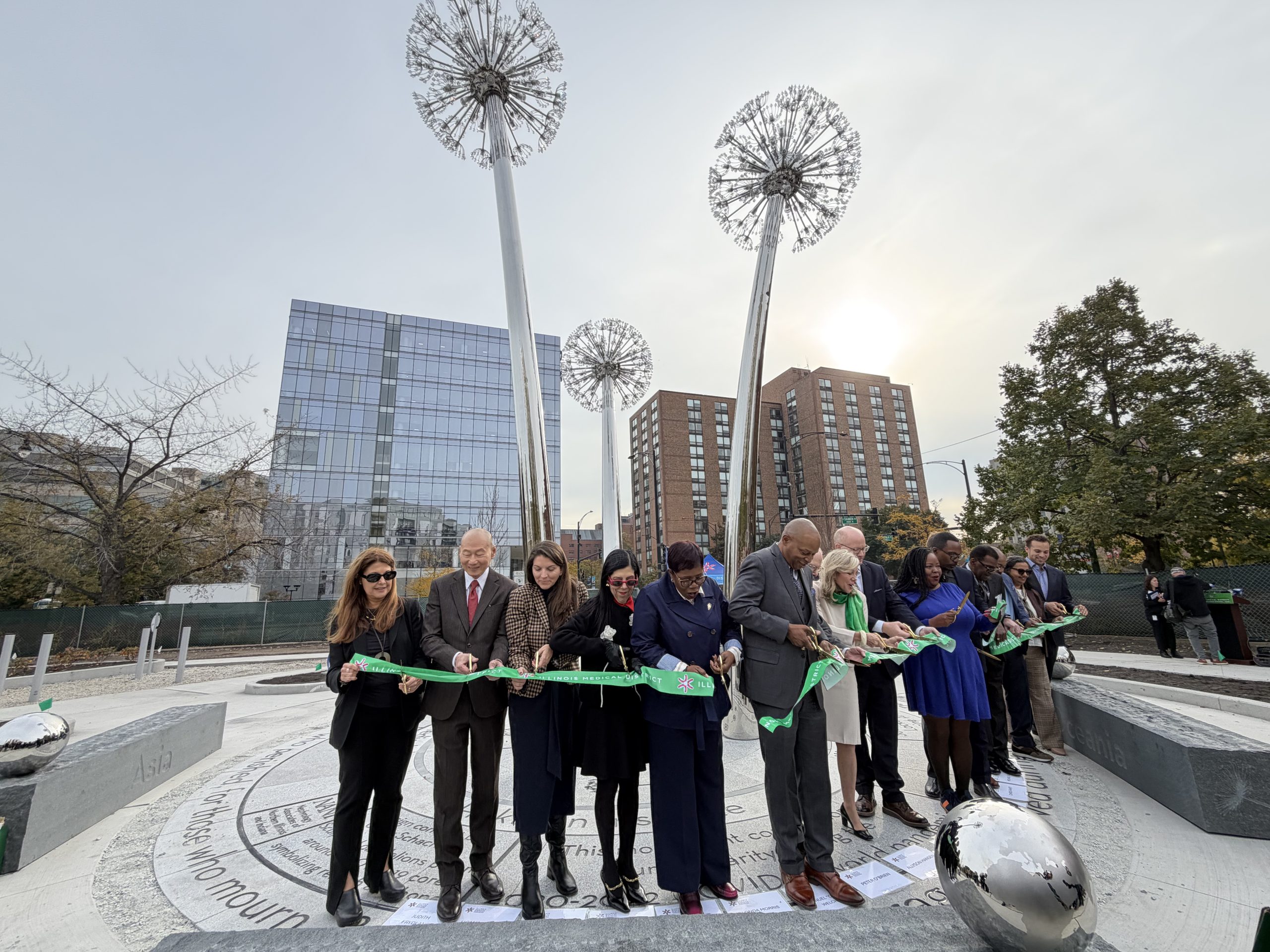
A $4.95 million investment has transformed a one-acre triangle of land in Chicago’s Illinois Medical District into a permanent sanctuary for reflection and health. The new IMD Park, featuring the Global COVID-19 Monument of Honor, Remembrance and Resilience, officially marked its ribbon-cutting on Tuesday, October 27, 2026, providing a dedicated space for the 30,000 healthcare workers and 90,000 daily visitors who move through the district, Block Club Chicago reported.
The project serves as a physical anchor for a city and a global community still processing the trauma of the pandemic. By blending a public utility—a park with fitness areas and playgrounds—with a solemn memorial, the city is attempting to integrate the memory of loss into the daily routine of those who fought the virus on the front lines. For the patients at nearby Stroger Hospital and Jesse Brown VA Medical Center, it is a place for peace; for the families of the deceased, it is a place for recognition.
A Dandelion Puff Built From Stainless Steel
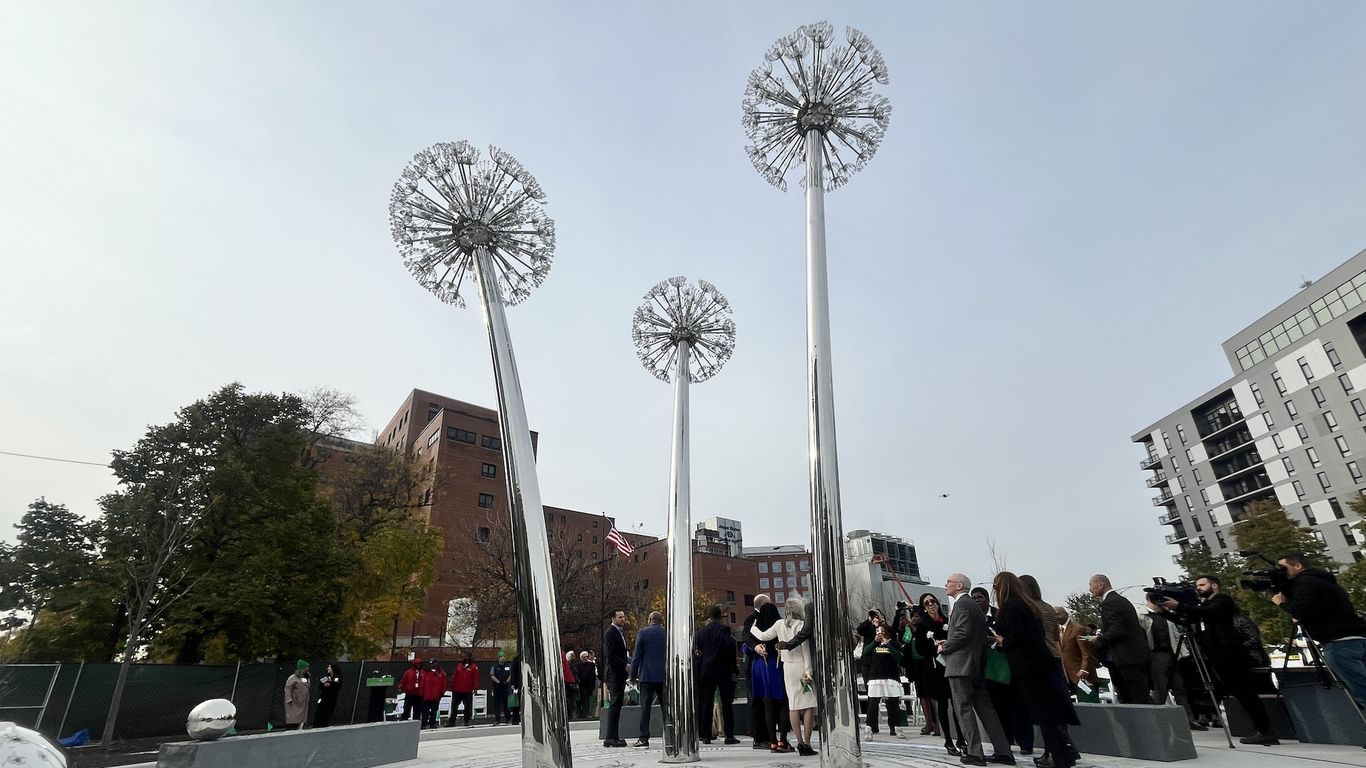
The centerpiece of the park is a series of three soaring stainless steel sculptures, the tallest of which reaches 25 feet. Designed by Casey Schachner, a sculptor and art professor at Georgia Southern University, the monument employs a deliberate visual metaphor: the sculptures combine the biological core of the COVID-19 virus with the airy form of a dandelion puff. According to Sally Metzler, chair of the COVID-19 Monument Commission, the dandelion was chosen because it grows worldwide, symbolizing the universality of the suffering caused by the pandemic.
The design isn’t just symbolic; it’s structural. The three stems of the sculpture represent the pillars of honor, remembrance, and resilience. Surrounding the base are five concrete benches, each featuring a steel globe. To ensure the monument remains a beacon even after dark, the top sections will illuminate in various colors once final arrangements are settled with ComEd and the city, Metzler noted.
“Today, we stand witness to the only monument in the world that honors frontline and essential workers, remembers those whom we lost to COVID-19, and celebrates our resilience in the face of adversity,” said Allyson Hansen, Illinois Medical District Commission CEO and executive director.
Funding the Recovery of Public Space
The financial architecture of the park reflects a heavy reliance on state intervention. Of the total $4.95 million cost, more than $4 million came from state funding, Axios reported. Specifically, Lakesia Collins secured $3.4 million in State of Illinois Capital Appropriation, while State Representative Yolanda Morris secured an additional half million. The remainder of the funding was filled by the Hektoen Institute of Medicine and the state’s Open Space Lands Acquisition and Development Program.
This investment corrects a decades-long drought of public green space in the district. According to Block Club Chicago, this is the first new public park in the Illinois Medical District in decades since 1946, when the Louis Pasteur Monument was moved to West Harrison Street. The only other recent addition to the area’s public infrastructure was the Welcome Plaza that opened in August 2024.
| Funding Source | Amount Contributed | Primary Facilitator |
|---|---|---|
| State of Illinois Capital Appropriation | $3.4 Million | Sen. Lakesia Collins |
| State Appropriation (Additional) | Half million | Rep. Yolanda Morris |
| Other (Grants/Hektoen Institute) | Not specified | Various/Hektoen Institute |
The Human Stakes of a Healing Garden
“As a former healthcare worker myself, I know the weight that our medical community carried during those hard times,” said state Sen. Lakesia Collins, whose 5th District includes the district. “This statue stands as a beacon, lighting up this park, honoring those we lost, and reminding generations to come of the courage, the resilience, and the profound love that our healthcare heroes demonstrated when we needed them the most.”
Timeline to Full Public Access
The path to this opening began in 2021, when Sally Metzler formed a volunteer commission of doctors and public health experts to envision a memorial. The project gained physical momentum in 2024 with the demolition of the former Easter Seals building to make room for the green space. Ground was officially broken last November.
Although the ribbon-cutting occurred this week, the park is still a work in progress. The site is expected to be fully open to the public by December 1.
The physical monument stands as a permanent reminder of a period when the Illinois Medical District was the epicenter of a city’s fight for survival.
Worth a look
Northwestern Volleyball Plays Illinois and Hosts Rutgers This Weekend
The Northwestern Wildcats volleyball team enters a weekend of Big Ten action, beginning with a match against Illinois...
NOAA Deploys Drone sailboats to Track El Niño in equatorial Pacific
“A monumental El Niño is knocking at the door,” Michael McPhaden, a former senior scientist at PMEL now...
NIC earns $179,023 MSHA grant for mine safety training program
North Idaho College has secured a $179,023 grant from the Mine Safety and Health Administration (MSHA) to sustain...

App State Volleyball: Mountaineers Face Georgia State in Atlanta
The App State volleyball team travels to Atlanta this week for a two-match series against Georgia State, with...