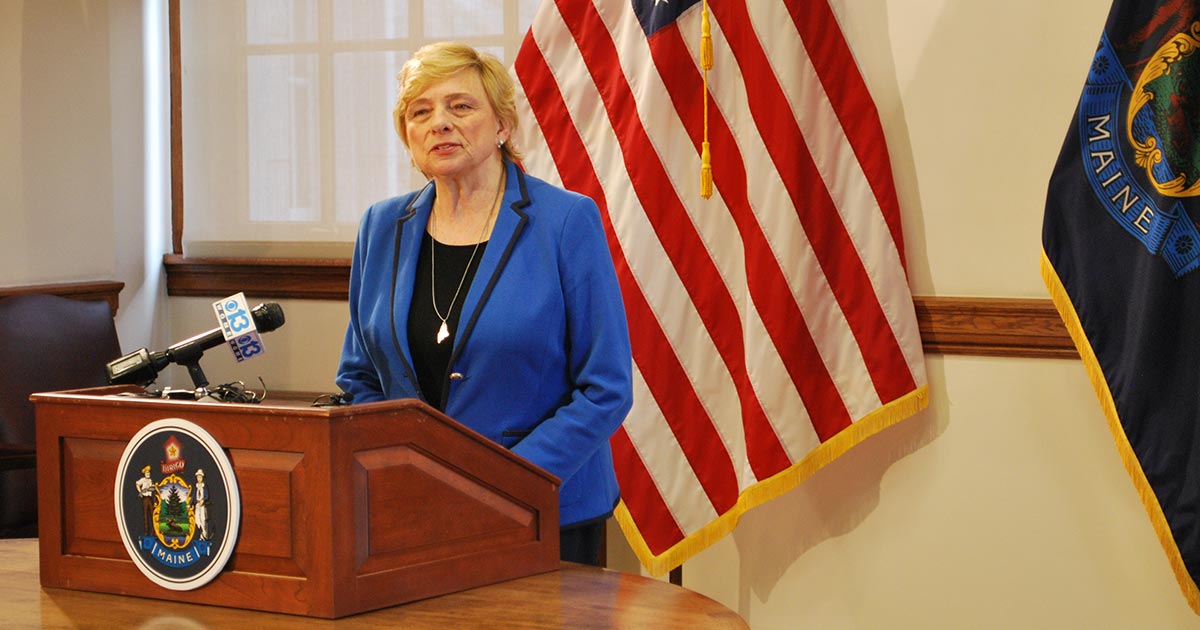
As winter temperatures begin to dip across the Northeast, a coalition of New England governors is pushing Congress for an emergency infusion of $3 billion in federal home heating assistance.
The request, formalized in a joint letter sent to congressional leadership, aims to increase funding for the Low Income Home Energy Assistance Program (LIHEAP) as households face rising energy costs during President Trump’s war in Iran.
For states like Maine, where the reliance on heating oil is the highest in the nation, the situation has reached a critical threshold. Governor Mills, who has been vocal about the looming financial strain on residents, noted that the current economic climate is forcing families into impossible decisions.
“No one should be cold in their homes because Trump decided to wage an unnecessary, unwanted war with Iran,” Governor Mills said in a statement accompanying the joint letter.
The economic stakes are stark. Last month, the price of heating oil in Maine hit a record $6.04 per gallon. For the average household relying on a 275-gallon tank, this represents a $750 increase in filling costs compared to the same period last year.
According to the National Energy Assistance Directors Association (NEADA), heating oil prices are projected to rise by approximately 50 percent this winter, potentially saddling low-income households in the Northeast with an additional $1.1 billion in energy expenses.
The governors are asking Congress to raise total LIHEAP funding to $7 billion. They argue that at current appropriation levels, the purchasing power of the program will be effectively gutted, forcing states to either reduce the number of families served or slash the benefits provided to those who qualify.
With existing budget allocations, the surge in energy costs will diminish the value of LIHEAP aid, compelling states to either cut back on benefits or assist fewer qualifying families during the peak of winter demand.
This push for legislative funding follows earlier, more localized efforts to manage the energy crunch. Last month, Governor Mills formally requested that Maine’s congressional delegation seek increased appropriations to meet the escalating need.
Shortly thereafter, the U.S. Department of Energy authorized the release of up to 315,000 barrels of fuel oil from the Northeast Home Heating Oil Reserve, an action designed to serve as a safeguard against significant price volatility.
While the release of reserves provides a temporary supply-side intervention, the governors argue that direct financial assistance remains the way to protect vulnerable populations—specifically seniors on fixed incomes, families with young children, and individuals with disabilities. These groups often face the choice between maintaining safe indoor temperatures and meeting other basic necessities like groceries or medicine.
The request for a $3 billion supplemental appropriation faces a difficult path through a Capitol currently preoccupied with broader fiscal constraints. The governors’ letter emphasizes that the current price surges are largely driven by global geopolitical volatility—specifically the war with Iran—which is far beyond the control of individual state governments.
By framing the funding request as an essential safeguard against external economic shocks, the coalition is attempting to secure bipartisan support before the coldest weeks of the season arrive.
As the legislative calendar narrows, the question remains whether Congress will prioritize this supplemental funding as a necessary humanitarian measure. With winter already taking hold, the window to ensure that low-income households have the purchasing power to secure fuel is closing rapidly.

Handwritten Final Draft of MLK Jr. I Have a Dream Speech to be Auctioned at Christie’s
“When I first saw these pages, and realized what they were, I was astounded,” said Peter Klarnet, Christie’s...

DOE and UCOR reconfigure Oak Ridge Transuranic Waste Processing Center
Workers at a Tennessee nuclear cleanup facility have traded a loud, shaky reciprocating saw for a mechanical drum...

7 Experienced Seniors Lead Marshfield Basketball Into New Season
Marshfield boys basketball head coach Adam Thornhill spent his debut season searching for a stable foundation while his...

Enzo Maresca Faces Tactical Challenges to Maximize Rayan Cherki
Manchester City attacking midfielder Rayan Cherki has recorded seven goals and provided three assists across 16 appearances in...