
Frankfort, Indiana, now officially honors two of its own who helped us see the universe. A new Indiana State Historical Marker, installed last month in front of Frankfort City Hall, recognizes brothers Vesto and Earl Slipher, Indiana University astronomy graduates whose research fundamentally changed our understanding of the cosmos. Indiana Public Media reported on the dedication, which places the marker at the very site of the old Frankfort High School the brothers attended.
From Clinton County Farm Boys to Astronomical Giants
The marker itself is a physical testament to a remarkable journey. Vesto Slipher, a 41-year-old academic trailblazer by the time he completed his studies, earned his bachelor’s and master’s degrees in Mechanics and Astronomy from IU in 1901 and 1903. He didn’t stop there. In 1909, he made history by becoming the first person to earn a Ph.D. in Astronomy ever awarded by the university. His brother, Earl, followed a similar path, completing his bachelor’s and master’s in Astronomy in 1906 and 1908.
These weren’t just academic exercises. The brothers took their Hoosier educations west to Lowell Observatory in Flagstaff, Arizona, where they would embark on careers that would rewrite astronomy textbooks. It was there, far from their Clinton County farm roots, that their work began to reveal the true nature of the universe.
Discovering the Universe’s Expansion
Vesto Slipher’s most significant contribution began with a deceptively simple concept: spectra. Think of a spectrum as a rainbow, but one that charts the intensity of light over a range of energies. Astronomers use telescopes to create these “rainbows” from starlight and galaxy light, allowing them to study an object’s motion, velocity, and composition. NASA explains this process in detail on its educational website.
During Vesto’s time, the very definition of a “galaxy” was up for debate. The prevailing theory held that our Milky Way was the single, massive entity in the universe, populated with stars and fuzzy nebulae. The alternative, more radical idea, was that we lived in an “island universe” adrift in a cosmos filled with many others. Vesto’s pioneering work of taking spectra of galaxies provided the crucial data needed to settle that debate.
“Vesto, the work was significant, highly significant, because it changed our view of what and where we are in the universe,” said IU professor of astronomy Catherine Pilachowski. “It changed our understanding of the nature of the universe, the correlation of velocity and distance for galaxies. That led us to understand the expansion of the universe and changed our view of space and time entirely.”
In essence, Vesto’s observations didn’t just prove other galaxies existed; they showed those galaxies were moving away from us. This data became the bedrock upon which Edwin Hubble built his law of cosmic expansion, forever altering humanity’s place in the cosmos.
The Master Planetary Photographer
If Vesto looked outward to the stars, his brother Earl looked closer to home, becoming the master astrophotographer of his era. Earl Slipher focused his immense talent on planets, particularly Mars. He captured approximately 100,000 photographs of the Red Planet, creating a detailed visual record that was unprecedented for the time.
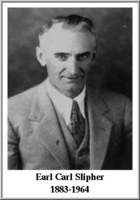
Pilachowski highlighted the practical and lasting impact of Earl’s work. “He really established the characteristics of the planets, their nature, what variations we find in those planets,” she said. “He really was the master of understanding the solar system and the planets, during the first half of the 20th century.”
Those photographs weren’t just academic curiosities. They became essential tools for the burgeoning space age. NASA relied on Earl Slipher’s detailed images of Mars to help plan some of its very first missions to the planet, turning decades of careful observation into the roadmap for exploration.
Why This Marker Matters Now
One might ask, in an era of space telescopes and rovers on Mars, why does a historical marker from 2026 matter? Because it grounds our greatest achievements in the people and places that made them possible. It ensures that the names Vesto and Earl Slipher, and their Frankfort roots, are not lost to time. Their work changed our view of the universe. Now, their hometown ensures we remember who they were.
Worth a look

Arkansas Supreme Court Vacates Order Removing HWH Mayor
Arkansas Supreme Court Restores Helena-West Helena Mayor, but Leaves Door Open for State LITTLE ROCK, Ark. — In...

Chiefs WR Rashee Rice Files for Chapter 7 Bankruptcy Over 2024 Dallas Crash Debt
Rashee Rice files for Chapter 7 bankruptcy amid millions in crash-related debt Kansas City Chiefs wide receiver Rashee...
Shine On Minneapolis Launches Free Black Friday Downtown Block Party
Minneapolis Unveils 'Shine On' Winter Campaign with Black Friday Block Party Minneapolis city leaders, in partnership with the...

MSU’s Garrison, Lile named Marshall Scholarship finalists
Two Mississippi State Students Finalists for Prestigious Marshall Scholarship Two Mississippi State University students, senior Evan Garrison and...