
South Korea’s Ministry of Climate, Energy and Environment Upends Environmental Policy
“The government must acknowledge the failure of its greenwashing policy, which fixated on ineffective substitute materials,” said South Korean politician Kim Wi-sang.
A new study from South Korea’s Ministry of Climate, Energy and Environment has dismantled a decade of environmental orthodoxy. It reveals that paper straws may actually inflict a heavier toll on the planet than traditional plastic alternatives when traced from the factory floor to the landfill.
The Manufacturing and Disposal Realities of Single-Use Substitutes
For years, environmental advocates campaigned vigorously against single-use plastic straws. Those protests successfully pushed municipalities and businesses across the globe to phase out plastic tubes in favor of soggy paper iterations.
Comprehensive new data paints a startlingly different picture. When evaluated across 16 distinct environmental categories, traditional plastic straws actually registered the lowest environmental footprint in 10 of those metrics, including human toxicity, particulate matter generation, and overall climate change impact.
Evaluating Biodegradable Plastics and Bio-PE Materials
The South Korean government analysis did not stop at traditional paper and plastic. It also evaluated biodegradable plastic and sugarcane-based “Bio-PE” straws.
Bio-PE straws, derived from renewable sources like sugarcane, produced 16 times the carcinogenic impact of standard plastic straws. They also registered six times the acidification damage—the specific scientific metric used to measure shifts in ocean and soil pH levels.
Sorting Failures and Microplastic Contamination in Recycling
Furthermore, the supposed end-of-life benefits of paper straws routinely fail in practice. Because paper straws are lightweight and structurally diminutive, they frequently slip straight through sorting equipment at commercial recycling facilities, meaning effectively none are successfully recycled.

Their required water-resistant coatings and heavy industrial glues also prevent them from breaking down efficiently. This demands significantly more energy during processing while leaving an open pathway for microplastics to contaminate recycled pulp.
Public Discontent and the Regulatory Shift Across Borders
The scientific revelations have triggered swift political pushback. Confronted with the ministry’s findings, Kim publicly criticized both domestic environmental groups and his own administration for prioritizing feel-good political narratives over empirical science.
Public sentiment appears to mirror that political frustration. A government survey of 1,001 South Korean citizens revealed that 87.5 per cent of respondents actively dislike paper straws. The regulatory shift has faced comparable division in Australia, where most states and territories have enacted legal bans on traditional plastic straws.
For consumers seeking alternatives, experts suggest turning toward durable, reusable options like stainless steel or silicone straws, which withstand repeated use and run safely through standard dishwashers. Alternatively, many beverage consumers have simply returned to sipping straight from the rim.
Worth a look

Trump and Talarico campaign in Texas for Senate race
President Donald Trump campaigned in Texas on Tuesday, appearing in Corpus Christi and Lubbock to boost Republican Senate...
Google DeepMind Releases Genie 4 With Real-Time Audio and Physics
Google DeepMind has introduced Genie 4, a cutting-edge world model that generates photorealistic, explorable virtual environments in real...
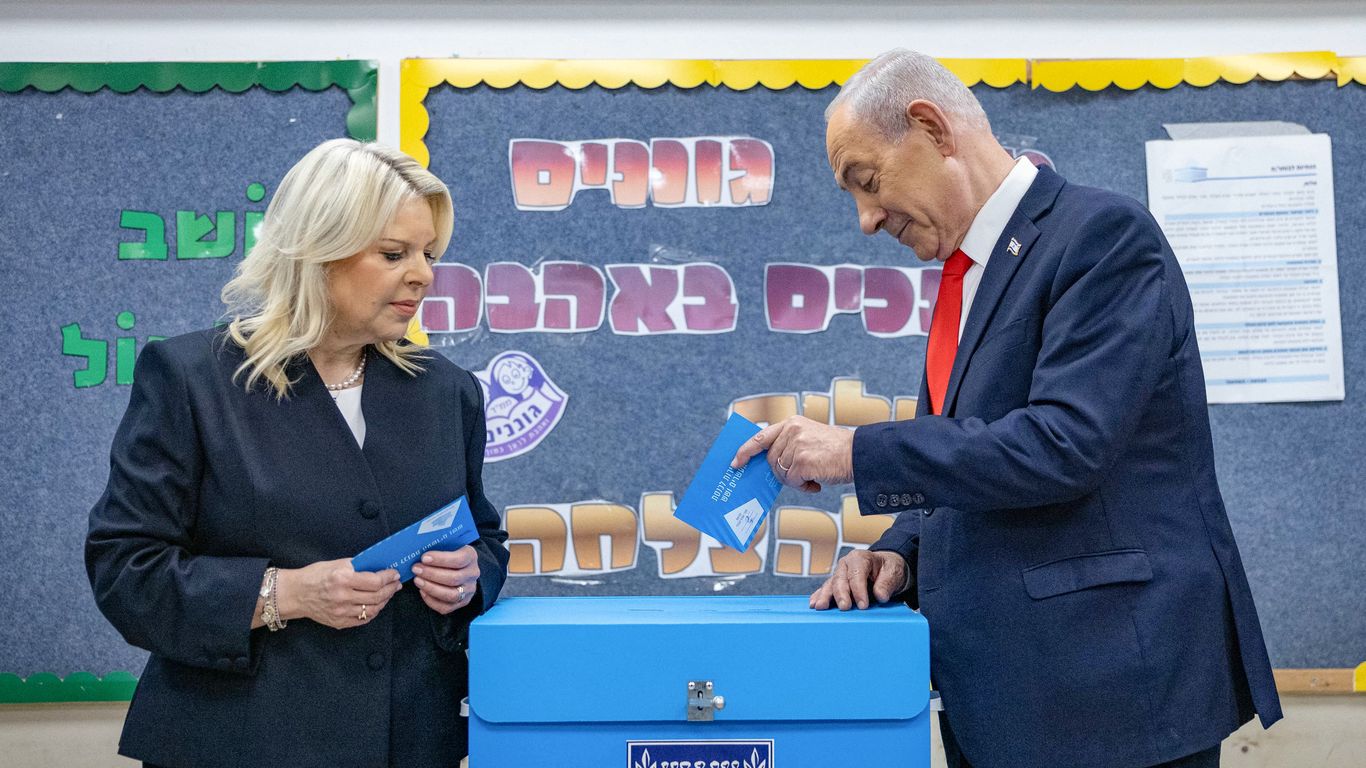
Israel Election Exit Polls Show Deadlock Between Netanyahu and Eisenkot
Israel Faces Deep Political Stalemate as Exit Polls Show Deadlock Israel's wartime election ended in a tight deadlock...
Thomas Markle Sr. Probed Over Child Abuse Image Allegations
Authorities in the Philippines are investigating Thomas Markle Sr., the estranged father of Meghan, Duchess of Sussex, following...