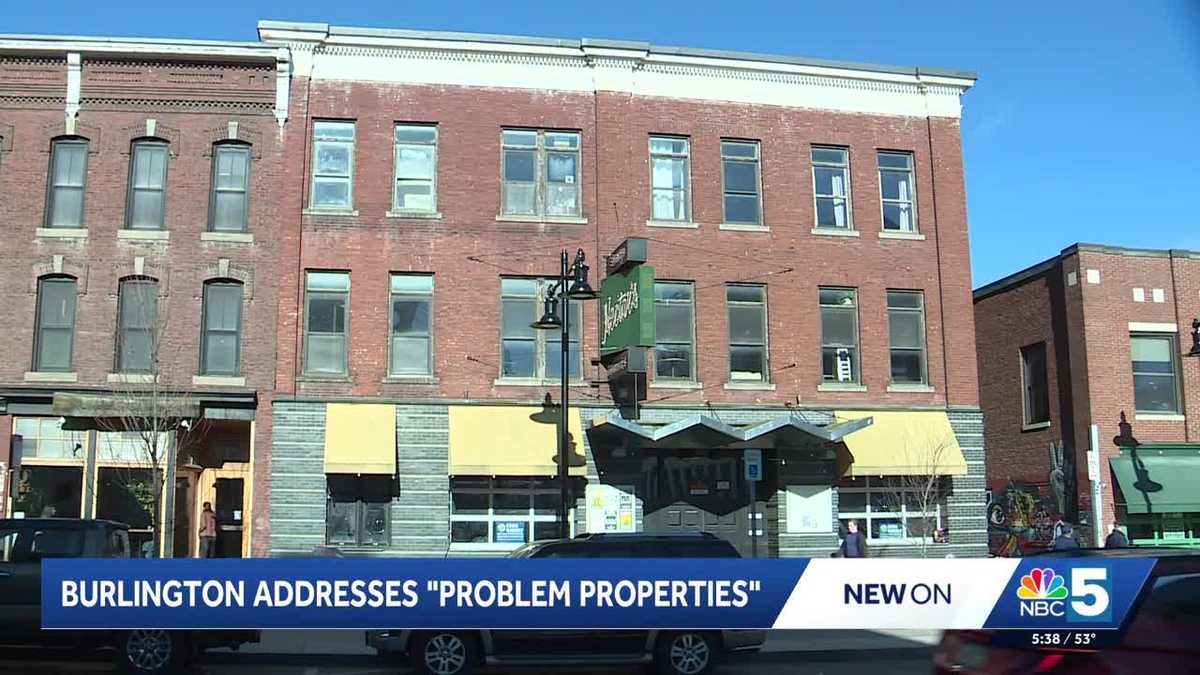
Burlington’s Problem Property Initiative has moved six long-vacant buildings into active rehabilitation, but the former Bove’s restaurant on Pearl Street is sliding toward a potential demolition-by-neglect violation, city officials said Thursday.
Mayor Emma Mulvaney-Stanak and Permitting and Inspections Director Bill Ward framed the progress as proof that the city's coordinated tracking and fee structure is working, even as Ward acknowledged that rising revenue from vacant-building fees shows some owners still aren't complying.
“This means that although we are collecting more money, it means that people are not complying with the ordinance,” Ward said. “But, again, back to the good news, it means we’re going to be holding them accountable.”
The clearest wins sit on North Avenue and in the downtown core. Vermont Federal Credit Union bought 1070 North Avenue in October 2026 and is finishing interior work for a branch opening by year’s end. The former Nectar’s building at 188 Main Street, shuttered since July 2025, is under new management and pursuing code compliance with a possible third-floor addition.
Queen City Development Group is advancing redevelopment at 184 Church Street. A fire-damaged building at 32 Grove Street, vacant since November 2025, is undergoing substantial rehabilitation. Safety upgrades are underway at 60 Colchester Avenue after an October 2026 sale. And an environmental assessment is proceeding at 141–143 North Avenue ahead of a potential sale.
“Good housing policy isn’t just about building new homes. It’s also about protecting, maintaining, and making the most of the housing we already have.”
Mayor Emma Mulvaney-Stanak said at the press conference.
Mulvaney-Stanak tied the initiative directly to the city’s 2026 Housing Strategy, arguing that reclaiming existing stock is faster and cheaper than new construction in a market where rental vacancy hovers near 1 percent.
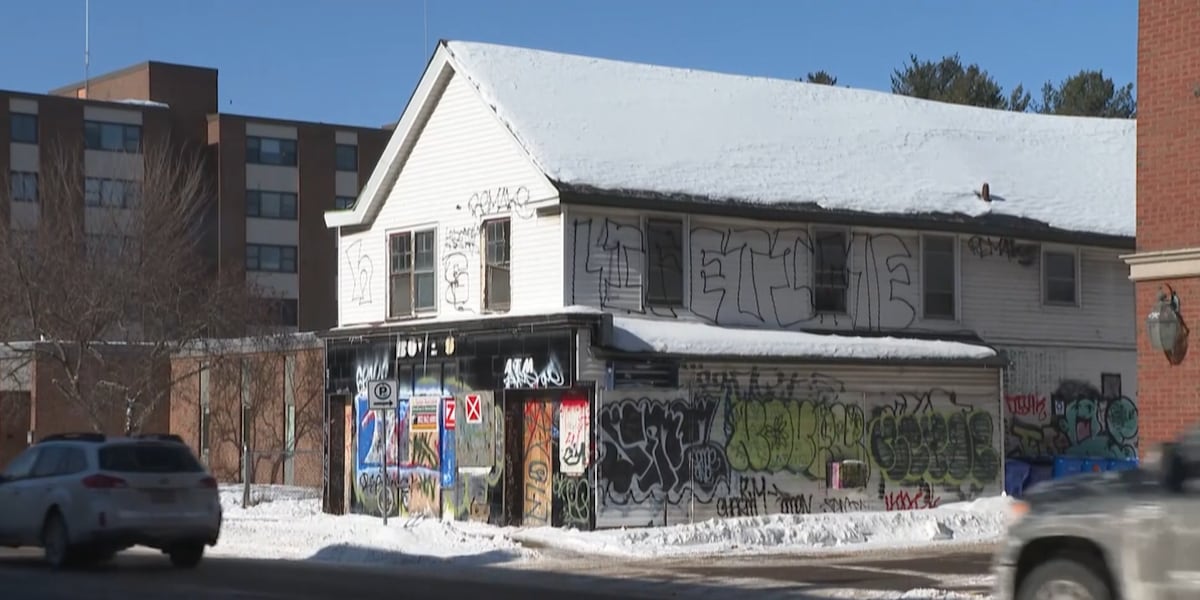
Two Pearl Street properties illustrate the initiative’s harder edge. The former Bove’s restaurant at 68 Pearl Street has been vacant since 2019; redevelopment plans have collapsed, and the city is now pursuing enforcement under its demolition-by-neglect authority.
Owners face a deadline next month to address code concerns or risk a formal violation. At 281 Pearl Street, also empty since November 2019, a 2026 zoning violation for an unapproved parking lot use has been appealed to the Vermont Superior Court Environmental Division.
“We appreciate the property owners who are stepping up and investing in their buildings and working to bring vacant or neglected buildings back into productive use, and we will continue to use the enforcement tools available to us when owners fail to take responsibility.”
Ward said.
The city’s online tracker of the top 10 noncompliant vacant buildings, launched in August, was designed to signal sustained pressure: “This is a way for us to let folks know we are not leaving that property. We’re going to stay with it until it comes into compliance or it comes back into productive use,” Ward said at the time.
Ward’s Thursday remarks revealed a structural tension: the vacant-building ordinance generates more fee revenue precisely when compliance falters. The city collects escalating fees the longer a property sits empty, creating a perverse incentive where fiscal success and policy success move in opposite directions. Neither Mulvaney-Stanak nor Ward quantified the fee total Thursday, and the city has not released an updated revenue figure since the tracker launched.
The next test comes next month, when the Bove’s deadline expires and the Environmental Division rules on the 281 Pearl Street appeal. Until then, the tracker remains the public’s only real-time window into whether pressure converts to rehabilitation or merely to penalty payments.
Related reading

Prescribed Fire Jumps Lines, Destroys Three Historic Cabins at Lewis and Clark State Historic Site
Three historic cabins at the Lewis and Clark Interpretive Center in Hartford burned down Wednesday after a prescribed...

Delaware County Prosecutor Rules Muncie Officer Justified in Standoff Shooting
March 31 brought a three-hour standoff to a quiet west-side Muncie street, and eight months later a single...

Central Missouri Erases 8-Point Deficit, Beats Lincoln 57-49 for Blue Tigers’ Fourth Straight Loss
Central Missouri erased an eight-point deficit and closed the game on a 7-0 run to beat Lincoln 57-49...

Trenton on Pace for Fewest Homicides Since 1999 as Police Hiring, Street Teams Cited
Nine homicides have been recorded in Trenton this year, a year-to-date rate of 9.8 per 100,000 residents that...