Milwaukee just won a World Series, and the city is waking up to the real work: turning a parade into a payroll.
The hard part is what comes after the confetti gets swept up.
“Champions do not just live here. They build here, they invest here and they create opportunity here,” Cristy Garcia-Thomas wrote in an op-ed for the Milwaukee Journal Sentinel.
Her organization has spent more than 80 years convening business, government, education, and philanthropic leaders. The argument now is that the same civic muscle that built a stadium must be flexed on housing, schools, and neighborhood safety — or the momentum evaporates.

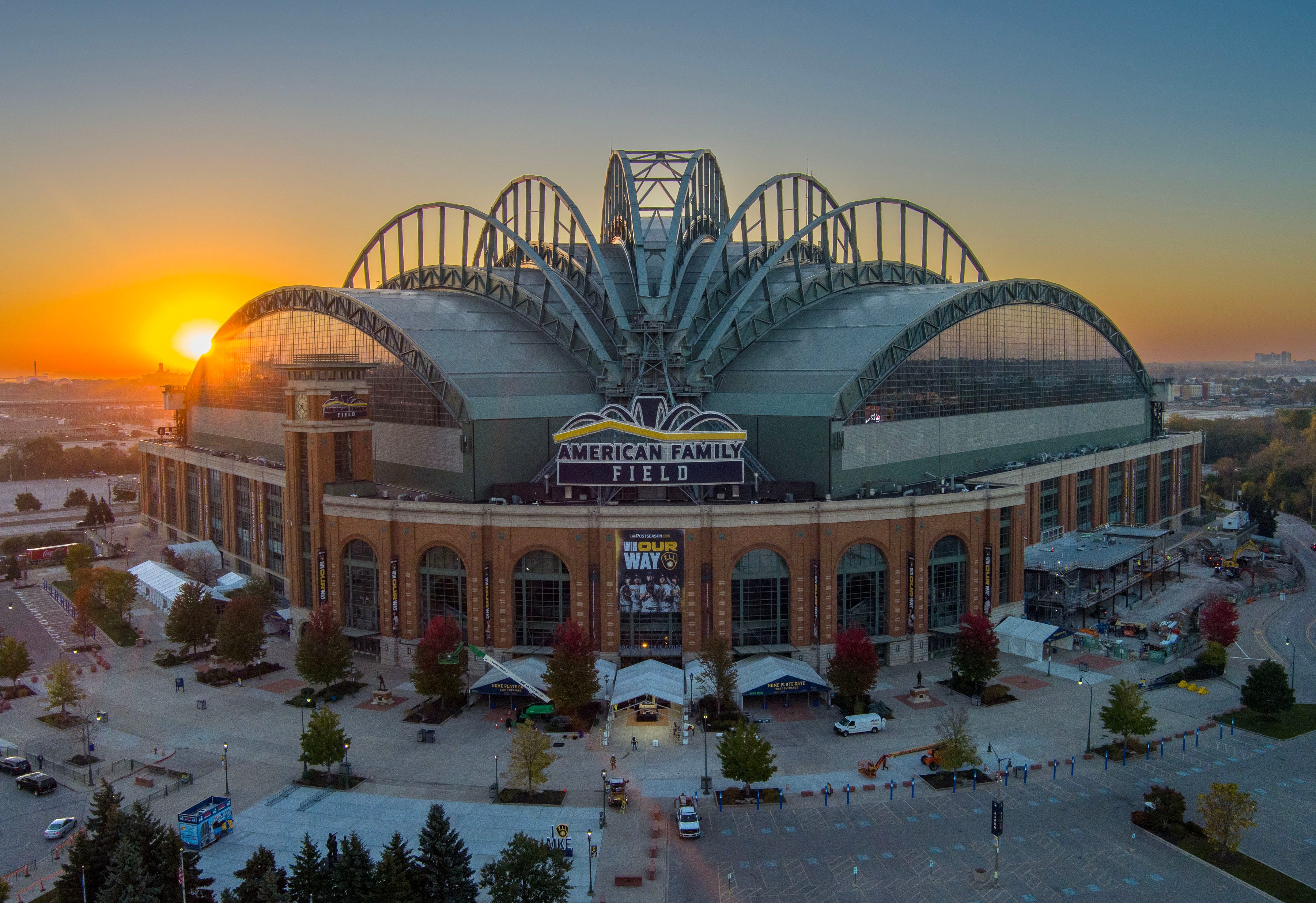
American Family Field, known as Miller Park until 2020, is the template. A 0.1 percent sales tax across five counties financed the bulk of the $392 million ballpark that opened in 2001. The tax sunsetted in 2020 after two decades.
A 2020 study commissioned by the Metropolitan Milwaukee Association of Commerce estimated the stadium and the Brewers generated roughly $2.5 billion in economic output for Wisconsin over those first 19 years, including $263 million in new state tax revenue.
The GMC acknowledges those figures are not a dollar-for-dollar return on the public’s investment. But they argue the stadium became an anchor for regional investment and a source of civic pride that now includes a world championship.
Leaders and lawmakers from both parties set aside differences to get the deal done. That bipartisan lift is the model Garcia-Thomas wants to replicate.
Milwaukee still bleeds residents. The city needs to attract and keep people, expand its tax base, strengthen neighborhoods, improve educational outcomes, and ensure employers can find talent. No single company, institution, or public agency can solve those alone, the GMC says.
The committee’s current work centers on three pillars: infrastructure, education and talent development, and neighborhood redevelopment and public safety. The goal is straightforward — make Milwaukee a place more people want to live, more businesses want to invest in, and more residents benefit from.
Milwaukee, Wisconsin’s largest city with 577,222 residents in 2020, sits on Lake Michigan’s western shore where three rivers converge. Incorporated in 1846 after the Treaty of Chicago, it grew into a German-American brewing powerhouse and a center of sewer socialism. Today its metro GDP exceeds $130 billion, anchored by five Fortune 500 headquarters and Harley-Davidson, yet it remains one of the nation’s most racially segregated cities due to early redlining.
“We have the assets, the talent and the leaders who care deeply about this city,” Garcia-Thomas wrote. “Now we need to keep coming together, making thoughtful investments and turning momentum into measurable results.”
Keep reading

Prescribed Fire Jumps Lines, Destroys Three Historic Cabins at Lewis and Clark State Historic Site
Three historic cabins at the Lewis and Clark Interpretive Center in Hartford burned down Wednesday after a prescribed...

Delaware County Prosecutor Rules Muncie Officer Justified in Standoff Shooting
March 31 brought a three-hour standoff to a quiet west-side Muncie street, and eight months later a single...

Central Missouri Erases 8-Point Deficit, Beats Lincoln 57-49 for Blue Tigers’ Fourth Straight Loss
Central Missouri erased an eight-point deficit and closed the game on a 7-0 run to beat Lincoln 57-49...

Trenton on Pace for Fewest Homicides Since 1999 as Police Hiring, Street Teams Cited
Nine homicides have been recorded in Trenton this year, a year-to-date rate of 9.8 per 100,000 residents that...