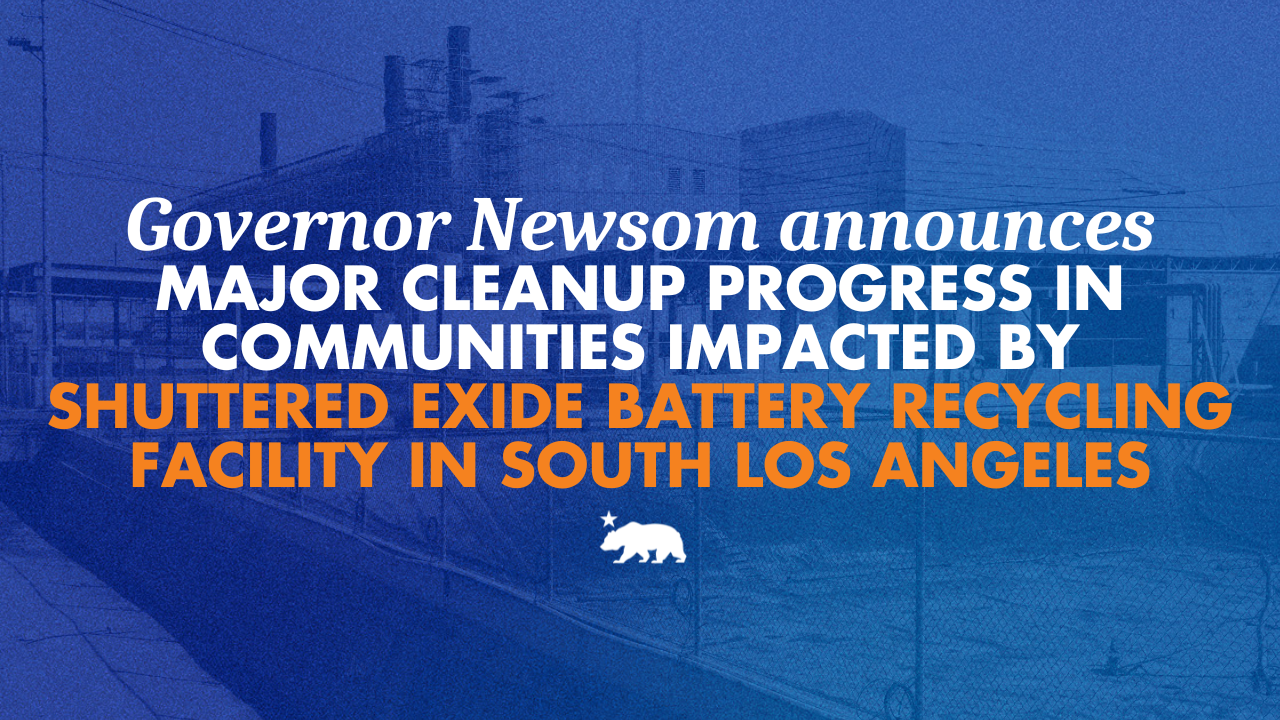
“Clean air, soil and water should be basic rights,” said Yana Garcia, California’s Secretary for Environmental Protection, in a statement regarding the state’s ongoing efforts to remediate decades of industrial contamination. According to a report from the Office of the Governor of the State of California, the Newsom administration has reached a major milestone in cleaning up neighborhoods impacted by the former Exide battery recycling facility, investing more than $500 million into one of the largest residential lead cleanups in U.S. history.
The cleanup efforts focus on Southeast Los Angeles, a region that has grappled with toxic exposure for years. The state has successfully completed remediation at 6,495 residential parcels, 7,818 parkways, 12 schools, 68 childcare centers, and 5 parks. This massive undertaking aims to address the “toxic legacy” left behind by the facility in Vernon, located five miles southeast of downtown Los Angeles.
The long road to remediation in Southeast Los Angeles
The history of the contamination is a decades-long timeline of industrial activity followed by environmental crisis. The former Exide facility in Vernon operated for decades recycling lead-acid batteries. By 2015, the DTSC had ordered Exide to withdraw its permit to operate, effectively closing the facility.
The situation grew more complex when a federal bankruptcy court allowed Exide to abandon the site. Governor Newsom condemned that decision, asserting that the state would continue to fight to hold the company and its creditors accountable for the pollution found in residential parcels, playgrounds and backyards. Since then, California has funneled sustained investments into the region, including major state funding in 2021 for site demolition and residential remediation, and additional funding in 2023 for parkway cleanup.
To bolster these efforts, the administration has sought to have the former Exide site added to the federal Superfund National Priorities List. If successful, this designation would bring additional federal resources to manage the contamination. As Katherine Butler, Director of the DTSC, noted, every home we clean brings communities closer to the safe, healthy future they deserve after decades of industrial pollution.
Technical precision and community involvement
The scale of the cleanup requires a rigorous scientific approach to ensure lead levels are safely reduced. The DTSC has performed soil sampling on 10,028 parcels to determine which areas require immediate attention. Based on lead concentrations greater than 80 parts per million and/or a single sample greater than 1,000 ppm, 9,016 parcels have been identified as eligible for further remediation. Currently, about 80% of those contacted have granted the DTSC access to their property.
To verify the effectiveness of the work, the state conducts spot-check verification and retrospective sampling. So far, the DTSC has conducted this verification on 623 properties to confirm that completed work meets state standards.
Beyond the technical aspects, the state has integrated the local workforce into the recovery process. Through the Workforce Environmental Restoration in Communities program, more than 120 community members have enrolled since 2017. More than 70 graduates of this program have gone on to work on the cleanup in their own neighborhoods.
The cleanup progress is tracked through the Exide Cleanup Feedback Management System, which allows residents to monitor the status of their properties. This follows thousands of hours of direct community engagement, including door-to-door outreach and public meetings, aimed at maintaining transparency as the state works to address the contamination in Southeast Los Angeles.
The scope of the completed work is detailed in the following table:
| Location Type | Total Completed/Impacted Units |
|---|---|
| Residential Parcels | 6,495 |
| Parkways | 7,818 |
| Schools | 12 |
| Childcare Centers | 68 |
| Parks | 5 |
While the progress is measurable, the legal and financial battles regarding the original polluters continue to shape the long-term recovery of the area.
MTA Urges Congress for Reliable Funding and Tariff Relief
The MTA’s Post-Election Wishlist for Congress Following the results of Tuesday’s national election, which handed Democrats a firm...

Deb Haaland elected governor as Colorado flooding causes detours
New Mexico is entering a new chapter of governance following this week’s election results, which solidified a Democratic...

Darren Moore selects England men’s under-20s squad for November
The England men’s under-20s squad has been confirmed for upcoming Elite League fixtures against Czechia and Portugal, with...

Man Swept Into Lake Superior at Presque Isle Park Black Rocks
Marquette Police Close Presque Isle Park Following Lake Superior Incident The Marquette Police Department has shuttered Presque Isle...