
“Sustaining the business required hundreds of millions of additional dollars of liquidity that Spirit simply does not have and could not procure,” said Spirit Airlines on May 2, 2026.
Norse Atlantic Airways has now met the same fate, filing for bankruptcy for its Norwegian operating unit on Friday after soaring jet fuel prices — driven by the US-Israel war on Iran — drained its cash reserves.
The long-haul budget carrier suspended all flights on Thursday, 26 November, and the following day its lessors moved to terminate leases on all 12 Boeing 787 Dreamliners. Norse contests the validity of those notices, but with its shares down more than 99% this year and the board stating it intends to file for bankruptcy unless urgent financing appears, the airline’s survival looks unlikely.
Rising jet fuel prices toppled Norse
Jet fuel prices more than doubled after the war began in late February. IATA data shows global averages jumping from $99 a barrel on 26 February to $209 in April, then settling around $190 in early October before climbing above $200 in Europe. For airlines without hedges, the impact was immediate and overwhelming.
Norse did not hedge at all, leaving it fully exposed to spot prices on routes that burn large quantities of fuel. “Aviation analyst John Strickland told Al Jazeera” the carrier had no protection against rising prices, and “Fuel is what toppled this company.”
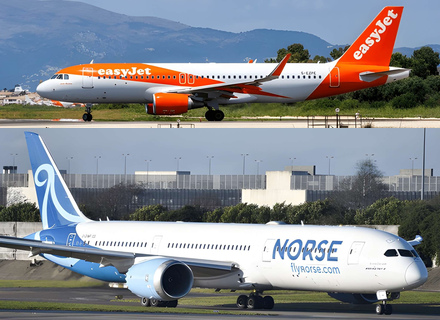
The contrast with hedged carriers is stark. Emirates saw fuel costs before hedging rise 60%, but $1.9 billion in hedging gains cut the net increase to 13%. EasyJet hedged roughly 69% of its first-half 2027 needs and 54% for the second half, giving it flexibility to buy more if prices dip.
CEO Kenton Jarvis told reporters the strategy allowed the airline to “come in and take a bit more equally” when prices fall. Norse had none of that cushion.
A model that never proved itself
Norse Atlantic launched in 2021, founded by Bjorn Tore Larsen after Norwegian Air abandoned long-haul flying during the pandemic. It stepped into the same gap with 12 leased 787 Dreamliners, flying from London Gatwick, Oslo and Rome to Orlando, Cape Town, Bangkok and Phuket.
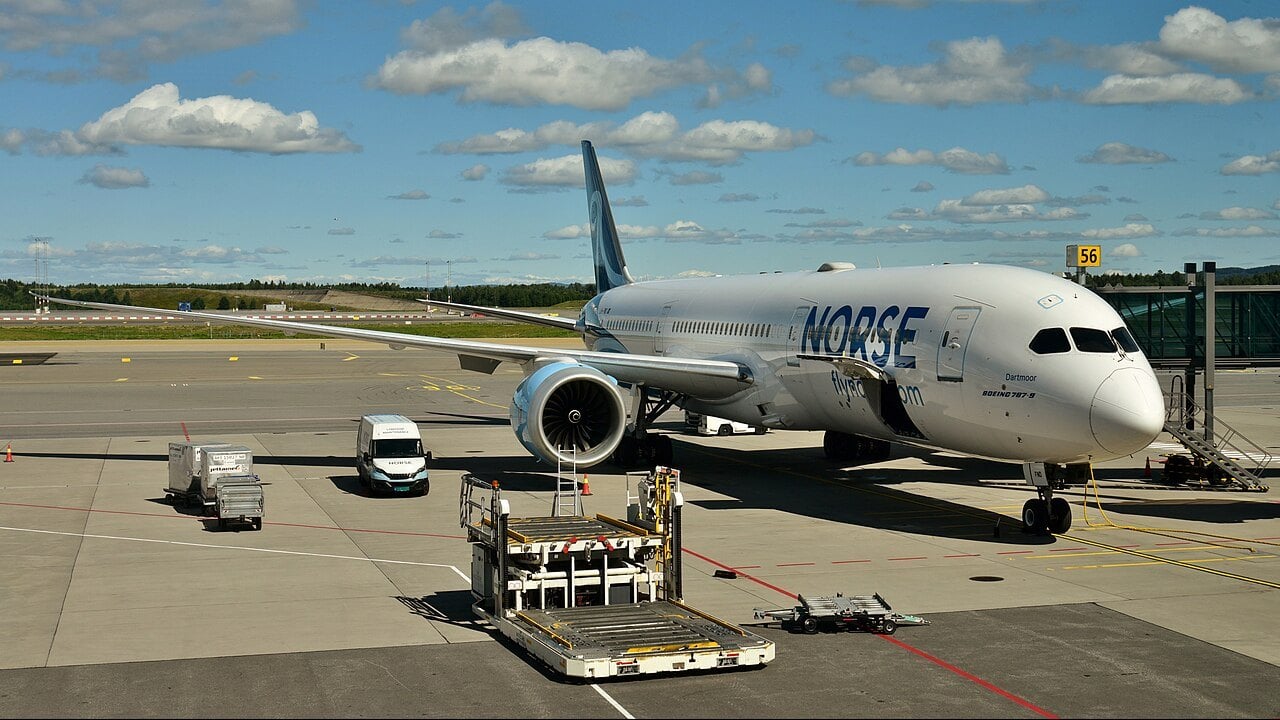
Aviacionline notes the airline accumulated more than $630 million in net losses over four and a half years, even while recording load factors above 90% and hitting 94% on its own network in the second quarter of 2026 — the same period it lost $70.6 million.
Collapse in three days
The end played out in public filings. On Wednesday 25 November, Norse Atlantic ASA told the Oslo Stock Exchange its financial situation was “critical” and depended on securing financing. Shares fell 85% that day. On Thursday 26 November, the airline suspended all flights while hunting emergency money; CEO Eivind Roald told Norwegian business daily Finansavisen the entire fleet had been returned to bases in Norway, Sweden and Britain.
On Friday 27 November, lessors sent termination notices for all 12 aircraft. The board stated it intends to file for bankruptcy if a short-term financing solution is not secured urgently. MiGFlug’s timeline shows the carrier contesting the notices while continuing funding talks, but Dawn reports the Norwegian operating unit has now declared bankruptcy at the Agder District Court.
Norse Atlantic ASA, the listed parent, along with other group entities, are excluded from the filing and continue trying to keep the business alive. But with lessors reclaiming the fleet and no financing secured, the path back to operations is all but closed.
Norwegian budget airline Norse Atlantic Airways suspends flights and warns of possible bankruptcy amid soaring fuel costs, putting its Thailand winter expansion at risk. Norwegian low-cost carrier Norse Atlantic Airways suspended all flights on Thursday (November 26, 2026),…
FlightGlobal notes the airline “contests the validity” of the termination notices and remains in talks for urgent funding, while reiterating there is “no assurance” of a practical solution.
Ripple effects across UK leisure and charter
The collapse removes a competitor from the UK long-haul market and a significant provider of widebody charter capacity. ADS Advance reports Norse was one of three aviation partners — alongside TUI Airways and Virgin Atlantic — selected to support P&O Cruises’ winter 2026/27 Caribbean programme, contracted to operate flights to Antigua from Gatwick and Manchester and to Barbados from Gatwick, Manchester, Cardiff, Glasgow and Newcastle between October 2026 and March 2027.
P&O Cruises has secured replacement carriers for this weekend’s departures, including a Manchester-to-Barbados flight on Friday 27 November and two Antigua rotations on Saturday 28 November, though it did not name the alternative airlines.
British passengers holding Norse bookings face cancelled flights and unavailable customer service. The Telegraph estimates 10,000 to 20,000 UK travellers are affected, with more than 1,000 staff having lost jobs and likely unpaid for November work.

Rescue fares from rival carriers may offer seats for as little as £200 one-way including baggage for those who can prove a valueless Norse booking. Package holiday bookings carry stronger protection: the organiser must find alternative flights or provide a full refund.
Financing talks persist despite fleet loss
Norse Atlantic ASA vice-president of finance, controller and treasurer Emily Halverson said the group is evaluating a range of financing options and will pursue the approach that best supports its financial and strategic objectives. FlightGlobal added that the company continues discussions to secure short-term financing while reiterating there is no assurance of a practical solution.
According to MiGFlug, the lessors moved to end the leases on all 12 aircraft, Norse challenged the move, and negotiations on short-term financing carried on without any guarantee that a workable solution will emerge.
P&O Cruises activates replacement carriers
Karlobag.eu reported that P&O Cruises has locked in substitute airline partners for passengers leaving the United Kingdom this weekend on Caribbean cruises. The decision follows the suspension of operations by Norse Atlantic, which put flights connected to the Britannia and Arvia sailings at risk. The cruise company confirmed that alternative airlines will cover all scheduled flights throughout the weekend.
The announcement did not identify the airline that will operate the flights or provide details about the aircraft. The cruise operator stated that its team will contact guests affected by the changes directly, and for guests with later departure dates, further information will depend on whether the changes affect their specific bookings.
The fifth carrier to fall
Norse is the fifth carrier pushed toward collapse by the fuel shock since the war began. Spirit Airlines ceased operations on 2 May after a $500 million federal rescue failed. Latvia’s airBaltic entered Chapter 11 restructuring in September.
Spain’s Volotea began debt restructuring talks the same month. Plus Ultra, a Spanish long-haul operator, suspended its last route, Madrid-Caracas, on 23 November. BigGo Finance’s tally shows the divide between hedged and unhedged carriers has become the sector’s central fault line.
Some airlines are now testing whether they could withstand $200-a-barrel jet fuel in 2027. Ryanair chief executive Michael O’Leary warned analysts this month that “The risk is that oil prices might roll off and we catch ourselves on the wrong side of the market.” That points to higher fares and further capacity cuts, particularly on marginal routes. For Norse Atlantic, the test came too early and the answer was final.
Worth a look

Kenyan Court Convicts Paul Mackenzie on 123 Manslaughter Counts
A Kenyan court convicted doomsday cult leader Paul Mackenzie on Friday of manslaughter in the deaths of 123...

Israeli Strike Kills Two MSF Staff at Gaza Clinic
An Israeli airstrike killed two Médecins Sans Frontières staff members at a clinic near Gaza City's al-Shifa Hospital...

Dutch Customs Seize 26 Rare Turtles, Nearly 10% of Wild Population, NVWA Says
Dutch customs officers seized 26 critically endangered Vallarta mud turtles from a passenger's checked luggage at Amsterdam's Schiphol...

Spain’s PP and Vox Projected to Win 190 Seats, Polls Show
Spain heads to the polls on Sunday with the conservative People's Party and the far-right Vox party projected...