
Dutch customs seized 26 Vallarta mud turtles at Schiphol Airport, accounting for nearly 10% of the estimated 300 remaining wild turtles.
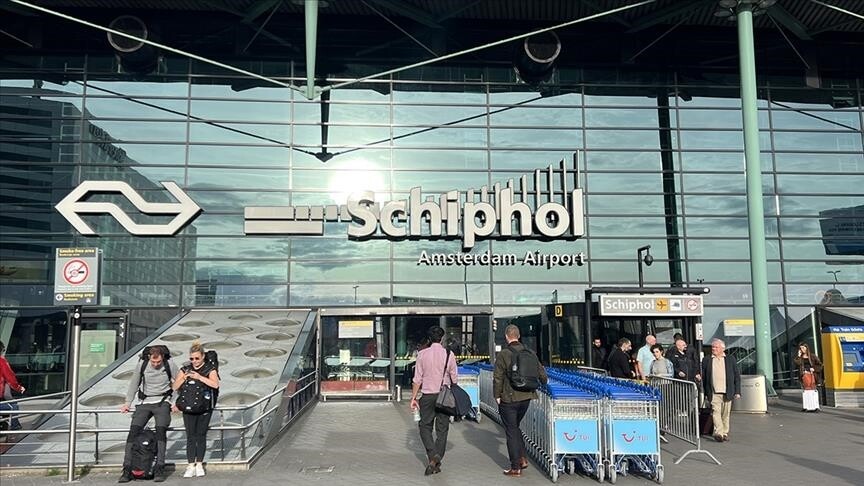
Dutch customs officers seized 26 critically endangered Vallarta mud turtles from a passenger’s checked luggage at Amsterdam’s Schiphol Airport on November 21, the Netherlands Food and Consumer Product Safety Authority (NVWA) announced Friday.
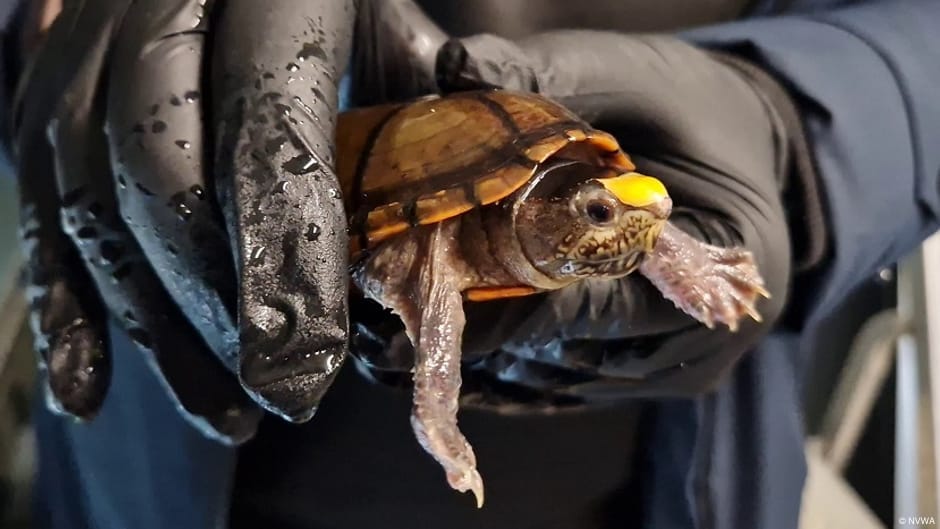
The turtles — a species only scientifically described in 2018 and endemic to a small area of western Mexico — were found wrapped in duct tape inside a box alongside a toy car and a sealed sock within a suitcase. All 26 survived the journey and were transferred to a specialized sanctuary for care.
The passenger, a man traveling from Mexico to Hong Kong via Amsterdam, was arrested by the Royal Netherlands Marechaussee at the NVWA’s request and remains in custody as prosecutors investigate.
Take nearly 10% of the wild population
The seizure represents a staggering blow to a species already on the brink. The NVWA estimates only about 300 Vallarta mud turtles remain in the wild, meaning the 26 animals intercepted at Schiphol account for nearly 10% of the entire known population.
These highly rare and protected turtles were presumably taken from the wild in Mexico, where an estimated population of only about 300 of these animals remain.
NVWA press release
Conservationists warn the actual toll of illegal trade is far higher. “Experts believe wildlife authorities only seize a small portion of illegal traded wildlife,” the Center for Biological Diversity said in a statement last month.
Discovered, then targeted
The Vallarta mud turtle (Kinosternon vogti) is among the world’s smallest freshwater turtles, reaching a maximum length of about 10 centimeters. It inhabits a restricted coastal area in the Bahía de Banderas Valley in Jalisco state, where habitat loss from urbanization and tourism has already claimed over 99% of its natural range, according to the Turtle Island organization in Austria.
Its recent discovery and diminutive size have made it a prime target for collectors. The species is listed as Critically Endangered on the IUCN Red List and receives the highest level of protection under CITES.
Black market prices drive the trade
The financial incentive is immense. “Vallarta mud turtles sell for up to $30,000 each in China, providing a major financial incentive that drives illegal trade,” the Center for Biological Diversity said in a statement last month. Environmental news outlet Mongabay, cited by the BBC, puts the Asian black market price at $10,000 or more per animal.
Hong Kong has emerged as a key destination. In October, customs authorities there seized eight endangered turtles with an estimated market value of about $54,000. Three months earlier, two separate operations netted 42 live turtles valued at $210,000 total.
A pattern of airport smuggling
The Schiphol case fits a broader pattern. In December 2025, approximately 20 Vallarta mud turtles bound for Asia were seized at Los Angeles International Airport, according to the Center for Biological Diversity. Research by University of Michigan doctoral candidate Tara Easter, using U.S. Fish and Wildlife Service data, shows the commercial export trade for mud turtles in the United States grew from 1,844 in 1999 to nearly 40,000 in 2017.
Wildlife officials have warned airports to expect a surge in live animal smuggling ahead of the holiday season, particularly on flights to Asia. All 26 turtles survived the unheated cargo hold — where temperatures can plummet well below freezing. Many smuggled animals do not.
Investigation continues
The detained man has not been publicly identified, and the specific charges he may face have not been disclosed. The NVWA has not indicated the long-term plan for the rescued turtles, though the Turtle Island organization in Graz, Austria — which breeds the species as a “genetic reservoir for eventual rewilding” — is working to preserve them in Mexico.
The NVWA enforces CITES rules at Dutch borders, including a ban on importing certain protected species. The authority also conducts inspections to ensure compliance with CITES documentation and requirements for trade and possession, as outlined in the Netherlands’ implementation of the convention.

In this case, the NVWA requested the Royal Netherlands Marechaussee to arrest the passenger at Schiphol Airport on November 21, demonstrating its role in coordinating enforcement actions against wildlife smuggling.
Dutch prosecutors are leading the ongoing investigation into international wildlife trafficking. The NVWA urged the public to report suspected illegal wildlife trade, including sales through online marketplaces and forums. What happens to the seized turtles is not yet known.
Keep reading

Spain’s PP and Vox Projected to Win 190 Seats, Polls Show
Spain heads to the polls on Sunday with the conservative People's Party and the far-right Vox party projected...
New Zealand Election Leaves Opportunity Party as Decider
New Zealand's final election count on Friday stripped Prime Minister Christopher Luxon's coalition of its provisional majority, leaving...

Trump Claims U.S. Victory Over Iran, Warns of Pickaxe Mountain Strike at Thanksgiving Briefing
President Donald Trump told reporters at Mar-a-Lago on Thanksgiving Day that the United States has achieved victory in...

AP’s Global Teamwork and Scoops Define Trump Asia Trip Coverage
Jim Gomez, AP's Manila chief correspondent, secured a three-day advance on the story that China and ASEAN failed...