
North Dakota deer season begins with record-low license counts
North Dakota’s 2026 deer season officially opened at noon on Friday, Nov. 6, which reduces available hunting opportunities.
According to reports from KFGO and the Grand Forks Herald, the state has implemented a highly conservative management strategy to prioritize herd recovery.
The scale of the reduction is historic. This year, officials made 39,100 licenses available to hunters, which is 3,200 fewer than the previous year. This figure represents the lowest total license allocation seen in more than half a century.
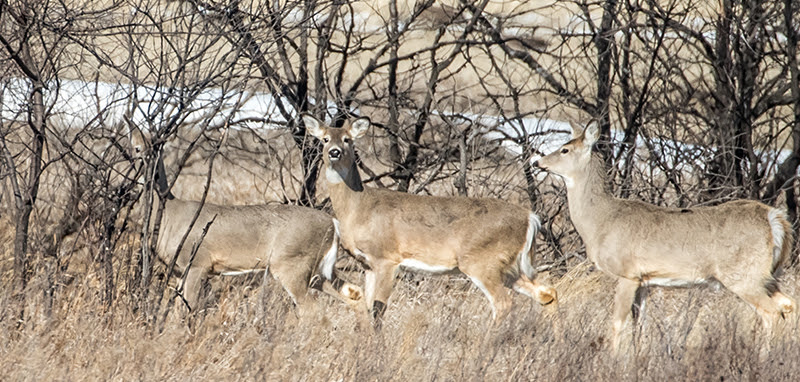
These strict limits are a direct response to a series of biological and environmental pressures facing the state’s wildlife. The statewide deer herd is currently struggling to recover from the severe weather impacts of the 2022-23 winter alongside outbreaks of epizootic hemorrhagic disease. Beyond these acute crises, biologists are also contending with an increasingly limited amount of available habitat across the North Dakota landscape.
Management shifts favor residents and population growth
The North Dakota Game and Fish Department is using these limited allocations to balance the immediate desire for hunting access with the long-term necessity of population growth. To achieve this, several management units have seen even more drastic restrictions.
In certain management units, antlerless deer gun licenses were completely unavailable this season. The agency has also implemented restrictions on nonresidents, who were permitted to hunt on private land only during the first 9.5 days of the deer bow season. These specific changes are designed to give residents more management priority while the population stabilizes.
The agency is also looking toward even more restrictive measures for the future. Bill Haase, the department’s wildlife division chief, noted that the agency will continue to engage stakeholders regarding additional herd-growth measures.
“The agency will continue to engage stakeholders on additional herd-growth measures, including discussions around limiting future adult archery tags to antlered-only deer,” Haase said.
Strict rules for transport and meat gifting
Because of the focus on disease management and legal compliance, hunters face rigorous requirements regarding the transport of game and the handling of carcasses. One of the most critical protocols involves the management of deer heads to mitigate the spread of chronic wasting disease.
Under standard rules, a deer carcass or boned-out meat must be accompanied by the head to its final place of storage. However, the department allows a digital exception to assist hunters. To use this method, hunters must tag the deer as required by law and take two specific cell phone photos with location, date, and time stamps enabled:
- A photo of the entire animal at the kill site with the tag attached.
- A clear, close-up photo showing all readable information on the tag.
If these photos are taken, hunters may drop the head off at a chronic wasting disease collection site. If a hunter chooses to leave the head at the kill site instead, they must cut off the ear or antler with the tag still attached so that it stays with the meat during transport. Game wardens and law enforcement officers have the authority to request these digital photographs at any time.
Transportation of the animal itself also carries strict requirements. License holders are required to personally accompany their game animal or its parts, excluding the hide, during transit. While residents can ship big game out of state, they must obtain a specific department permit to do so, though common carriers may ship game if they possess a proper bill of lading.
The rules regarding the sharing of meat are equally precise to prevent illegal commerce. While legally harvested meat can be gifted, it is illegal to sell, trade, or barter it. For unprocessed, unpackaged meat, two conditions must be met: a formal transportation permit must accompany the meat before it reaches a permanent residence, and the original harvester’s carcass tag must accompany the meat once it arrives at that residence.
For those using commercial services, the department requires that the individual’s carcass tag remains with the edible flesh throughout the entire processing stage. Commercial processors and common carriers are permitted to legally possess a hunter’s limit, provided the tagging requirements are strictly followed.
Doug Leier, an outreach biologist for the North Dakota Game and Fish Department, said these regulations help the state manage the balance between hunting traditions and ecological necessity.
Keep reading
- Prison Sentences Handed to Julia Pewo and Coye Nohava for Meth Case
- UnitedHealthcare 2027 Dual Choice DC-YL1 Enrollment Guide
- Porzingis Stepped Away, and His $20M Still Counts on Golden State's Cap (daybreakwire.com)
- COP31 climate summit begins after disastrous year of extreme weather (newsarchyuk.com)

Prison Sentences Handed to Julia Pewo and Coye Nohava for Meth Case
Julia Pewo and Coye Nohava were sentenced to federal prison for their roles in a methamphetamine distribution conspiracy,...

UnitedHealthcare 2027 Dual Choice DC-YL1 Enrollment Guide
UnitedHealthcare Dual Choice DC-YL1 enrollment opens District of Columbia residents eligible for both Medicare and Medicaid can begin...

Latonia Reed Sentenced for Philadelphia Housing Fraud
United States District Judge Joel H. Slomsky handed down the sentence following Reed's guilty plea in June to...

International Western Music Association Convention Begins in Albuquerque
The International Western Music Association begins a five-day convention in Albuquerque this week, bringing a global community of...