
Probate becomes a legal requirement in North Dakota and Minnesota when a deceased person leaves behind real estate or an estate exceeding specific monetary thresholds—$100,000 in North Dakota and $75,000 in Minnesota—that lacks designated beneficiaries or joint ownership. Families can often bypass this court process entirely by utilizing strategic titling and specific legal instruments.
Why does the Red River create such different outcomes?
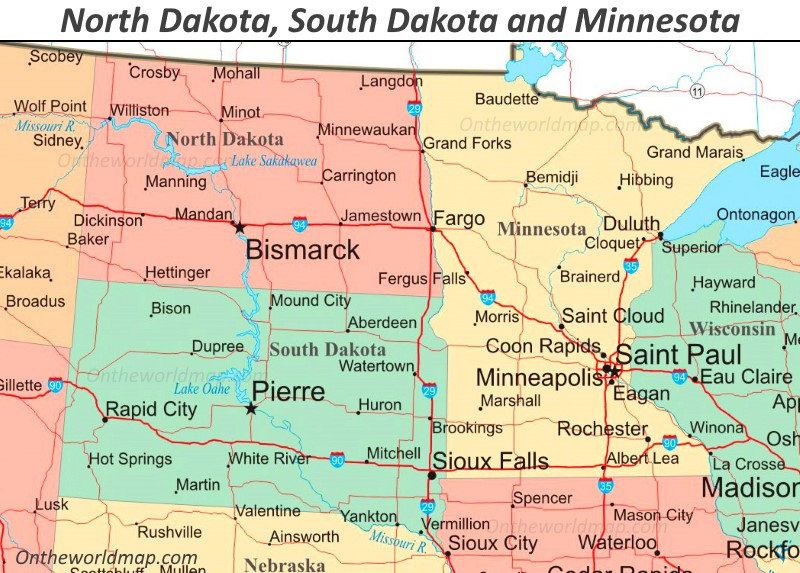
The border between these two states is more than just a geographic line; for families managing an estate, it represents a distinct difference in financial thresholds. As reported by the probate team at SW&L Attorneys, Minnesota’s lower probate limit of $75,000 means that an estate worth $90,000 consisting solely of bank accounts would trigger a court process in Moorhead, while that same estate would qualify as a small estate in Fargo.
This discrepancy stems from state-level legislative decisions regarding how much wealth can transfer outside of the court system. When an estate exceeds these limits or includes real property that hasn’t been specifically structured to avoid probate, a personal representative must be appointed to collect assets, satisfy outstanding debts, and distribute the remainder to heirs.
What counts as a “probate asset”?
The court process only reaches property titled in the name of the deceased individual alone. This is a crucial distinction for families who believe they must probate every item the deceased owned. Assets that pass directly to survivors—such as those with a named beneficiary, property held in joint tenancy, or assets placed within a trust—are generally shielded from the probate process.
If the estate qualifies as a small estate, heirs may avoid the court system entirely by using an Affidavit for Collection of Personal Property in North Dakota, or the equivalent Minnesota statute. This sworn statement allows for the collection of assets like bank accounts or vehicles 30 days after death, provided no probate has been initiated. However, this tool cannot be used to transfer real estate, including mineral interests.
How can real estate bypass the court?
For many, the family home or land holdings represent the largest portion of an estate. Since real estate almost always requires probate if it is held in a single name, owners often turn to specific legal mechanisms to ensure a smooth transition.
- Transfer on Death Deeds: Authorized in North Dakota under N.D.C.C. ch. 30.1-32.1 and Minnesota under Minn. Stat. § 507.071, these allow an owner to name a beneficiary for real estate while retaining full control during their lifetime.
- Joint Tenancy: This form of ownership ensures that when one owner dies, the interest automatically transfers to the surviving owner. Both states require the deed to explicitly state that the owners hold title as joint tenants.
In both instances, the process after death is relatively straightforward: the survivor must record a death certificate and an affidavit of survivorship with the local county recorder. This documentation serves as the official record that the deceased person’s interest has ended, effectively clearing the title without a judge’s intervention.
Who bears the brunt of these rules?
The complexity of these rules often falls on families who lack formal estate planning. While those with trusts or well-structured accounts move through the post-death transition with minimal friction, others find themselves caught in a bureaucratic process simply because their assets were not titled correctly.
The economic stakes are clear: probate involves court filings, potential attorney fees, and time delays that can tie up liquid assets for months. The “so what” for the average family is that the effort spent titling an account or recording a deed today acts as a direct investment in the ease of their heirs’ lives tomorrow. If your assets don’t align with these state-specific thresholds, the administrative burden of probate becomes a reality that no amount of planning after the fact can easily fix.

Keys Weekly Celebrates Teacher and Coach Helena Bursa
Helena Bursa Reflects on 28 Years of Teaching and Community in the Keys For nearly three decades, Helena...

Scott Colom appears poised to unseat Cindy Hyde-Smith in MS Senate race
Mississippi Senate Race Remains Uncalled as Ballots Continue to Tally As of Wednesday afternoon, the U.S. Senate race...

Iron Mountain Blue Spruce Selected as Michigan State Christmas Tree
The Riccio Family Spruce Heads to the Capitol A 64-foot blue spruce that has watched over an Iron...

Flood Watch Issued for Southeastern Massachusetts Amid Heavy Rain
Southeastern Massachusetts Braces for Heavy Rain and Potential Flooding A flood watch is in effect for parts of...